Iraq's first Jewish Museum opens a door to the past – and a contentious debate on the present
Inside the Shamash Jewish Museum in Baghdad, the elegant glass-fronted wooden display cases hold a paper trail to a vanished Iraq . Some of the neatly arranged documents are originals, yellowed and fraying at the edges, while others are carefully reproduced copies. Together, they reconstruct the daily life of Iraqi Jews: school certificates, handwritten letters, identity cards, marriage…
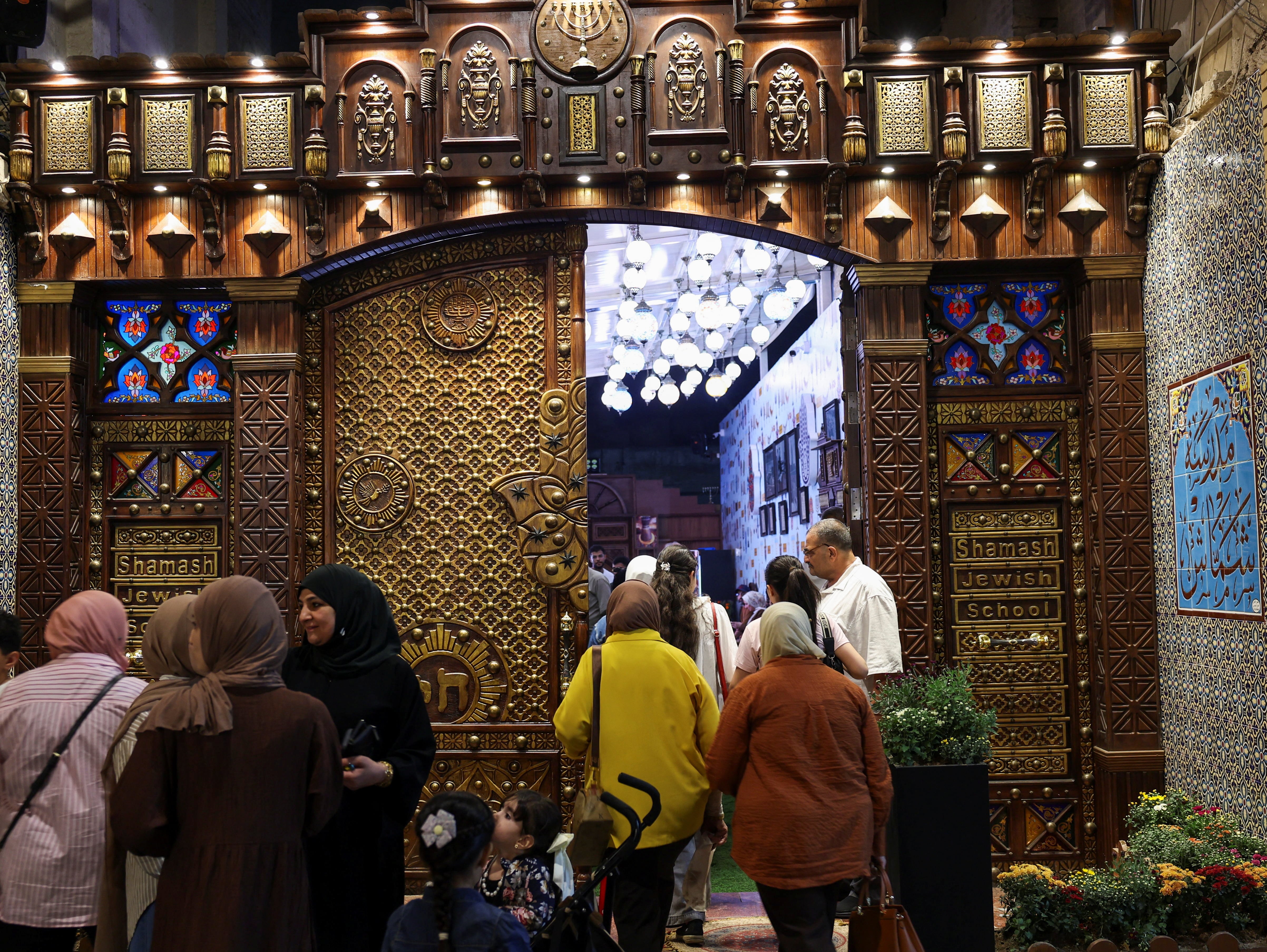
The first Jewish Museum in Iraq has opened its doors in Baghdad, showcasing a collection of artifacts that trace the community's rich history. The elegant, glass-fronted wooden display cases house original documents and carefully reproduced copies, offering a glimpse into the lives of Iraqi Jews. From school certificates and handwritten letters to marriage contracts and family photographs, the museum aims to “rediscover an important part of Iraq’s diverse cultural and religious heritage” and preserve this memory for future generations.
Established in the former Shamash Jewish School founded in 1928, the museum has already attracted dozens of visitors during its opening days. However, the timing of the museum's inauguration has sparked a contentious debate about its purpose and the context of its opening. Some argue that acknowledging the community that once made up a fifth of Baghdad's population is essential for the country's healing, while others claim that no cultural project exists in a vacuum and that the timing is inappropriate given the ongoing conflicts and political tensions in the region.
Supporters of the museum emphasize the historical significance of Iraq's Jewish community and its contributions to the modern state. The museum's curators insist that the project is completely Iraqi, legitimate, and funded entirely through community resources. One retired employee of the Ministry of Commerce praised a past achievement by Jewish statesman Sassoon Heskel, who insisted during negotiations with the British that exploration rights be paid for in gold shillings rather than paper currency, a decision that protected the nation's wealth during the tumultuous aftermath of World War II.
However, some critics express concern that the museum's opening could be read as a political signal, especially in light of the ongoing conflict with Israel and the persistent talk of establishing relations. A retired employee of the Ministry of Commerce, who spoke anonymously, highlighted one of Heskel's major achievements but cautioned that the timing of the museum's opening could potentially lead to further steps towards establishing relations with Israel, which remains banned under Iraqi law.
The debate over the museum's opening also reflects the complex emotions of the Jewish community in Iraq. While some believe that the museum represents a "beginning of fixing the wound in Iraqi society," others argue that it is impossible to trust Israel at this time due to its current actions in Gaza and its growing influence in the region.
The museum's legal representative, Ammar Al Tamimi, emphasizes the Endowment's independence and adherence to Iraqi law, stating that the museum's funds are deposited in the state-run Al Rafidain Bank and that the state is aware of every thousand dinars entering the account.
The history of Iraq's Jewish community, as documented in the museum, reveals that Jews made up about a fifth of Baghdad's population during Ottoman rule and for several centuries thereafter. The community peaked at around 150,000 in 1947, with many remaining even after the establishment of the State of Israel in 1948. However, following the Farhud pogrom in 1941, which resulted in the deaths of dozens of Jews, and the mass emigration of Jews to Israel between 1950 and 1952, only a handful of Jews are believed to remain in Iraq today.
Written by urgent.news from The National Business's reporting — not their text. Machine-written — may contain errors; check the original before relying on it.
This story
This is one outlet's version. Read the fullest account.