Instruments on NASA’s Roman Space Telescope Get in Sync for Science
NASA’s Nancy Grace Roman Space Telescope has completed a key milestone, bringing its instruments into precise alignment and moving the observatory another step closer to science operations. “Roman requires exquisite alignment because it has to be at least ten times more stable than our Hubble or Webb space telescopes to conduct the science it’s setting […] The post Instruments on NASA’s Roman…
NASA’s Nancy Grace Roman Space Telescope has officially completed a crucial alignment milestone for its instruments, bringing the observatory closer to conducting scientific research. Dominic Benford, the program scientist at NASA Headquarters, explained that Roman needs to be significantly more stable than Hubble or Webb to achieve its goals, emphasizing the observatory's reliance on precise alignment for its success.
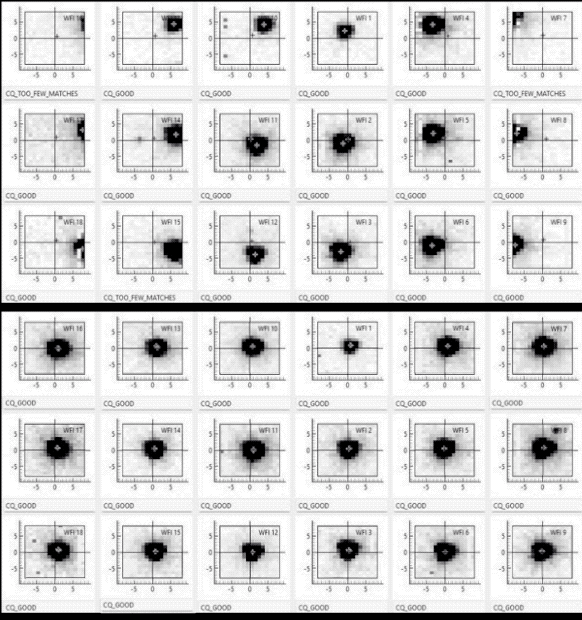
The team meticulously aligned the telescope's optics and instruments on Earth before launch, anticipating that space vibrations, temperature changes, and zero gravity could cause minor shifts post-launch. To address this, scientists conducted a series of test observations to measure these shifts and update their internal map of Roman’s anatomy.
Tyler Desjardins, an astrophysicist at the Space Telescope Science Institute, highlighted the importance of accurate positioning of the 18 detectors in the Wide Field Instrument, which work together when locking onto guide stars. Desjardins emphasized that even a slight positional error could affect guiding and lead to issues during observations.
To ensure accuracy, the team adjusted the positions of various components, including the secondary mirror and a smaller mirror that connects to the Coronagraph Instrument. Tony Sohn, an astronomer at the Space Telescope Science Institute, noted that Roman is now aligned to within a fraction of a hair's breadth of perfection, crucial for both pointing at targets and maintaining stability during observations.
The Wide Field Instrument serves dual purposes as the primary instrument and a guider, tracking guide stars to help the telescope maintain its position. Meanwhile, the Coronagraph Instrument uses masks to block starlight, allowing the detection of faint planets, but even minor misalignments could prevent it from accomplishing this task.
Brian Kern, an optical engineer at NASA’s Jet Propulsion Laboratory, explained that the Coronagraph Instrument’s alignment is vital to ensure it can block overwhelming levels of starlight, revealing planets that would otherwise be obscured. The team is currently preparing to test more than 3,000 of the instrument’s small, movable parts, focusing on the deformable mirrors that will help reject starlight and reveal distant planets.
Written by urgent.news from NASA Science's reporting — not their text. Machine-written — may contain errors; check the original before relying on it.