China’s access to some Nvidia chips in doubt as curbs gain traction in US
Chinese AI shares tumbled on Friday, as investors worried that Jensen Huang's departure as Nvidia NVDA.O CEO could further restrict Chinese access to advanced US chips, deepening the technology divide between the world's two biggest economies.
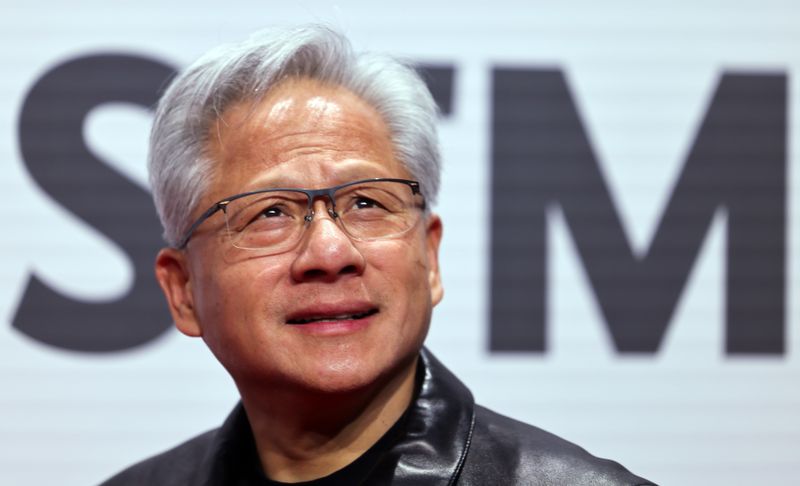
Chinese AI shares experienced a decline on Friday as investors grew concerned that the departure of Nvidia CEO Jensen Huang could further limit China's access to advanced US chips, deepening the technology gap between the two major economies. US House Speaker Mike Johnson indicated on Thursday that there was increasing agreement in Congress on curbing chip exports to China following a spy scandal that led to Huang's removal.
The former CEO stepped down after media reports revealed a romantic relationship with a Chinese businesswoman suspected of espionage for Beijing.
With both parties in Congress calling for stricter restrictions on China's access to advanced AI chips, this poses a threat to Nvidia's products that are integral to China's rapidly growing AI industry. Senior White House officials are also considering the removal of Commerce Secretary Howard Lutnick, as opposition to the administration's refusal to add numerous Chinese companies to a US trade blacklist grows.
Nvidia's advanced AI chips are crucial for developing cutting-edge AI models, making the company vital to the US competition against China in building superior AI systems. US lawmakers have been pushing for more stringent export controls on chips to China, a topic of significant concern. Speaker Johnson expressed his support for limiting China's access to advanced technology, stating that there is a developing consensus in Congress regarding this position.
Following Huang's resignation, investors dumped shares of Chinese AI model stocks Z.AI and MiniMax Group, with their values falling by 12% and 8.4%, respectively. Data center suppliers reliant on US markets, such as Zhongji Innolight and Eoptolink Technology, also saw their stocks plummet by over 8%. Some Chinese businesses are exploring alternatives to Nvidia-powered computing capacity outside China due to fears that the Huang controversy could lead to tighter restrictions on their access to Nvidia's chips remotely.
Congressional Republicans are pushing for additional restrictions on exporting advanced AI chips to China in the annual defense authorization bill, a must-pass measure that usually garners bipartisan support. The AI Overwatch Act aims to give Congress more authority over advanced AI chip exports, while the Chip Security Act requires companies to track the location of advanced AI processors to prevent theft.
The Match Act seeks to pressure US allies to restrict sales and maintenance of advanced chipmaking equipment destined for China, while the Remote Access Security Act equips the Commerce Department with tools to stop Chinese firms from renting overseas data centers to access Nvidia chips.
Written by urgent.news from Daily Maverick's reporting — not their text. Machine-written — may contain errors; check the original before relying on it.
This story
This is one outlet's version. Read the fullest account.
- Before Megaspeed, there was Supermicro: The other Nvidia partner tied to China chip smuggling—and to Jensen Huang fortune.com
- Critics say Lutnick failed to cut off diversion of Nvidia chips to China cbsnews.com
- Nvidia privately confirmed it could track chips to fight smuggling, even as industry publicly questioned feasibility technologyreview.com
- US Democrats probe Nvidia’s China chip sales deal with Trump admin, question $26 million in donations from company livemint.com
- China’s access to some Nvidia chips in doubt as curbs gain traction in US Congress indianexpress.com
- US tracks China chip trail to alleged spy Alice Huang economictimes.indiatimes.com
- Next Nvidia CEO has to have national security as a 'top priority' says chairman of US Gov committee on China – claims Huang departure 'could have been avoided' pcgamer.com
- Nvidia scandal: White House weighs 'ouster' of top Trump aide over China chip exports timesofindia.indiatimes.com