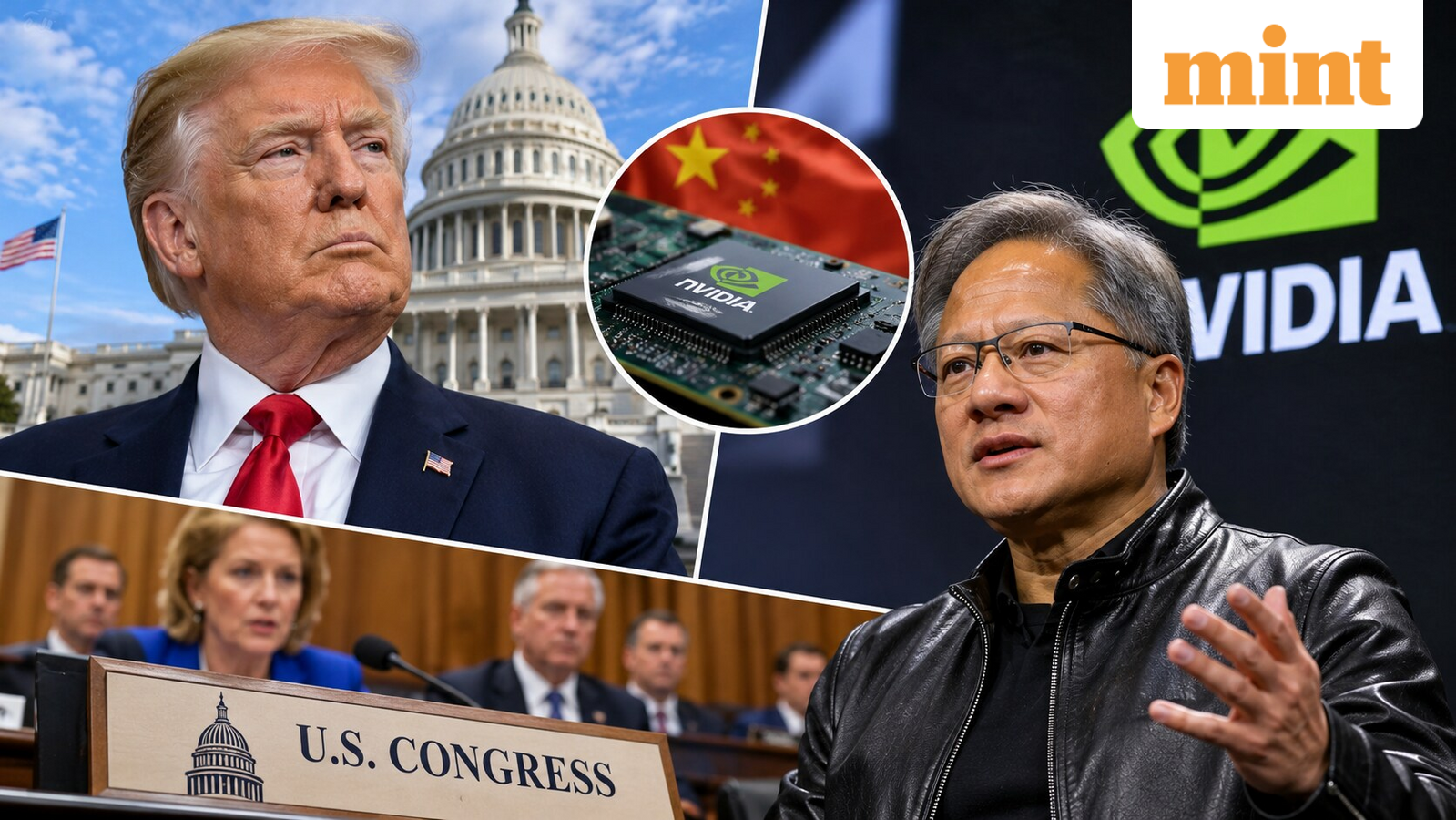
US Democrats probe Nvidia’s China chip sales deal with Trump admin, question $26 million in donations from company
US Democrats have launched an investigation into the Trump administration’s deal allowing Nvidia to sell advanced AI chips to China in exchange for 15% of its sales revenue.
In an interview with MIT Technology Review, Illinois representative Bill Foster revealed that Nvidia had privately confirmed the feasibility of tracking chips as part of the Chip Security Act, despite the industry's public skepticism. The Democrat, who chairs the Committee on Science, Space, and Technology, worked with Nvidia to explore the technical possibility of implementing geotracking requirements to prevent smuggling of advanced AI chips to China.
Though the Semiconductor Industry Association publicly opposed the bill, stating its mandates were "potentially infeasible," Nvidia's own representatives told Foster that the company could indeed implement such safeguards.
Foster's Chip Security Act aims to introduce geotracking requirements to verify locations of advanced AI chips to prevent their smuggling to China by 2025. The act is one of three chip-security bills under consideration for inclusion in the Senate's National Defense Authorization Act. The ping-based technique, which would require GPUs to send a signal of their location when they come online, was identified as the most cost-effective option by the Center for Security and Emerging Technology.
Despite Nvidia's public opposition, the company's Fleet Intelligence tool, announced in December 2025, allows customers to monitor the performance of its advanced chips across various data center locations, including their country of origin. However, Nvidia has not confirmed whether this technology can be used to prevent smuggling.
The company only responded to MIT Technology Review's inquiry with a statement emphasizing that the diversion of controlled U.S. products was minimal compared to the existing domestic compute in China.
The controversy surrounding Nvidia is linked to several individuals and companies allegedly involved in chip smuggling. Alice Huang, Jensen Huang's alleged affair partner, runs a Singaporean firm, Megaspeed, currently under investigation for smuggling advanced GPUs to China. A US Commerce Department investigation into Megaspeed was reportedly halted upon Nvidia's intervention. Megaspeed is said to have purchased chips from Supermicro, a company that packages Nvidia's chips onto servers.
If the bill passes, the new tracking mechanisms would only identify where the chips are, not provide a way to disconnect them if they were smuggled. Foster intends to introduce stricter legislation in the new year that would require licenses for operating advanced GPUs, with valid licenses needing verification before a GPU can connect. With increased political pressure following Nvidia's recent fallout, Foster suggests that companies may be more inclined to effectively validate the geographic location of chips.
Written by urgent.news from MIT Technology Review's reporting — not their text. Machine-written — may contain errors; check the original before relying on it.
This story
This is one outlet's version. Read the fullest account.
- Before Megaspeed, there was Supermicro: The other Nvidia partner tied to China chip smuggling—and to Jensen Huang fortune.com
- Critics say Lutnick failed to cut off diversion of Nvidia chips to China cbsnews.com
- Nvidia privately confirmed it could track chips to fight smuggling, even as industry publicly questioned feasibility technologyreview.com
- US tracks China chip trail to alleged spy Alice Huang economictimes.indiatimes.com
- Nvidia scandal: White House weighs 'ouster' of top Trump aide over China chip exports timesofindia.indiatimes.com