A truly multilingual society should not come at the cost of Arabic
Writing about the UAE often emphasises its exceptionalism: usually in terms of the booming economy, first-rate infrastructure and embrace of innovative technology. Less discussed among these idiosyncrasies is that the country's lingua franca, English, is not its official language, which is Arabic . It is a language phenomenon reflective of the UAE’s ambition to become a global hub, the result of…
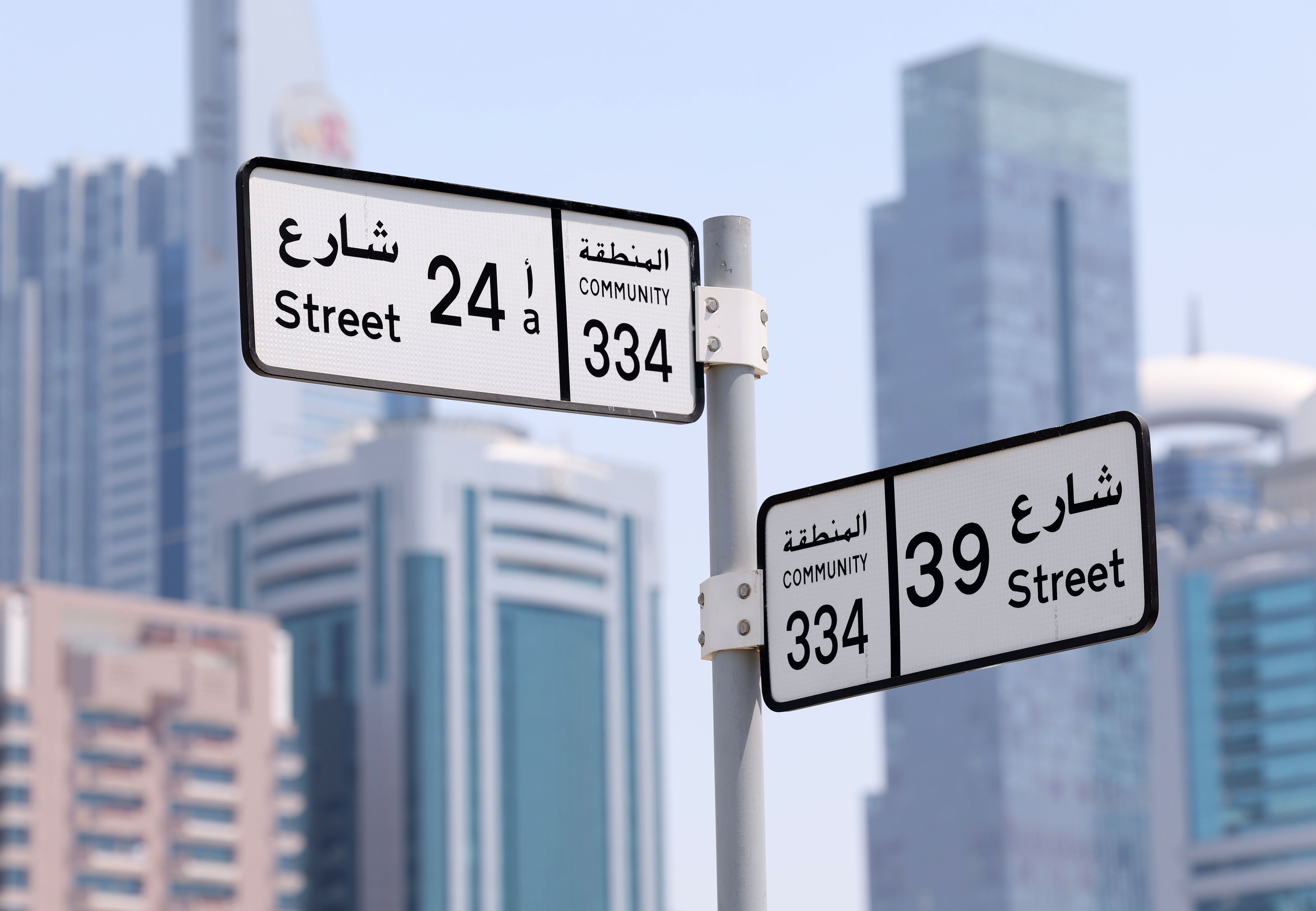
The United Arab Emirates often highlights its exceptional qualities, such as its thriving economy, state-of-the-art infrastructure, and adoption of cutting-edge technology. However, one aspect that receives less attention is the country's official language, Arabic. This linguistic choice is emblematic of the UAE's aspiration to become a global hub, largely due to its inclusive immigration policies that attract a diverse and transient population.
While the widespread use of English has contributed significantly to the UAE's growth, it has also posed challenges to the native Arabic language and the cultural vitality of Arab youths and families in the country.
A truly multilingual society is not inconceivable, but only if Arabic is viewed as indispensable. While one can comfortably reside in the UAE without learning Arabic or feeling compelled to do so, the language is predominantly restricted to signage, the public sector, and the speech of various Arab social circles. Native Arabic speakers, although not a majority, constitute a significant portion of the population.
Nonetheless, the dominance of English has led to young Arabs, both Emirati and non-Emirati, communicating primarily in English; many lack proficiency in Arabic, unable to read, write, or speak the language.
This outcome, counterintuitive for those raised in an Arab family and country, is becoming increasingly prevalent among Arab youth in the UAE and Gulf cities. Arab parents tend to overestimate the amount of Arabic their children are absorbing at home, while others might actively diminish Arabic communication, believing that English fluency offers greater advantages for education and career prospects.
Schools play a crucial role in language development. Across the region, many Arab parents opt to enroll their children in English-medium private schools. In the UAE, 48% of K-12 schools are private, with the British curriculum being the most popular, accounting for 37% of enrollments, followed by Indian (26%) and US (14%) curricula.
Arabic-medium private schools are statistically insignificant, despite Arab students comprising a significant portion of Dubai's private school population.
Even within English-medium schools, Arabic is underprioritized. According to the Knowledge and Human Development Authority's (KHDA) 2025-26 requirements, a first-grader with an Arab passport receives only four hours of Arabic instruction per week. These statistics do not include the large number of Arab students with non-Arab passports, who study Arabic as a second language.
The question arises whether to consider the neglect of Arabic as an acceptable trade-off for global economic potential or a problem to address. The answer hinges on the perceived loss when the ability to communicate in Arabic is sacrificed. The clear answer is that a part of Arab identity is lost. Kenyan author Ngugi wa Thiong'o, in his 1986 essay collection "Decolonising the Mind," stated, "Language as culture is the collective memory bank of a people's experience in history."
Language embodies heritage and transmits it across generations. Essentially, there is no Arabness without Arabic: a young Arab individual who only speaks English internalizes American or British culture and perceives their own culture only through translation.
The UAE government has acknowledged the intrinsic link between language and identity. In 2026, the government announced it was drafting its first Arabic language law, aiming to strengthen national identity and cultural belonging through reforms in education, advertising, technology, and other sectors. While the specific motivations are not elaborated, the urgency is evident.
With the Emirati community and the country's projected population growth over the next decade, with expatriate Arabs comprising a substantial portion, the UAE symbolizes the future for many individuals. It represents a conscious decision to remain in the Arab world, establish roots, and contribute to the region while seeking safety, opportunities, and a cosmopolitan society.
Preserving the UAE's Arab identity requires normalizing Arabic usage at home, in the workplace, and in public spaces. As a Dubai-based education and culture strategist, the author emphasizes the importance of Arabic, advocating for its normalization in all aspects of life to maintain the country and its communities as distinctly Arab.
Written by urgent.news from The National Business's reporting — not their text. Machine-written — may contain errors; check the original before relying on it.
This story
This is one outlet's version. Read the fullest account.
- A truly multilingual society should not come at the cost of Arabic thenationalnews.com