World faces 'irrecoverable overshoot' on warming - report
The world is heading for an "irrecoverable overshoot" on dangerous warming unless governments reject fossil fuels and start rapidly cutting emissions, a report has warned.
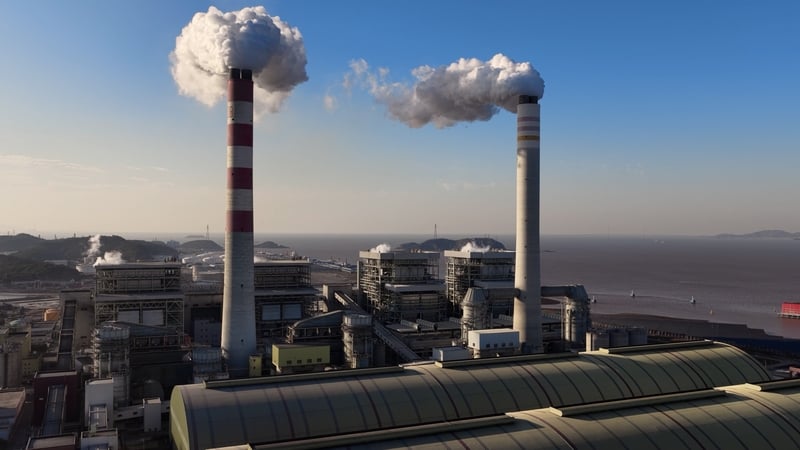
The Climate Action Tracker's latest report reveals the world is on track for an irrecoverable overshoot on dangerous global warming if governments continue relying on fossil fuels. The UN climate talks in Turkey, COP31, saw the CAT's warning that collective climate action has stalled for the fifth year in a row. However, there are positive signs with clean electricity meeting global power demand in 2025, China and India rapidly deploying renewables, electric vehicle sales soaring, and Amazon deforestation dropping sharply.
Despite these positive developments, the report warns that progress in replacing fossil fuels - the primary source of greenhouse gas emissions from transport, heating, power, and industry - is not fast enough. Rising energy demand and new fossil fuel infrastructure construction have led to increasing emissions. With current policies, the world is headed for 2.7C of warming by 2100, up slightly from 2.6C last year and the same as 2021 to 2024.
Meeting 2030 and 2035 emission reduction targets under the Paris Agreement would only slightly reduce warming to 2.6C, the same as last year. However, an optimistic scenario of all pledged and target emission cuts to zero could limit warming to 1.9C by the end of the century. Still, experts warn that the Paris target of 1.5C will likely be exceeded in the coming years.
Climate Analytics' Chief Executive, Bill Hare, urges governments to choose between continuing to support fossil fuels, causing economic damages, health risks, and inadaptability, or pivoting to available and cheaper solutions. CAT partner Niklas Hohne emphasizes the urgency of transitioning to renewables and electrification, highlighting the potential for a peak in global emissions and a faster decline than previously thought.
However, CAT lead author Sarah Heck warns that governments are not moving fast enough to adopt the necessary policies, and long-term warming is expected to cross the 1.5C threshold around 2030. To minimize overshoot, emission reductions must accelerate from about 4% a year to 2030, then 7% a year in the first half of the 2030s and 9% a year from 2035-2050.
Written by urgent.news from RTE News's reporting — not their text. Machine-written — may contain errors; check the original before relying on it.