Taiwan’s tea growers adapt to climate change by letting nature take control
In the high-altitude Alishan mountain region of central Taiwan, tea growers cultivating prized oolong tea face mounting environmental crises: Between 2014 and 2023, local tea production dropped by 13.5% due to severe climate pressures and soil degradation. In response, a group of farmers is abandoning chemical inputs for nature-based solutions and wild cultivation, reports contributor […]
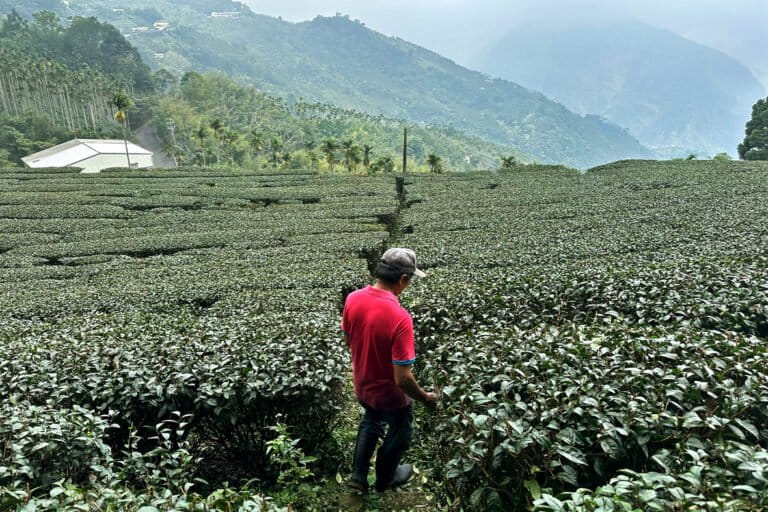
In the Alishan mountain region of central Taiwan, tea growers who produce prized oolong tea are adapting to climate change by shifting to nature-based solutions. Over the past decade, the region has warmed by 0.7°C (1.26°F), nearly triple the rate of Taiwan's average temperature increase. This warming trend has led to reduced mist coverage, which normally shields tea leaves from intense sunlight and helps maintain their moisture levels.
Additionally, the hotter climate has intensified spring droughts, making it even more challenging for tea growers to maintain healthy crops during the most critical growing period.
Huang Cho-ying, chair of the Department of Geography at National Taiwan University in Taipei, noted that tea growers have experienced two or three spring droughts in the past five years, a period when the plants desperately need water. Heavy winter rainfall and landslides further complicate matters, exacerbating crop damage.
One farmer who has successfully adapted to these changing conditions is Lin Kuang-li, a 60-year-old sixth-generation grower in Longyanlin village. Lin has been practicing natural farming for the past 30 years, eschewing chemical fertilizers. Instead, he employs sustainable methods such as growing alfalfa to produce "green manure" and using cut branches as ground cover to retain essential soil moisture.
According to Lin, his soil has a superior ability to absorb and drain water compared to soil treated with chemical fertilizers, illustrating the benefits of nature-based solutions.
Rewritten by urgent.news; may contain errors — check the original.
Source: news.mongabay.com