New research could lead to faster, trustworthy AI models for climate prediction
MIT scientists developed a training method to generate models that simulate the effects of human activities on climate much more quickly than other approaches.
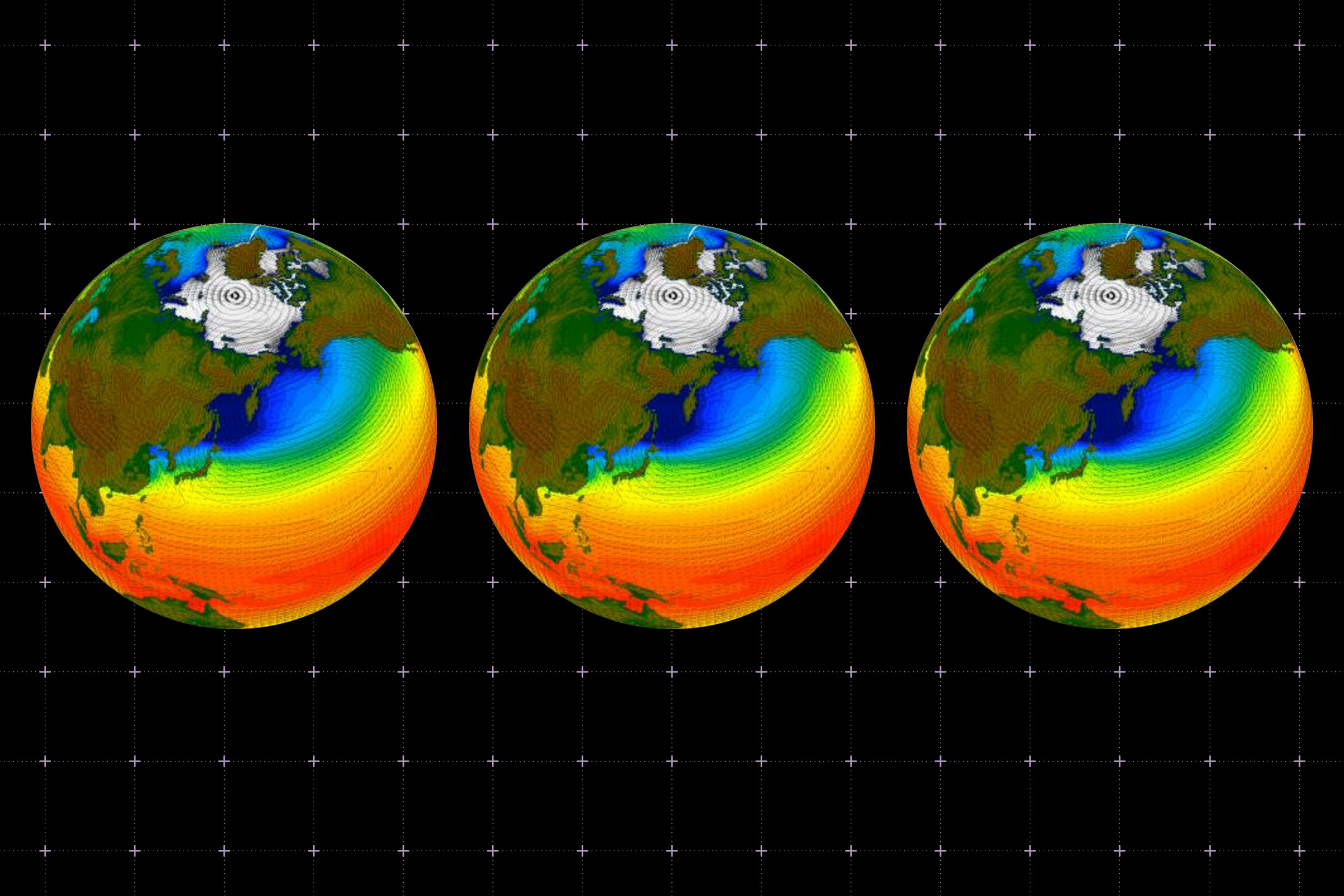
Accurate climate projections are crucial for planning decisions that improve grid resilience, public health, agricultural yields, and more. MIT researchers have developed a technique that creates fast and reliable AI models for climate prediction, known as climate emulators. These emulators can rapidly simulate the effects of human activities on the future climate, predicting impacts on temperatures or sea levels.
By running in seconds, scientists can test thousands of varying climate scenarios, providing more accurate estimates and uncovering unexpected consequences of regional interventions. The researchers created a training method that increases the performance and adaptability of climate emulators while using only a fraction of the data typically required, significantly reducing production time for these valuable scientific tools.
The team shows that an emulator trained with a smaller, carefully selected synthetic dataset can accurately predict outcomes of unseen scenarios, unlike traditional emulators that struggle to adapt. This makes climate emulators well-suited for modeling policy-relevant scenarios, enabling faster and more reliable emulators for better decision-making.
Lead author Christopher Womack, now a postdoc at ETH Zurich, collaborated with researchers from MIT and Imperial College London on the technique, which appears in the Proceedings of the National Academy of Sciences.
Written by urgent.news from MIT News Research's reporting — not their text. Machine-written — may contain errors; check the original before relying on it.
This story
This is one outlet's version. Read the fullest account.