Minority caucus questions women’s bank pledge, alleges silence in 2027 Budget
The Minority in Parliament has questioned the government’s commitment to establishing a women’s bank, alleging that the 2027 Budget failed to address a promise repeated in the previous two budgets.
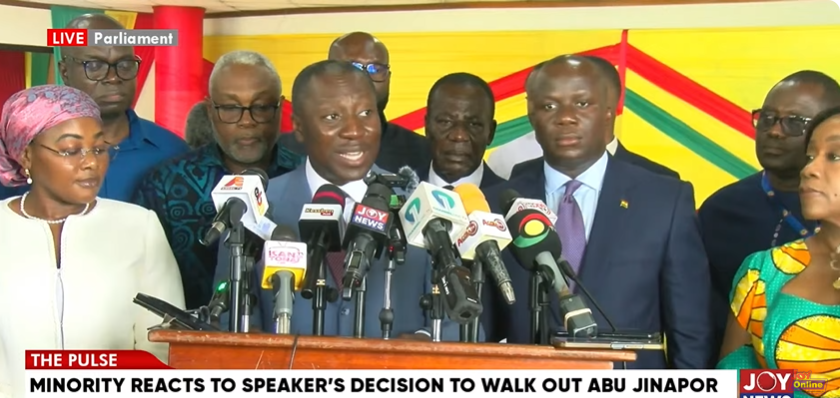
The Minority in Parliament has challenged the government's commitment to establishing a women's bank, claiming the 2027 Budget failed to fulfill a promise made in the previous two budgets. Minority Leader Alexander Afenyo-Markin criticized Finance Minister Dr Cassiel Ato Forson during a press conference on Thursday, accusing the government of ignoring its pledge to provide women, especially traders, with access to loans through the proposed bank.
Afenyo-Markin pointed out that the government had repeatedly stated its intention to create a women's bank in the 2025 and 2026 budgets, but remained silent on the matter in the 2027 budget. He questioned the government's delivery on its campaign promises, stating that the NDC could not fulfill its commitments to Ghanaian women and traders.
The Minority Leader also linked the women's bank promise to broader issues of employment, business support, and the cost of living, noting that high food prices continue to strain households and traders in various regions of Ghana. Afenyo-Markin further challenged the government to reveal how many jobs it has created and questioned the minister's call for patience, emphasizing that Ghanaians expected employment opportunities after just two years in office.
The Minority demanded clarity on the relationship between the New Economy Programme and the government's 24-hour economy policy, expressing dissatisfaction with the lack of detail in the budget regarding the availability of the proposed US$10 billion for the New Economy in 2027 and which projects it would finance. The caucus also questioned the government's support for private businesses, criticizing limited incentives for machinery imports and advocating for a stronger enabling environment to foster business expansion and job creation.
While welcoming the government's ability to meet deferred payments under the Domestic Debt Exchange Programme, Afenyo-Markin asked why funding remains a concern for public-sector workers and recruitment. He concluded that the budget's success would be measured by its ability to deliver jobs, support businesses, and alleviate household hardships in Ghana.
Written by urgent.news from MyJoyOnline Ghana's reporting — not their text. Machine-written — may contain errors; check the original before relying on it.
This story
This is one outlet's version. Read the fullest account.