In 1986, the US humbled Japan’s dominant chip sector. Is Korea next?
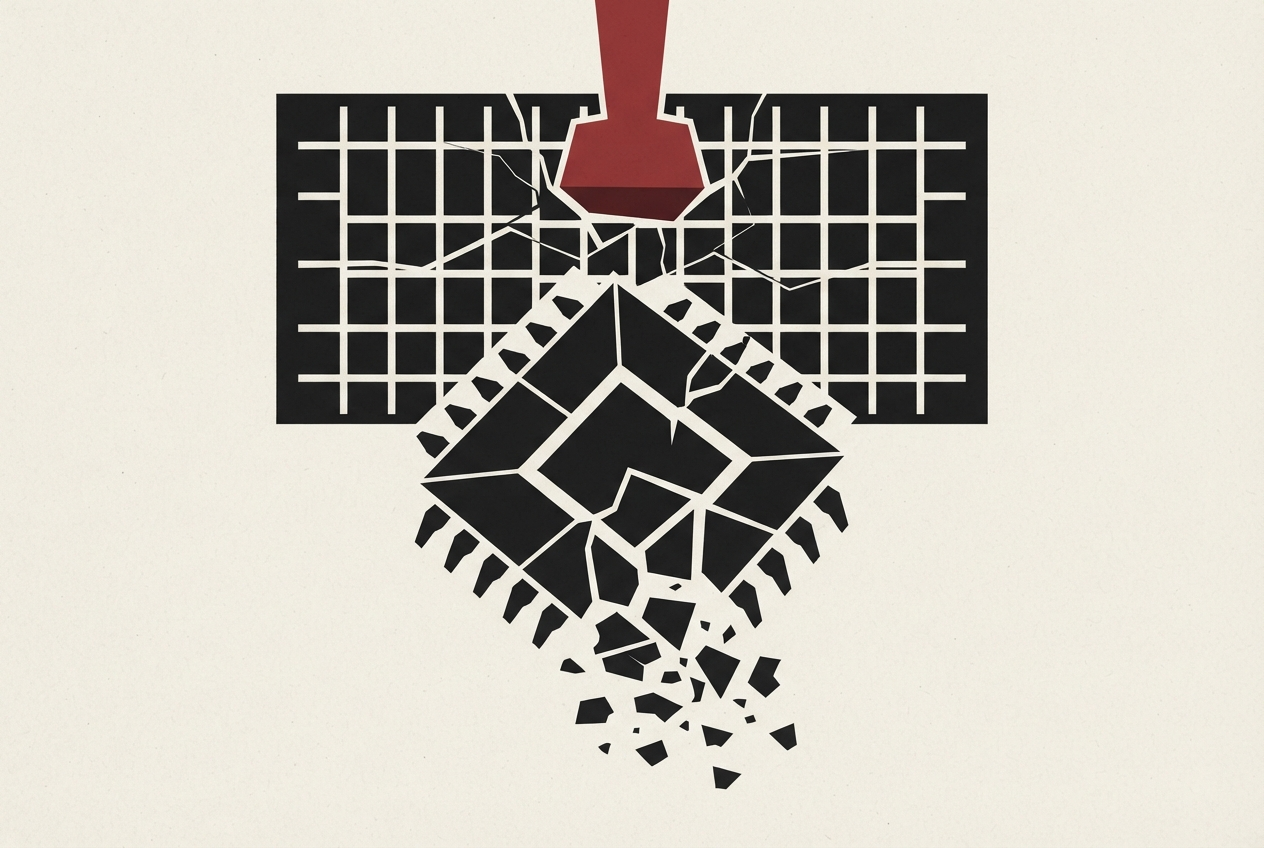
In July, SK Group Chairman Chey Tae-won cautioned that memory prices were abnormal and that failure to lower them could result in a situation similar to Japan's 40 years ago. He was referring to the 1986 agreement between the US and Japan, which was enacted at the height of Japanese chip dominance. At that time, Japanese companies controlled half of the global semiconductor market, but they faced pressure from the US to curb their dominance.
Japan's market share of Intel's DRAM chips dropped to around 1%, prompting Washington to introduce a fair market value system and pressure Tokyo to increase foreign-made chips in the Japanese market to about 20%. Consequently, the US slapped 100% retaliatory tariffs on $300 million worth of Japanese imports, causing Japan's share of the global chip market to fall to the high 20% range a decade later.
Today, Korea's semiconductor industry is facing growing concerns as its trade surplus with the US surpasses $100 billion, surpassing Japan's achievement 40 years ago. American clients are growing dissatisfied with Korean memory semiconductors, whose prices have skyrocketed due to the artificial intelligence investment frenzy. Apple CEO John Ternus has described the memory shortage as an "absolute crisis," and a class-action lawsuit has been filed against Samsung Electronics, SK Hynix, and Micron.
The US Secretary of Commerce Howard Lutnick has outlined the future of American tariff policy, stating that companies building in the US will not face tariffs, while those not building in the US can expect to pay to enter the market.
Recent developments suggest a shift towards reducing dependence on Korea. Apple has tested products from Chinese chipmaker ChangXin Memory Technologies, and Taiwan's TSMC is reportedly considering Nvidia's request to produce next-generation 3D DRAM amid difficulties securing memory supply. While TSMC has denied rumors of entering the DRAM market, this could be a signal for chip clients to seek alternatives, similar to how the US partnered with Korea against Japan 40 years ago.
However, experts suggest it will be challenging for the US to extract one-sided concessions from Korea, as high-bandwidth memory and server DRAM, sectors led by Korean companies, are crucial to the AI infrastructure of American Big Tech.
A semiconductor industry source stated, "Since imposing semiconductor tariffs would also harm American companies, the pressure on Korean chipmakers to accelerate investment in the US could intensify." Despite the differences from 1986, Lee Jun, the director of the Strategic Industries Research Center at the Korea Institute for Industrial Economics and Trade, emphasized that Korea's commanding share of the semiconductor market could become a trigger for economic security risks.
Written by urgent.news from The Hankyoreh's reporting — not their text. Machine-written — may contain errors; check the original before relying on it.
Also reported by 5 other outlets
- In 1986, the US humbled Japan’s dominant chip sector. Is Korea next? hani.co.kr
- South Korea's Lee says Samsung chip packaging expansion to spur $30 billion additional investment channelnewsasia.com
- South Korea's Lee says Samsung chip packaging expansion to spur $30 billion additional investment economictimes.indiatimes.com
- South Korea’s Lee announces $34B Samsung investment plan for advanced chip packaging seekingalpha.com
- South Korea’s Lee says Samsung chip packaging expansion to spur $30 billion additional investment investing.com