Finanzen: Koalition findet Kompromisse für Etat – Stromsteuer ungelöst
Union und SPD ringen darum, den Bundeshaushalt 2027 unter Dach und Fach zu bringen. Kommen noch weitere Steuerentlastungen in letzter Minute?
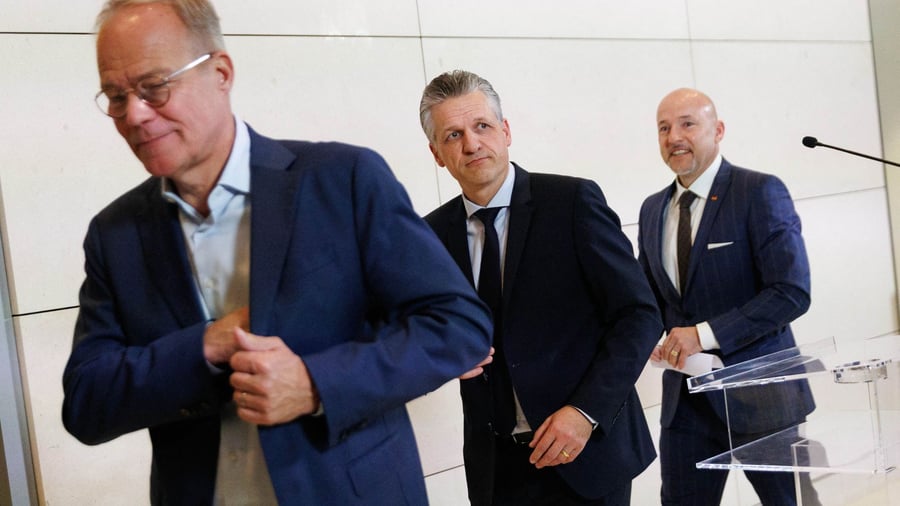
The coalition government has found compromises for several points in the 2027 federal budget, but a desired reduction in the electricity tax remains unresolved. Chancellor Friedrich Merz (CDU) aimed for this tax cut, but Union Fraktion leader Thorsten Frei (CDU) stated that a corresponding financing in the budget has not been found so far.
Union colleague Matthias Miersch noted that overall, a lot of blocks were cleared. Time for further compromises is pressing, as the budget committee convenes for crucial final discussions on Thursday. Government factions met on Wednesday evening for special sessions to assess the progress made. The Union finished three hours after the SPD, who called the atmosphere in the room "tense".
CSU Landesgruppenchef Alexander Hoffmann said the government proposal causes too much discussion in the factions, and this became evident to some extent. The coalition has managed to resolve each challenge so far, it will do the same with the 2027 budget. However, no plastic tax was mentioned. The Union mainly highlighted compromises on new taxes planned.
The sugar tax on highly sweetened drinks will only come into effect from January 1, 2028, instead of the previously planned July 1, 2027. An agreed new tax on plastic packaging will not be introduced next year. An increase in the carbonated beverage tax will not occur. Frei suggested that instead, personnel cuts in the federal administration could be more ambitious.
The SPD stated that social benefits cuts should be particularly avoided for families. After a "fairness check", the child supplement for low earners in the original regulation will remain, excluding asylum seekers. There are still final negotiations on the child supplement for maintenance and parental benefits in the government.
The housing allowance will have a 2027 dynamization that remains intact. Miersch emphasized that the core remains the same. The coalition still needs to clarify further relief from high energy prices if the tank rebate ends at year-end. Frei said the reduction of the electricity tax is "the top priority". They wanted to try to implement the common goal as soon as possible.
Miersch said the SPD primarily relied on an agreed coalition sugar price cap that would not cost the state money. He hoped an "effective mechanism" would be found at the Coalition Committee on Tuesday. Finding a solution at the last minute for the electricity tax seemed unlikely. Theoretically, the required 5.4 billion euros could be raised during the so-called reconciliation session of the budget committee, where last-minute changes to the 2027 budget are made before it is approved by the Bundestag in late November.
The Union and SPD had agreed in their coalition contract to reduce the electricity tax to the European minimum level. However, this has only been implemented for the manufacturing industry and agriculture. The Union also wants to fully compensate the inflationary cold progression in the income tax. If this cannot be financed now, "possibly also retroactively" would be released, Frei said.
Bund, states, and municipalities would cost 4.2 billion euros. As a "cold progression" refers to income tax increases that only compensate for inflation and keep real purchasing power the same, or even lower it. The demand aims at the planned income tax reform, which is to take effect from early 2027. The Finance Minister Lars Klingbeil's (SPD) draft already specifies annual reliefs of 10 billion euros, mainly benefiting small and medium-sized incomes and families with children.
The counter-financing should, among other things, bring the "wealth tax" for very high incomes into effect earlier. The sugar tax has now been divided into three stages, instead of the originally planned two. It will be levied on sodas, lemonades, iced teas, energy drinks, and fruit juice concentrates with added sugar. The branch criticized the new tax stage.
A third stage would burden consumers even more, explained the association of non-alcoholic beverages. The later start date does not increase the permanent higher burden. The Union and SPD had agreed on the introduction of the tax within the context of the approved law for stable health insurance contributions. The recommendations of a commission appointed by the Health Ministry, which made reform proposals, are pending.
Written by urgent.news from Handelsblatt's reporting — not their text. Machine-written — may contain errors; check the original before relying on it.
This story
This is one outlet's version. Read the fullest account.