Climate pledges at COPs need an investment pathway
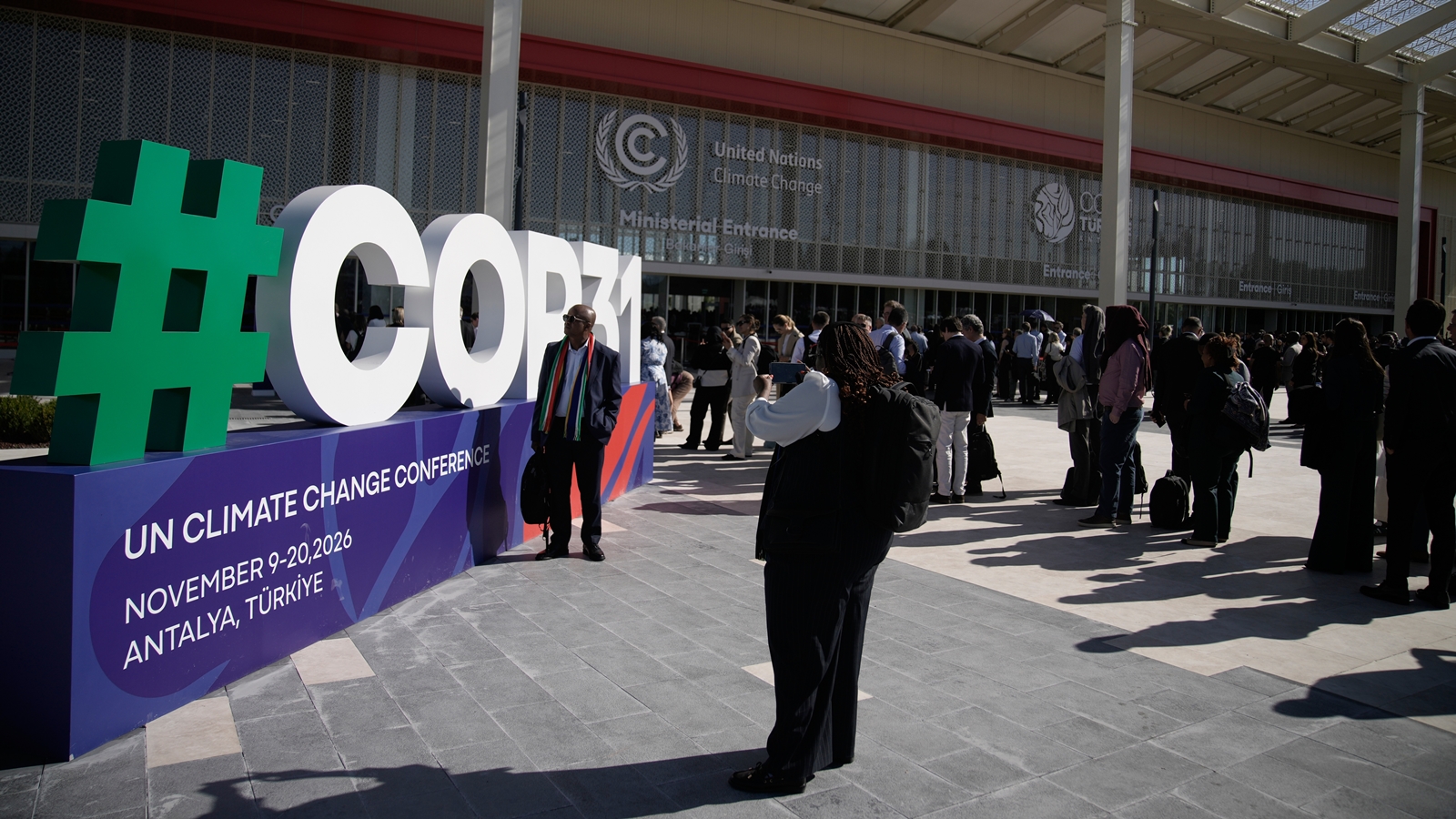
As governments gather at COP31 to discuss climate action, a key question hangs in the air: how swiftly and efficiently will they turn pledges into tangible results? With its reputation as the "implementation COP," the success of COP31 will be measured by the investments, trade and projects that emerge from it. While the disparity between pledged commitments and scientific requirements is well-known, the focus should also be on the underlying reasons for this gap.
In discussions with business leaders worldwide, the primary obstacle identified is not a lack of commitment but rather the absence of the necessary conditions to convert pledges into capital. Stable policy frameworks, credible incentives, common standards, bankable projects and affordable financing are the essential elements missing. This is the message that the International Chamber of Commerce (ICC), the official business focal point in the UN climate process, has been promoting throughout this year.
Three critical areas require immediate attention. Firstly, the transition to clean energy must move beyond merely measuring installed capacity. The goal of 35 percent electrification hinges on whether grids, connections, system design, and regulation keep pace with the rapid deployment of renewable energy. Secondly, adaptation must be treated as a crucial economic priority.
While public funding remains vital for resilience in cases where commercial returns are absent, insurers, lenders and development banks can do more to quantify and demonstrate the financial returns of resilience efforts. The adaptation indicators agreed upon at COP30 must speak the language of the real economy, featuring robust methodologies and accessible data.
The third area of focus is finance. The New Collective Quantified Goal, adopted at COP29, aims to mobilize at least $300 billion annually by 2035, with a broader ambition of $1.3 trillion overall. The main challenge in channeling private capital towards this goal is fixable: excessive costs associated with clean infrastructure lending, insufficient private money injected by multilateral development banks for every dollar they deploy, and credit ratings that overvalue risk in emerging markets.
The ICC's Trade Register, which aggregates performance data from leading banks, has demonstrated that trade and supply-chain finance carries consistently low default rates. This evidence can help regulators and rating agencies accurately price actual risk, thereby lowering the cost of capital.
Carbon markets also exhibit similar patterns. Buyers and sellers need assurance that disputes can be resolved neutrally and outcomes enforced across borders. The ICC's arbitration and mediation services are designed to handle cross-border transition contracts, ensuring a standardized approach for such contracts. International trade accounts for approximately 30 percent of global emissions, yet there is currently no unified definition of sustainable trade.
The ICC's Principles for Sustainable Trade and Trade Finance offer a standardized method to evaluate transactions and rate their sustainability. By directing trade finance towards sustainable supply chains and facilitating exporters' ability to prove their carbon credentials, these principles aim to align trade finance with sustainability goals, particularly in light of emerging carbon border measures.
Small and medium-sized enterprises (SMEs) form the backbone of the global economy, accounting for a significant portion of global emissions. Through the SME Climate Hub, ICC has facilitated commitments from many SMEs to reduce emissions by half by 2030 and achieve net zero by 2050. However, without considering the needs of developing economies, the transition to a clean energy future may remain an uphill battle.
Standards and border measures should be designed with developing economies in mind to avoid becoming new barriers to trade. Technology alone will not guarantee success; healthy ecosystems, sustainable land use, responsible resource management, and a substantial increase in nature-based solutions are essential components of the transition.
Nature-based solutions must receive a far larger share of climate finance than they currently do. If governments create the right conditions and businesses provide the capital, technology, and expertise, COP31 will be remembered as the turning point where climate ambition shifted from mere rhetoric to concrete action.
Written by urgent.news from The Indian Express's reporting — not their text. Machine-written — may contain errors; check the original before relying on it.