Blas de Lezo: The ‘Half-Man’ Who Defeated the British Empire at Cartagena
In March 1741, a British fleet appeared off Cartagena de Indias, determined to capture one of Spain’s most important ports in the Americas. The expedition, commanded by Admiral Edward Vernon, brought an estimated 190 ships and more than 25,000 men, making it one of the largest naval operations of its time. Waiting for them was […]
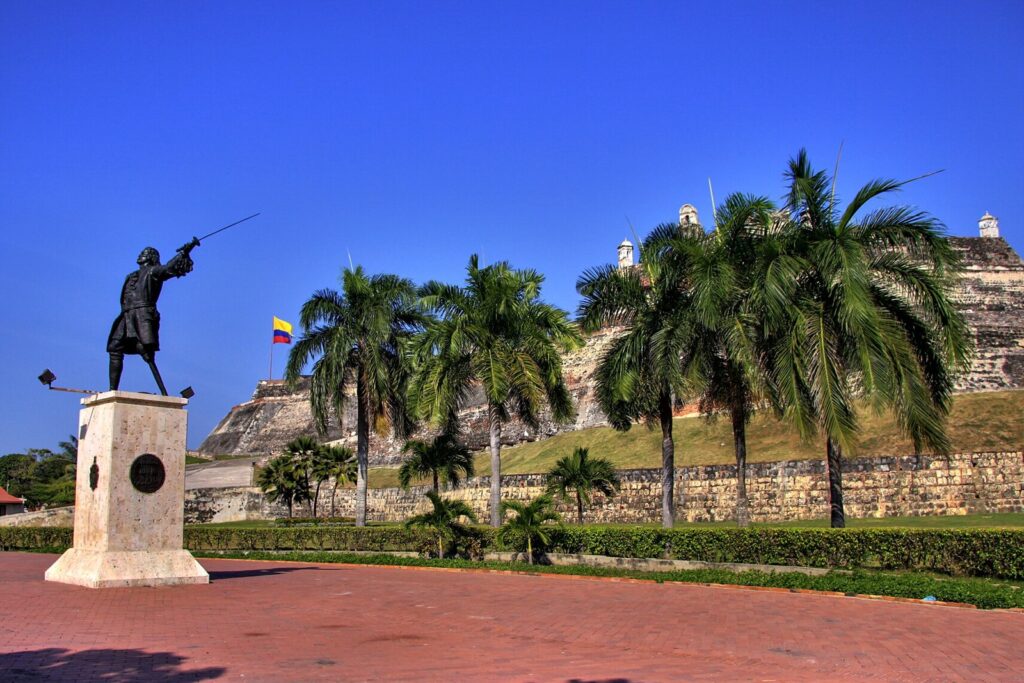
In March 1741, a formidable British fleet under Admiral Edward Vernon embarked on a mission to capture the vital Spanish port of Cartagena de Indias. The fleet consisted of an estimated 190 ships and over 25,000 men, making it one of the largest naval operations of its era. However, standing in their way was Blas de Lezo, a seasoned Spanish admiral who had lost his leg, eye and right arm in previous battles—a moniker that followed him as "Half-Man."
Despite being outnumbered and outgunned, Blas de Lezo's strategic prowess and the defense led by Viceroy Sebastian de Eslava and the city's military forces thwarted the British invasion. The confrontation not only solidified Cartagena's status as a crucial stronghold of the Spanish Empire but also cemented Blas de Lezo's place in naval history as the "Half-Man."
Born in 1689 in Pasajes, Basque Country, Blas de Lezo joined naval service as a teenager and fought during the War of the Spanish Succession. His nickname, Mediohombre, or "Half-Man," referred to the severe injuries he endured in combat, including the loss of his left leg at Velez-Malaga, his left eye at Toulon, and the use of his right arm during the siege of Barcelona.
These injuries did not deter him from serving his country; he continued to lead fleets in the Americas and gained valuable experience confronting European rivals and privateers.
In 1737, Blas de Lezo arrived in Cartagena de Indias to command the Spanish naval squadron stationed there. The city's harbor was of immense importance to Spain's colonial system, as it connected the mainland territories of the Spanish Empire with Caribbean shipping routes and the transatlantic trade network. Losing Cartagena would have dealt a significant blow to Spanish power in the region.
The British attack on Cartagena was part of the War of Jenkins' Ear, a conflict that began in 1739 due to disputes over trade, maritime rights, and British complaints about Spanish enforcement of colonial restrictions. The war, fueled by commercial and imperial rivalries, saw Britain aiming to weaken Spain's control of Caribbean trade and seize strategically important ports. Cartagena, with its crucial role in the movement of goods and precious metals between the Americas and Europe, was a prime target for the British.
Despite assembling a substantial force, the British encountered a formidable challenge in Cartagena. The city's fortifications and defensive geography posed significant obstacles for the British forces. The Spanish defenders, numbering between 3,000 and 4,000 men and six warships, managed to repel the initial British bombardment of the Bocachica entrance to the inner harbor.
Blas de Lezo cleverly used his limited fleet to obstruct British approaches, sinking ships to hinder navigation and making it difficult for the attackers to proceed.
As the British advanced toward the fortress of San Felipe de Barajas, they faced determined resistance from Spanish troops. The British assault was met with fierce fighting, and the defenders' knowledge of the harbor and defensive positions proved advantageous. The British forces suffered from disease, shortages, and the cumulative effects of a prolonged campaign, which weakened their numbers and morale.
By May 20, after weeks of intense combat and mounting difficulties, the British withdrew from the siege, leaving Cartagena firmly under Spanish control.
The failure to capture Cartagena was one of the most humiliating military defeats in Britain's 18th-century Caribbean campaigns. The expedition had incurred significant costs and casualties, and the British fleet had failed to capture its objective despite overwhelming numerical superiority. The news of the defeat reached London in June 1741, sparking public outrage and intensifying political criticism of Prime Minister Robert Walpole's government.
The British authorities initially attempted to conceal the failure and maintain public morale, but the extent of the British disappointment eventually became evident as the truth about the expedition's shortcomings became apparent.
Written by urgent.news from Colombia One's reporting — not their text. Machine-written — may contain errors; check the original before relying on it.