Art Problems: Should I Get an MFA?
Paddy Johnson breaks down the factors to consider when applying for your master’s, from loans and salaries to professional development.
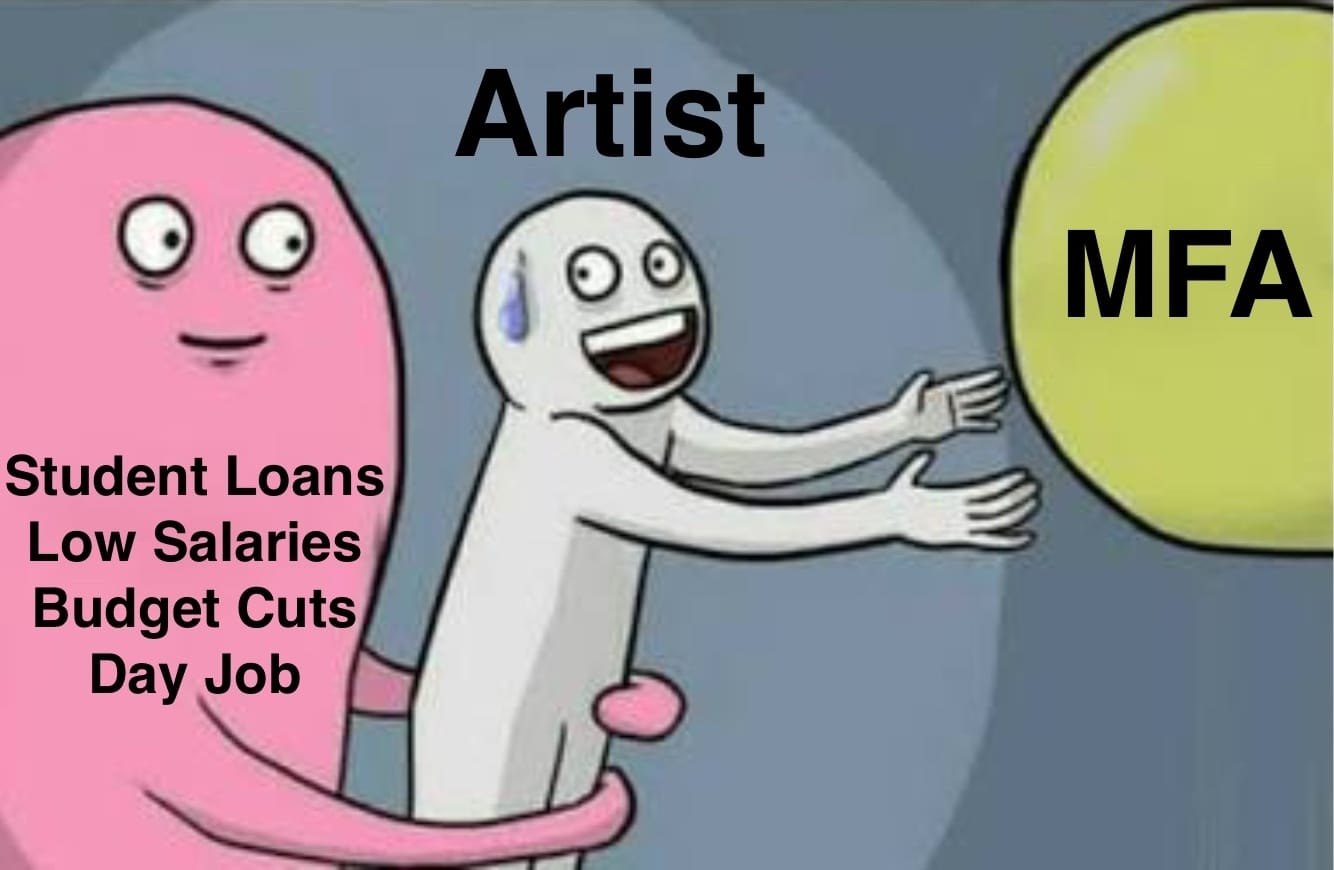
Dear Dazed and Degreeless, a 33-year-old painter currently residing in New York City and earning a living as an art handler, has found themselves pondering the decision to pursue an MFA. With an existing debt of approximately $30,000 from loans and credit card bills, they are contemplating whether a Master of Fine Arts from institutions such as Yale, Columbia, or Hunter University is a worthwhile investment.
Their primary motivations include the potential to gain teaching opportunities, improve their artistic abilities, and broaden their professional network. However, the potential financial burden of an Ivy League education, which could exceed $200,000, leaves them questioning whether such a costly pursuit is necessary.
Though one might assume that art schools are essential to preserving the cultural value of art and ensuring that capitalism does not dictate its worth, this scenario raises an important question: is it possible to afford a lifetime of crippling debt for the sake of an MFA? Ultimately, the decision to invest in an MFA should be based on personal circumstances and long-term goals.
If the prospect of paying off substantial debt for the rest of one's life is a risk that can be taken, then pursuing an MFA could be a valuable move. On the other hand, if financial stability and mental well-being are more important priorities, it may be wise to reconsider the necessity of an MFA and explore alternative paths to achieving artistic and professional aspirations.
Written by urgent.news from Hyperallergic's reporting — not their text. Machine-written — may contain errors; check the original before relying on it.