‘Without storyboards, I feel like I’m in Grand Central station in my underwear’: film’s fightback against AI
As Hollywood begins to adopt the technology, the professionals in most direct jeopardy are the illustrators mapping out directors’ first visions. They sketch out what could be lost A film industry dominated by AI is a dystopian prospect: stories and dialogue generated by large language models, populated by reincarnated screen icons and uncanny humanoids . That is in the future, but the real-world…
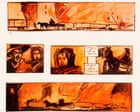
Hollywood is embracing artificial intelligence (AI) technology, while those most affected by its rise are the storyboard artists. These professionals create visual representations of a film's story and scenes to help directors communicate their vision to the cast and crew. Storyboards are crucial in the filmmaking process, serving as a blueprint for how a movie will look, and are often the first step in bringing a script to life.
Emerging AI tools threaten to replace storyboard artists, who are responsible for drawing out scenes using text prompts. While some renowned film directors, such as James Cameron, Steven Soderbergh, and Christopher Nolan, use AI for various purposes, they acknowledge that it can enhance certain aspects of filmmaking, but not replace human creativity.
Martin Scorsese recently partnered with an AI firm to incorporate text-to-image models in his storyboard process for his upcoming movie. Alex Clark, a British storyboard artist, emphasizes the collaborative nature of the process and the importance of conveying a scene's essence through careful mark-making. He explains that storyboarding allows filmmakers to dream and create the cinematic language of the movie.
Clark also highlights the balance between capturing a scene's essence and figuring out how shots will work during filming. The process involves multiple stages, from pre-production to post-production, and storyboard artists play a vital role in conveying the director's vision to the entire team. Storyboarding has a rich history, dating back to the 1930s with Walt Disney, and has been adopted by live-action productions, including Alfred Hitchcock's iconic films.
The storyboard process is an ongoing collaboration that continues throughout the filmmaking journey, revealing the creative vision behind a film.
Written by urgent.news from Guardian Technology's reporting — not their text. Machine-written — may contain errors; check the original before relying on it.