Verteidigung: Polens größte private Rüstungsfirma expandiert nach Deutschland
Mit einem Büro in Berlin will die WB Group künftig auch um Bundeswehraufträge mitbieten. Der Elektronik- und Drohnenspezialist hat jahrelange Ukraine-Erfahrung.
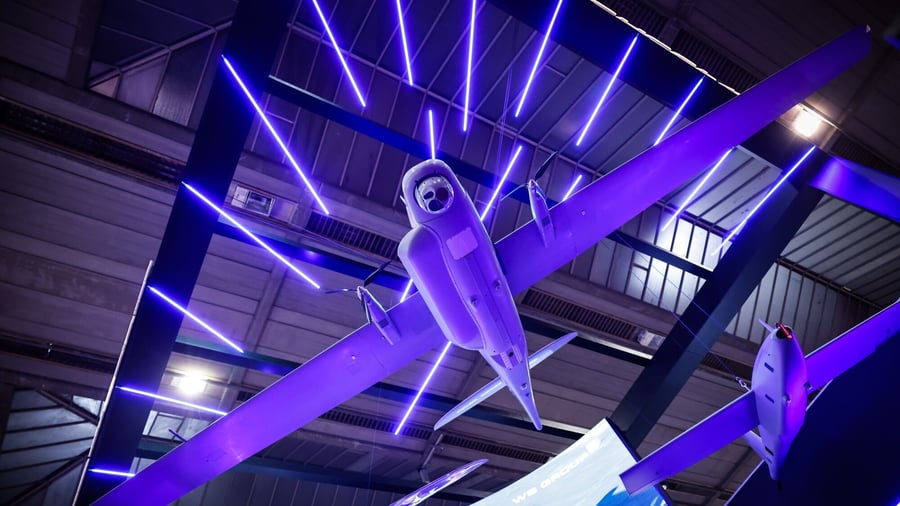
The largest private Polish defense company, WB Group, is expanding its presence in Germany. On Tuesday afternoon, the company opened a representative office in Berlin. Bundesverteidigungsminister Boris Pistorius and Polish Foreign Minister and Deputy Prime Minister Radoslaw Sikorski attended the opening. The manufacturer of military electronics and drones is one of the fastest-growing companies in Poland and is increasingly looking to new markets abroad.
The office's location near the German Defense Ministry underscores the company's goal of being recognized by the Bundeswehr and considered for contracts. With a defense budget that is an enticing pot of money, the company aims to find partners in the German industry and initiate collaborations with researchers at Max-Planck Institutes and Fraunhofer Institutes.
Headed by Poland expert Agnieszka Ozubko, who previously worked for the German Foreign Trade Chamber in Warsaw, the office will seek partnerships, particularly in the development of military vehicles. A cooperation with Volkswagen for military trucks has already been announced, with plans to convert the VW Amarok into the military Antares and a armored version of the VW Bulli called Sirius at the VW factory in Osnabrück.
The company is also working with MAN, a subsidiary of Traton, and plans to equip their military vehicles with electronics and chassis from the WB Group. The exact details of these plans are yet to be revealed. WB Group, with annual revenues of over a billion dollars, is the largest private defense company in Poland and the second-largest after the state-owned PGZ.
Founded in 1997 by engineers Piotr Wojciechowski and Adam Bartosiewicz, who still hold majority ownership, the company is set to go public in 2027. Discussions are underway about a potential IPO, with estimates suggesting a valuation of up to seven billion euros. The company's breakthrough came in 2010 with the licensing of the US Army's digital communication system, Fonet, which has since become a central source of revenue.
The WB Group's fortunes surged during the Ukrainian war, with revenues doubling between 2021 and 2025. The company has already supplied 15,000 drones of various types and ranges to Ukraine since 2014, following the Russian invasion of eastern Ukraine. In 2022, the company built a production facility in Ukraine to service their products locally.
The core competency of the company remains the software it develops in-house, which is used in the Fonet and Topaz systems and accounts for 58 percent of the company's total revenue. Another 20 percent comes from drone sales, with a growing trend in this sector. In addition to aerial drones, the company now offers ground and sea drones.
At the NATO summit in Ankara in the summer, the company presented its vision of the future to attending politicians, showing how a frigate in the Baltic Sea was accompanied by sea drones, which were filmed by an aerial reconnaissance drone. All of this was coordinated by the company's in-house communication system. The Polish state fund PFR, which invested 32 million euros in the company eight years ago, is pleased with its investment, noting that its value has multiplied.
PFR CEO Mikolaj Raczynski told the Handelsblatt that a portion of the fund's 26 percent stake may be sold during the potential IPO, but the fund will not sell its entire stake as WB Group is strategically important to Poland.
Written by urgent.news from Handelsblatt's reporting — not their text. Machine-written — may contain errors; check the original before relying on it.