The Lost World of Aquaterra
Most of human history is waiting to be found. And it’s underwater.
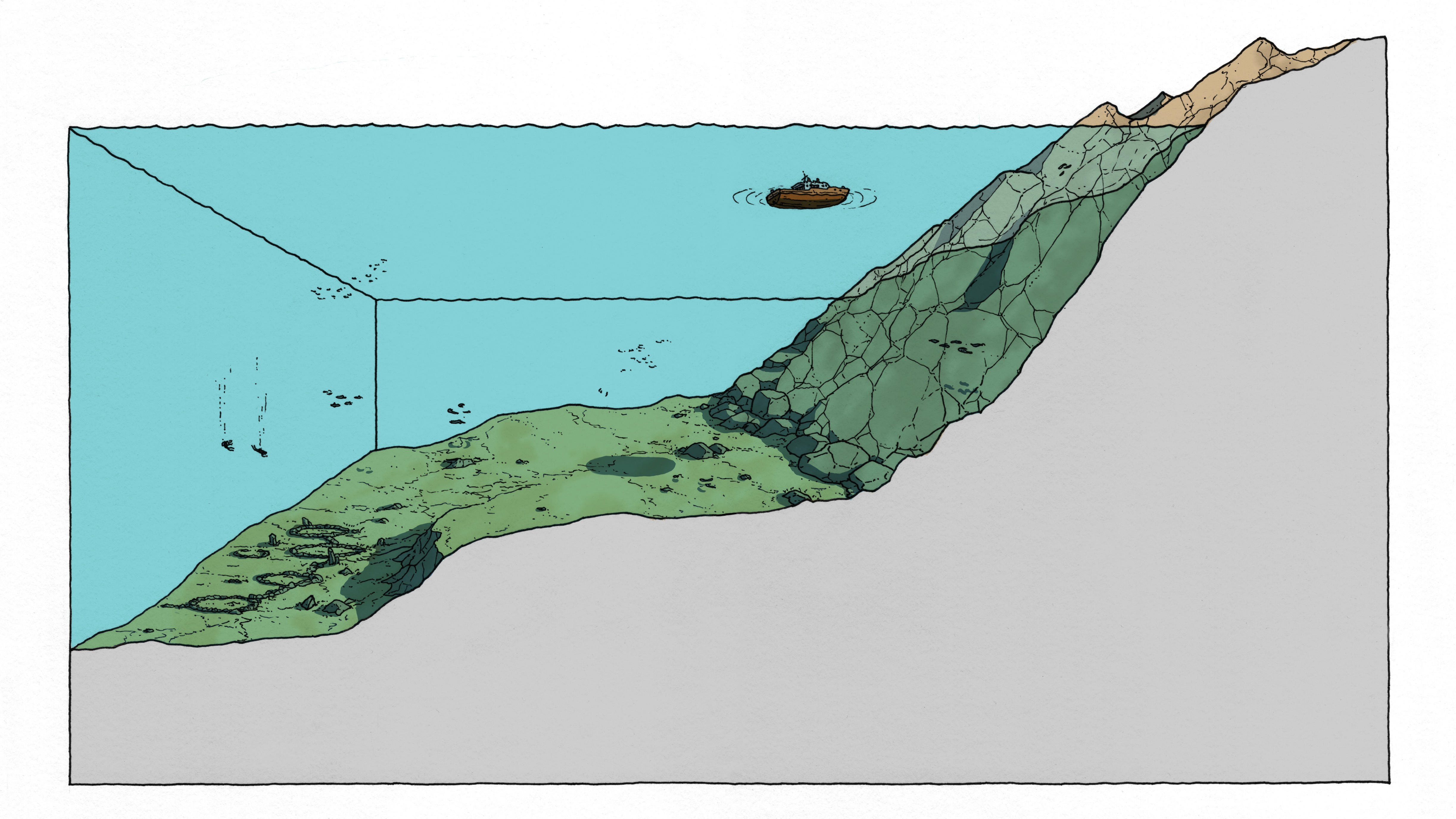
A vast landmass, known as Aquaterra, once covered a significant portion of the Earth's coastal shelves, extending from the tropics near the equator to the polar regions. This area, roughly the size of South America, has been submerged for thousands of years, but its story remains largely unknown.
During the last Ice Age, Aquaterra was composed of various ecosystems, ranging from cold grasslands and tundras in the far north to tropical forests, grasslands, and mangrove swamps near the equator. Human beings are believed to have settled in this region after migrating out of Africa, developing technologies and techniques that enabled them to establish small settlements and accumulate food surpluses.
However, around 20,000 years ago, Aquaterra began to flood, and by 6,000 years ago, it had disappeared entirely. The present-day seafloor of Aquaterra, Dobson argues, is the "least-known zone on earth"—less mapped than the deep ocean floor or even the surfaces of Mars, Venus, and the moon.
As human beings continued to migrate and develop, many of the advancements that define modern society may have originated in the now-submerged lands of Aquaterra. Dobson suggests that understanding this submerged world could provide valuable insights into our past and the roots of human progress.
Rewritten by urgent.news; may contain errors — check the original.
Source: theatlantic.com