SUSE points Rancher Prime’s AI agents at virtual machines and updates its enterprise Linux
Open-source enterprise software company SUSE S.A. today extended the artificial intelligence troubleshooting agents in its SUSE Rancher Prime platform from Kubernetes clusters to virtual machines. The company released version 16.1 of its SUSE Linux Enterprise Server operating system at the same time. The updates are pitched at enterprises trying to run AI workloads next to existing […] The post…
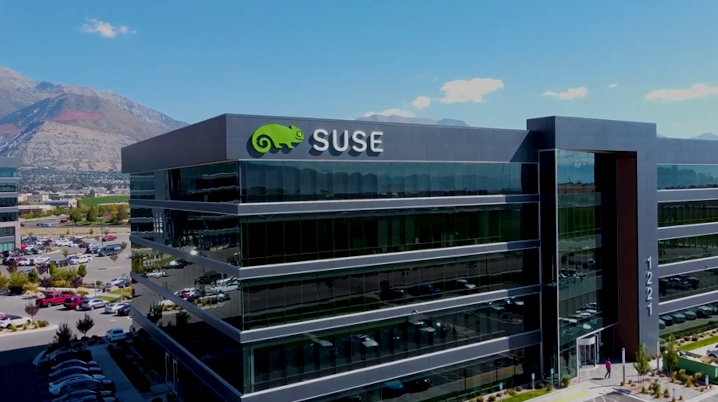
Open-source enterprise software provider SUSE has expanded the AI troubleshooting agents in its SUSE Rancher Prime platform to include virtual machines. This update, released alongside version 16.1 of its SUSE Linux Enterprise Server operating system, targets enterprises seeking to run AI workloads alongside existing applications in hybrid environments.
Research commissioned by SUSE reveals that IT leaders prioritize Kubernetes management as their top investment, followed by AI, with 24% considering AI-assisted troubleshooting as a means to simplify Kubernetes management. SUSE's Chief Technology and Product Officer, Thomas Di Giacomo, emphasizes the need for infrastructure capable of handling new AI workloads alongside existing applications.
SUSE's commitment to open infrastructure allows organizations to adopt AI on their own terms, free from being locked into a single technology stack or vendor. With this update, the AI troubleshooting agents can now monitor virtual machines through a new integration with SUSE Virtualization. Additionally, Liz, the Rancher Prime assistant, can now connect to Model Context Protocol servers, and operators can utilize a server-side dry run to preview the impact of commands before implementation.
SUSE Rancher Prime Virtual Clusters now offers a hosted control plane mode, enabling platform teams to offer Kubernetes as a service on SUSE's RKE2 distribution. Stateful workloads experience up to a 10x performance boost on SUSE Storage's v2 data engine. Version 16.1 of SUSE Linux Enterprise Server consolidates deployments previously requiring separate SUSE products, allowing customers to migrate without disrupting their support lifecycle.
The release also includes an on-box Model Context Protocol (MCP) framework for AI-assisted diagnostics, accelerated infrastructure support from Nvidia Corp., expanded live patching, and preparation for post-quantum cryptography. The SUSE Application Collection now hosts over 1,000 Python libraries, each with a software bill of materials and provenance information for developers to assess dependencies.
Upcoming SUSE Security 6.0 release will feature a vulnerability scanner and anomaly detection component. SUSE Linux Enterprise Server 16.1 and its AI-first Rancher command-line interface are currently available, with the hosted control plane mode for Virtual Clusters in open beta. The remaining Rancher Prime features will follow their own release schedules.
Written by urgent.news from SiliconANGLE's reporting — not their text. Machine-written — may contain errors; check the original before relying on it.