Clouds on the high mountains, dancing in a unique style
Due to climate change, clouds over the Qinghai-Tibet Plateau and the Andes are colder and higher than elsewhere. This could affect local hydrological cycles and radiation processes.
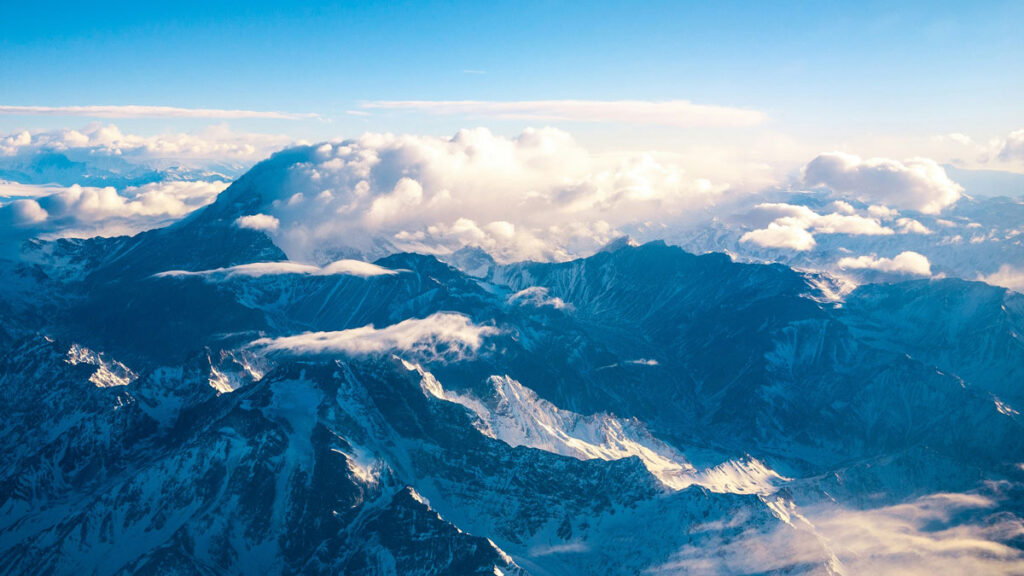
New research reveals that clouds at high altitudes, such as those found on the Qinghai-Tibetan Plateau and the Andes, respond more strongly to global warming than clouds at lower elevations. A study by Zhang et al. analyzed satellite observations and climate data from 2003 to 2022, focusing on cloud quantity, cloud top temperature, and cloud height across several major mountain ranges.
The results show an increasing proportion of liquid and ice clouds, suppressed vertical development, and a reduction in cold cloud formation in most mountain regions. However, cold clouds at higher elevations, like those on the Qinghai-Tibetan Plateau and the Andes, tend to cool further and rise upward at a rate 2-4 times faster than clouds at lower elevations.
In the Qinghai-Tibetan Plateau, this shift may be linked to higher warming rates, destabilizing the region's vertical thermal structure and allowing clouds to develop in higher, colder air layers. Conversely, in the Andes, colder and higher clouds correlate with increased atmospheric water vapor content. Overall, the findings suggest that high-altitude clouds react more intensely and differently to global warming compared to lower elevation regions.
Further research is needed to understand how changes in high-altitude ice clouds on the Qinghai-Tibetan Plateau and the Andes impact the Earth's atmospheric radiation processes, including heat retention or reflection back into space.
Written by urgent.news from Eos's reporting — not their text. Machine-written — may contain errors; check the original before relying on it.