Royal Navy stands up first autonomous boat squadron
Force deploys an operational squadron to gain experience in uncrewed systems as part of its Hybrid Navy vision
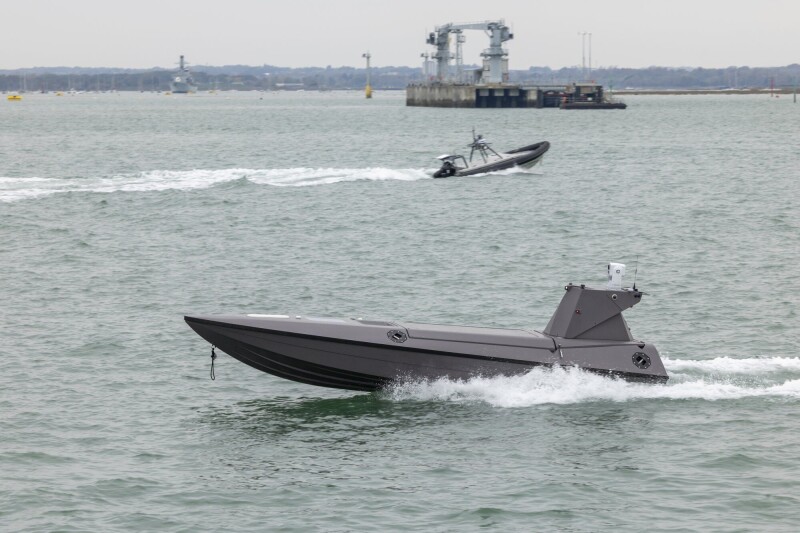
Britain's Royal Navy has formally established its first autonomous boat squadron, deploying unmanned vessels on frontline missions as part of its "Hybrid Navy" strategy. The 1st Autonomous Squadron formally entered active duty on November 5 at a ceremony in Portsmouth Naval Base, marking the end of Project Beehive, the navy's experimental program to develop autonomous and remotely operated vessels.
The squadron is comprised of around 180 personnel, divided into two shifts to ensure 24/7 operations. This new active squadron replaces Project Beehive, which acquired 20 uncrewed boats from UK-based Kraken Technology Group. The Royal Navy is using both Kraken's K3 Scout and SYOS Aerospace's SM400, referred to as the Rattler. The K3 Scout is an 8.4-meter vessel with a top speed of 55 knots and a payload capacity of up to 600 kg, capable of enduring up to 7 days at sea.
The Rattler boat, measuring 7.2 meters, carries a 500 kg modular bay and has a range of up to 950 nautical miles. The squadron's missions include acting as pathfinders for drone operations, supporting the development of additional uncrewed surface vessels (USVs), and conducting a variety of operations alongside other organizations.
Fleet Commander Vice-Admiral Steve Moorhouse hailed the launch of the autonomous squadron as an historic occasion, emphasizing the importance of the "Hybrid Navy" concept in addressing the challenges posed by increasingly contested and dangerous seas. The Royal Navy has also recently launched strike drones from one of its aircraft carriers for the first time, incorporating BAE Systems' one-way drones and Tekever AR5 fixed-wing unmanned aircraft.
Meanwhile, the Ministry of Defence has launched a British-built satellite, Titania, into orbit, which will provide the Armed Forces with enhanced space-based intelligence, surveillance, and reconnaissance capabilities.
Written by urgent.news from The Register's reporting — not their text. Machine-written — may contain errors; check the original before relying on it.