On this day in space! Nov. 10, 2013: Europe's GOCE satellite, the 'Ferrari of space,' fell out of orbit after mapping Earth's gravity field
On Nov. 10, 2013, Europe's GOCE satellite fell to Earth after four years in orbit mapping the planet's gravitational field. Here's why it mattered.
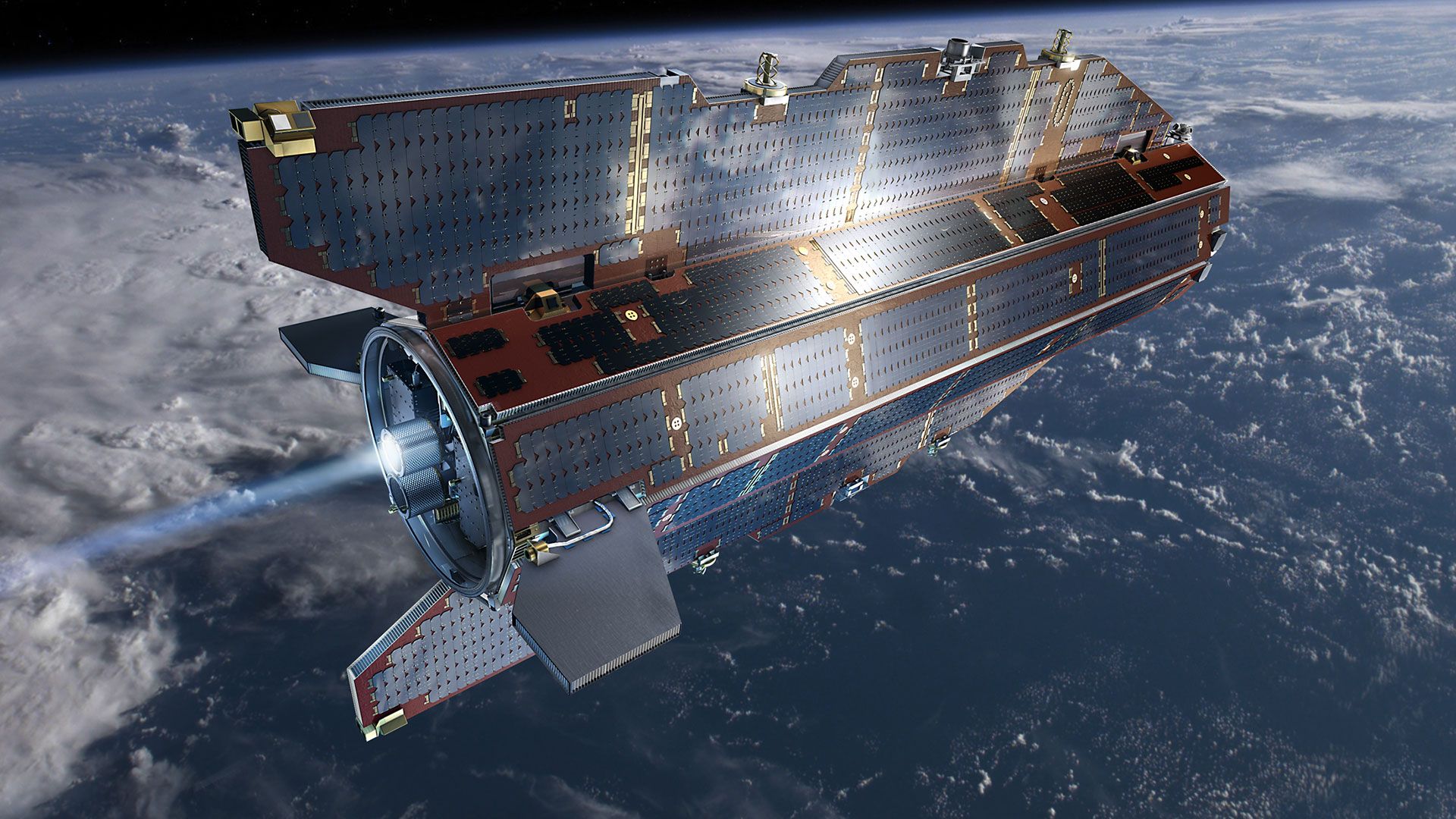
On November 10, 2013, Europe's GOCE satellite met its end as it fell back to Earth after a four-year mission mapping the planet's gravitational field. GOCE, short for Gravity field and steady-state Ocean Circulation Explorer, was launched in 2009 with the ambitious goal of mapping Earth's gravity like never before. However, the spacecraft's successful mission came to an abrupt end when it ran out of fuel, causing it to lose control over its low orbit of just 139 miles (224 kilometers) above Earth.
This low altitude was necessary to counteract the thin atmospheric drag at that height, a feat necessary for GOCE to maintain its position and collect data. Despite its successful mission, the large size of GOCE, weighing 2,425 pounds (1,100 kilograms) and measuring 17 feet (5.3 meters) in length and 3.2 feet (1 meter) in width, made its reentry into Earth's atmosphere a notable event.
About 50 miles (80 kilometers) above the Falkland Islands in the South Atlantic Ocean, the spacecraft disintegrated upon reentry, with at least a quarter of its mass expected to reach the Earth's surface. The European Space Agency hailed the mission as a success, highlighting GOCE's ability to map Earth's gravity field with unprecedented precision and precision, revealing small variations in the planet's gravity, the structure of Earth's crust and mantle, and tracking ocean currents.
Written by urgent.news from Space.com's reporting — not their text. Machine-written — may contain errors; check the original before relying on it.
This story
This is one outlet's version. Read the fullest account.