Gebrauchtwagen-Check: Darum ist der Audi A4 als Gebrauchter beliebt
Der Audi A4 wird oft dienstlich gefahren, darum gibt es viele Gebrauchte auf dem Markt. Die TÜV‑Statistik zeigt, worauf interessierte Käufer achten sollten.
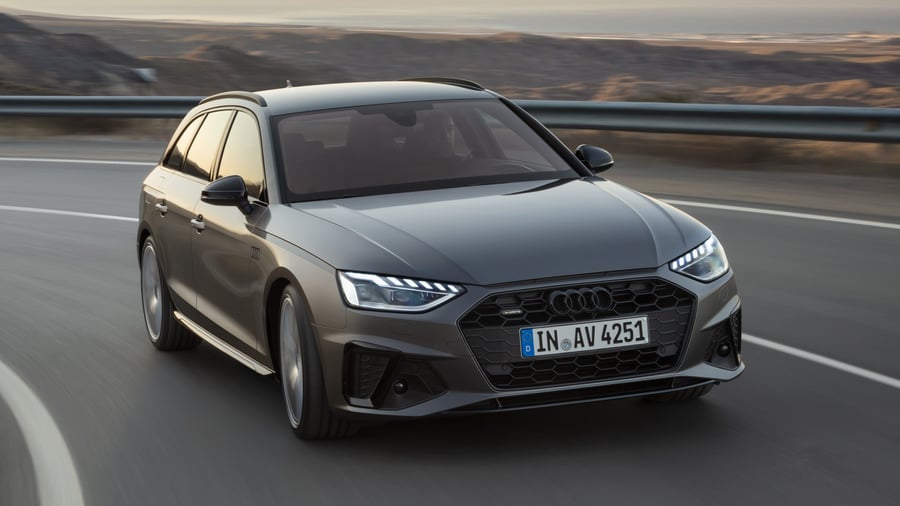
Between late 2015 and late 2024, the fifth generation of Audi A4 (B9) hit the market. This mid-size model was among the favorites of fleet and vehicle park customers, also popular with private buyers. Consequently, the supply on the used car market was abundant. Quality service vehicles are regularly maintained and cared for, which positively affects their TÜV assessment.
It performs well in TÜV main inspections (HU), with failure rates below average despite high mileage. However, the auditors do not approve older vehicles without issues. The auditors criticize the front suspension and especially the drive tires in older cars. The exterior design of the fifth generation changed little compared to the predecessor.
Audi designers made only subtle changes, such as widening the radiator grille. The interior design followed the SUV Q7's design. The most common car body variant of the A4 was the Avant, a wagon. About two-thirds of new orders fell on this variant. The largest car body variant of the A4 was the Avant, a wagon. About two-thirds of new orders fell on this variant.
The car trunk could hold between 505 and 1,510 liters, with a 4.73-meter-long limousine providing a 480-liter cargo volume. In 2019, the A4 received a facelift, including a flatter radiator grille, different LED headlights, side body lines, and a chrome strip between the taillights. The renowned twist-and-turn feature in the center console was omitted; infotainment and navigation were controlled via a display instead.
The engines and drivetrain made the A4 suitable for various preferences. The diesel engine dominated the fleet or service vehicles. The market launch featured diesel engines between 90 kW/122 PS and 200 kW/272 PS. The latter, like the 160 kW/218 PS strong self-igniting unit, was a 3.0-liter six-cylinder and came with all-wheel drive from the factory.
The two-liter diesel was available alongside the entry-level motor with 122 PS and a 3.0-liter six-cylinder with 200 kW/272 PS. The average fuel consumption ranged from 3.7 liters (150 PS) to 5.1 liters (272 PS). Following the facelift, Audi revised the diesel lineup. The base unit increased to 100 kW/136 PS, with a 120 kW/163 PS self-igniting unit added.
The top engine was a 251 kW/341 PS six-cylinder diesel (S4) introduced late 2020, working with mild hybrid assistance. Those looking for a gasoline engine also had options. A 1.4-liter model with 150 PS and a 2.0-liter with 190 PS and 185 kW/252 PS were available in higher trims. A 2.9-liter six-cylinder with 260 kW/354 PS (S4) and a 2.9-liter V6 turbo with 331 kW/450 PS (RS4) catered to petrolheads.
The average fuel consumption ranged from 5.1 liters to 9.2 liters. Diesel options included a gas-based two-liter with 125 kW/170 PS until the end of 2023. The transmission varied depending on the motor, with manual six-speed or automatic gearboxes. Outfitting and safety offered three lines of Audi for the A4. They differed mainly in chromium and wheel design penetration.
Each line also included numerous optional extras, such as sport suspension, leather, matrix headlights, metallic paint, navigation, virtual cockpit, head-up display, and defroster. Assist systems expanded the options for first-time buyers. In summary, the Audi A4 (B9) has performed well in TÜV HU assessments. It looks good and offers ample space.
The engine lineup also caters to various preferences. Prospective buyers should, however, have their desired object professionally inspected, as many vehicles have covered significant mileage. Currently, around 5,000 used A4-B9 models are listed on mobile.de, starting at around 7,000 euros for high-mileage vehicles.
Written by urgent.news from Handelsblatt's reporting — not their text. Machine-written — may contain errors; check the original before relying on it.