Why you probably shouldn't buy gadgets with micro USB ports
USB-C has largely taken over where micro USB used to reign, but you'll still spot (and should skip using) some devices using the older connector.
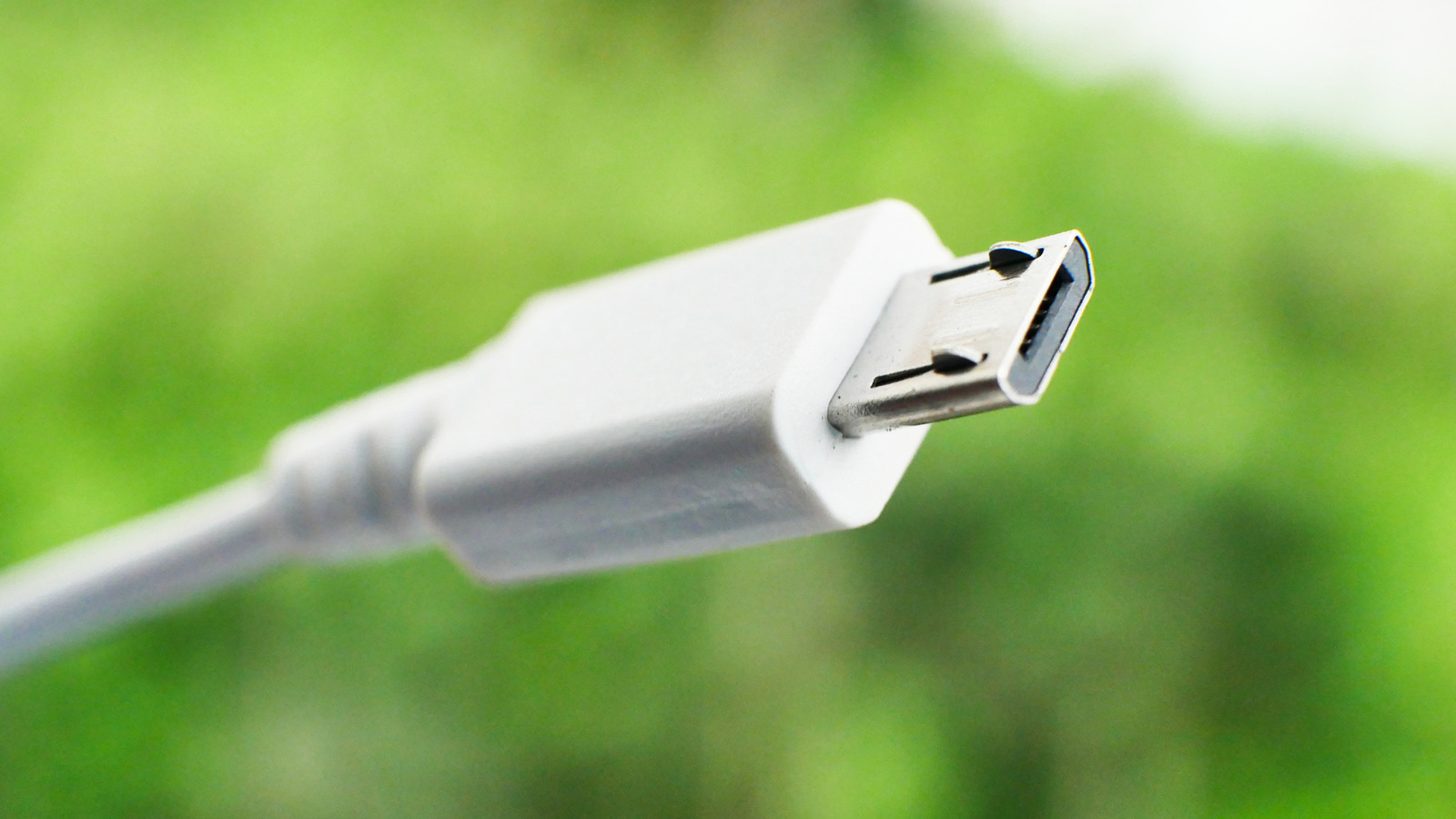
Micro USB may not be entirely gone, but it's wiser to steer clear of it. The USB 1.0 standard has been around since 1996, and since then, the tech industry has branched out into myriad variants. Even on top-of-the-line PCs, you'll likely encounter a blend of USB-A and USB-C ports, forcing you to ponder where to insert USB 4 cables.
Micro USB is among the most widespread variants, having helped disseminate data and charging advantages of USB to compact devices. It succeeded other standards, such as mini USB, but it has endured much longer than others. There's a possibility you still possess a few micro USB products. Even though the transition to USB-C is extensive, you might still discover new cables and accessories to purchase today that still employ the older connection standard.
However, it's best to bypass micro USB when given a choice. Opting for micro USB can only hinder performance and compatibility. Primarily, the existence of micro USB indicates a product is either obsolete or cutting corners. The format originated in 2007, the same year the original iPhone launched and an age in technology. USB-C presumably increases manufacturing expenses, but only marginally.
That standard debuted in 2014, which was well over a decade ago. It has become so commonplace that even affordable USB fans have discarded the micro USB form factor. More critically, micro USB is confined to antiquated data and power specifications. Data speeds are likely to peak at USB 2.0's 480 Mbps, whereas USB 3.0 supports 5 Gbps and USB 4 begins at 40 Gbps.
Power could be the real deal-breaker. Micro USB wall chargers are improbable to furnish any more than 7.5W, which is relatively sluggish compared to some laptops and Android phones that use USB-C to charge at over 100W with modern fast charging standards. In extreme cases, devices that fully capitalize on the USB PD (Power Delivery) standard can achieve 240W.
The compatibility factor mentioned affects convenience. Since micro USB is no longer popular, you'll need to carry different cables compared to those used for charging everything else. This consumes more space in your bag and takes up outlet slots that could be utilized for additional USB-C cables. Adapters may help, but they're cumbersome.
Additionally, there's the practical matter of micro USB not being reversible like USB-C, so you'll have to fumble around to locate the correct orientation occasionally. It's far easier to inadvertently bend the pins in the older standard. As time passes, it will become increasingly challenging to find any new micro USB products, similar to how you can't stroll into a local big-box retailer and assume there will be composite cables for an old VCR.
Micro USB ports are certainly not found on any new smartphone or computer. For certain gadget categories, there's nothing inherently wrong with micro USB. Wireless earbuds, for instance, don't have overly large batteries to charge, so even 7.5W may be sufficient to charge them promptly. Regarding data, 480Mbps should be speedy enough for file transfers under a gigabyte.
In most instances, it's worth retaining the micro USB devices you already own. There's no need to spend money or create electronic waste if the port is the sole drawback of a device. Simply keep a dedicated charging cable on hand for your older Kindle, flashlight, game controller, or similar. However, when it comes to acquiring new items, seek out USB-C.
You're likely to obtain superior performance, and you might even save money in the long run if it means not having to purchase another product prematurely when micro USB's weaknesses surface. USB-C offers advantages even within the categories where micro USB can have value. For example, while the Powerbeats3 boasted up to 12 hours without a case, the Powerbeats Pro 2 come with a USB-C charging case that allows up to 45 hours of total playback. It's difficult to envision that case being attainable at all with micro USB.
Written by urgent.news from Engadget's reporting — not their text. Machine-written — may contain errors; check the original before relying on it.