Why Iran Is Handing Out Iodine Tablets Near Its Nuclear Sites & How They Protect Against Radiation
Iran has reportedly begun distributing iodine tablets to residents living near its nuclear facilities, as fears grow that the United States could strike its atomic sites. The move, which signals preparation for a possible radiological emergency, comes as Washington weighs further military action and Iranian officials warn of wider retaliation. Attention has centred on Pickaxe Mountain, a heavily…
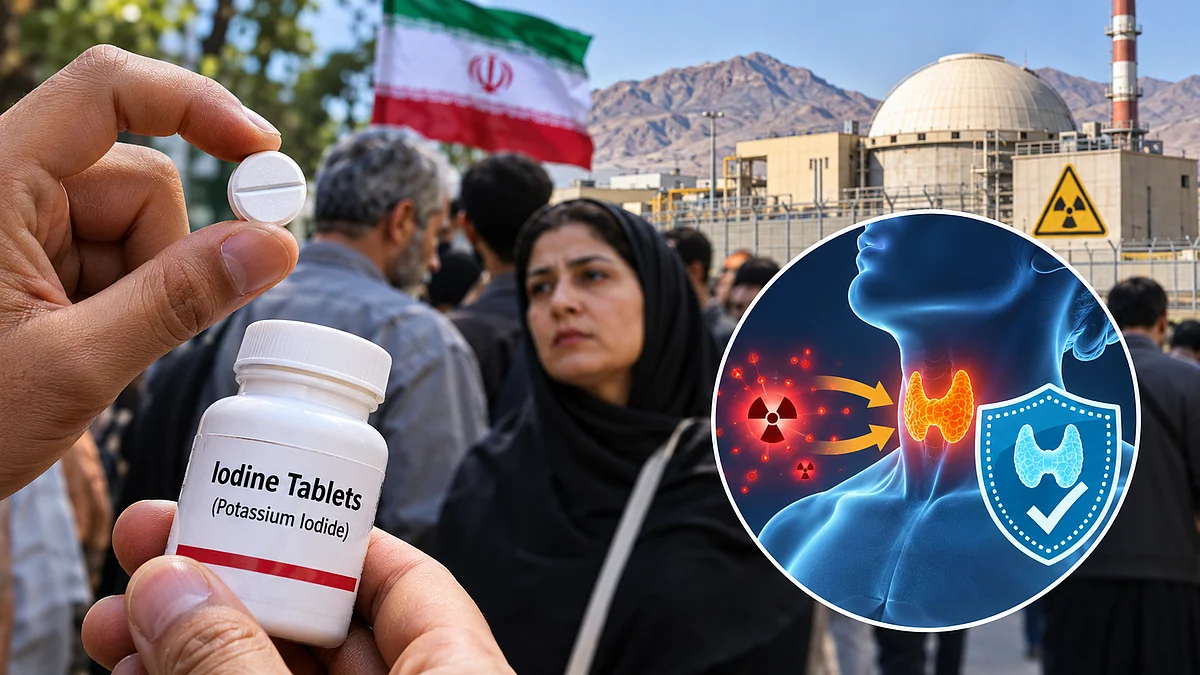
Iran has reportedly started distributing iodine tablets to residents living in proximity to its nuclear sites, as concerns rise over a potential military strike. This move indicates Iran's preparedness for a possible radiological incident and follows Washington's consideration of additional military actions against Iran. The focus has been on Pickaxe Mountain, a heavily guarded complex near Natanz.
The distribution of these tablets, which protect only the thyroid gland, was first reported by The Times of London, citing an Iranian Health Ministry official. The official stated that the administration aims to provide the tablets to areas within two to three kilometers of nuclear installations during any conflict. The official did not disclose the number of tablets distributed or the specific regions covered.
Iodine tablets contain potassium iodide, a stable form of iodine that saturates the thyroid gland, allowing it to absorb less radioactive iodine during a nuclear accident. Studies have shown that when potassium iodide is administered before exposure, the thyroid's intake of radioactive iodine decreases significantly, from an average of 20 percent to under 2 percent.
However, it is essential to understand that these tablets do not shield against other radioactive substances or external radiation and only provide protection for a few days. Children are considered the most vulnerable group, and they are prioritized in most emergency plans due to their heightened risk. The success of iodine tablets in protecting against nuclear radiation is largely dependent on proper timing and dosing.
The 1986 Chernobyl disaster demonstrated the severe consequences of unprotected exposure to radioactive iodine, resulting in a notable increase in childhood thyroid cancer in Belarus, Ukraine, and Russia. In contrast, Poland took swift action and distributed potassium iodide to over 95 percent of its children within three days of the accident, resulting in no increase in thyroid cancer cases within three years of follow-up.
Japan's response to the 2011 Fukushima disaster was uneven, with only a fraction of local governments distributing iodine tablets, resulting in limited protection compared to Chernobyl's experience. Recent applications of this strategy were observed in Ukraine, where iodine tablets were distributed near the Zaporizhzhia nuclear plant following its disconnection from the national grid for the first time in its 40-year existence.
Authorities emphasized that these tablets should only be used as instructed by government officials and not as a preventive measure.
Written by urgent.news from Free Press Journal's reporting — not their text. Machine-written — may contain errors; check the original before relying on it.