What the US midterms mean for Malaysia and the region
THE midterms have shifted the balance of power in Washington, but whether they will alter American foreign policy is an open question. For Malaysia and its neighbours, that distinction carries real consequences.
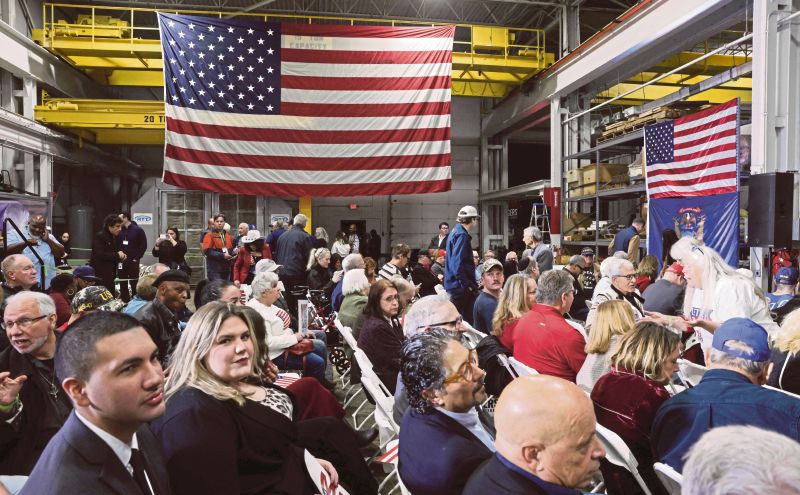
The recent US midterms have resulted in Democrats controlling both houses of Congress, but the extent to which this will impact American foreign policy remains uncertain. Former President Donald Trump retains significant veto power and the ability to obstruct legislation, meaning the Democratic victory may not lead to a more predictable US foreign policy.
The scale of the Republican defeat was notable, with Democrats gaining support even in traditionally conservative states due to issues such as living costs, the Iran war, and Trump's own conduct.
Divided government is not uncommon in American history, and Trump governed with a Democratic House during the final two years of his presidency without showing much deference to Congress. The incoming Democratic Congress will likely investigate the administration, challenge spending decisions, and obstruct legislation, although they lack the numbers to override Trump's vetoes or secure his impeachment.
For Malaysia and its neighbors, the implications of these political shifts are significant. The Democratic victory will complicate presidential appointments, and while Democrats may scrutinize some of Trump's trade policies, economic nationalism and the use of trade for strategic goals continue to enjoy bipartisan support. Malaysia's semiconductor industry and expanding data centre sector are particularly exposed to American scrutiny, as the country is an important participant in global technology supply chains.
Any pushback in the use of economic leverage against trading partners should be taken with caution, as it is unlikely that tariffs or other trade restrictions will change significantly.
Moreover, the relationship between Washington and Beijing may become more complicated, given Trump's willingness to negotiate directly with Chinese President Xi Jinping. While an understanding between the two leaders could offer economic relief or diplomatic success, Congress may challenge concessions involving sensitive technologies or security commitments. American regulators will also retain considerable influence over implementation.
For Southeast Asia, these competing pressures complicate an already difficult relationship with Washington. Countries such as Vietnam, Thailand, Singapore, Indonesia, and the Philippines must navigate the differing interests and priorities of the United States and China in their own unique contexts, making a unified ASEAN response challenging. Nonetheless, the region shares an interest in strengthening its own economic foundations amidst these shifting global dynamics.
Written by urgent.news from New Straits Times's reporting — not their text. Machine-written — may contain errors; check the original before relying on it.