Water surges into nearby work areas after rock mass collapse at Tarbela Dam
SWABI: A rock mass collapsed at the Tarbela Dam 5th Extension Project (T-5) construction site on Monday, causing a surge of water to enter nearby work areas, said the Water and Power Development Authority (Wapda). An emergency was declared following the collapse; construction work was suspended and workers were directed to move to safer areas. However, no loss of life was reported in the…
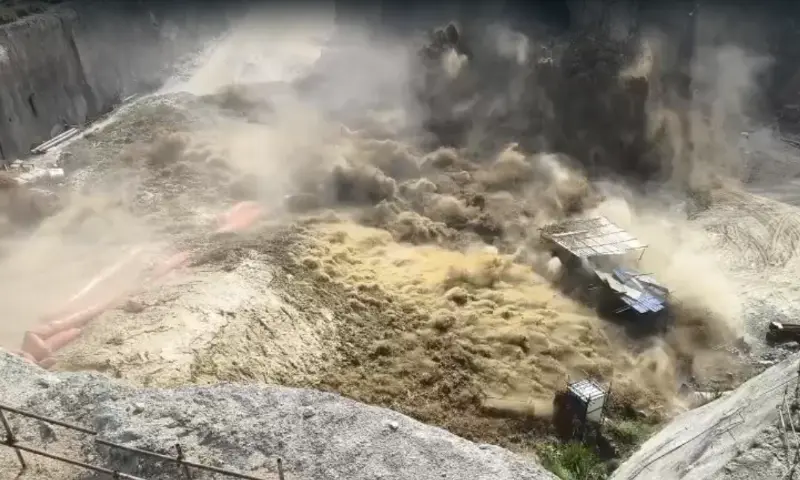
A rock mass collapse at a construction site near the Tarbela Dam led to a surge of water entering nearby work areas on Monday, according to the Water and Power Development Authority (Wapda). The emergency prompted the suspension of construction work and the evacuation of all workers to safer locations. Fortunately, no casualties were reported in the incident.
The authority stated that the collapse occurred in the 2nd Bench Connecting Tunnel during the excavation of the project, allowing water from the Intake Pit to enter the tunnel and power house area. All workers were safely evacuated, and the water from the Intake Pit has since been drained. Wapda officials are now assessing the potential damage to the tunnel, power house, and other structures in the working area.
No damage has been reported to the main tunnel, under-construction power house, tailrace culvert, or switchyard. Additionally, there have been no reports of injuries or fatalities among the workforce. While additional water has been released from Tarbela Dam for "unavoidable" reasons, no threat of flooding has been observed downstream of the dam.
The Swabi Deputy Commissioner urged citizens to take precautionary measures, particularly avoiding contact with the Indus River for activities such as bathing, swimming, and boating. The fifth extension project, which aims to increase Tarbela Dam's installed capacity from 4,888MW to 6,418MW, is being funded by the World Bank and the Asian Infrastructure Investment Bank.
Written by urgent.news from Dawn - Pakistan's reporting — not their text. Machine-written — may contain errors; check the original before relying on it.