Union: Als Letzter sagte auch der Bundeskanzler „Ja“ zu Aigner – Wie er zu der Entscheidung getrieben wurde
Merz schließt sich dem Vorschlag von CSU-Chef Söder an: Ilse Aigner soll Bundespräsidentin werden. Wie es zur Entscheidung kam – und was sie für das Machtgefüge in der Union bedeutet.
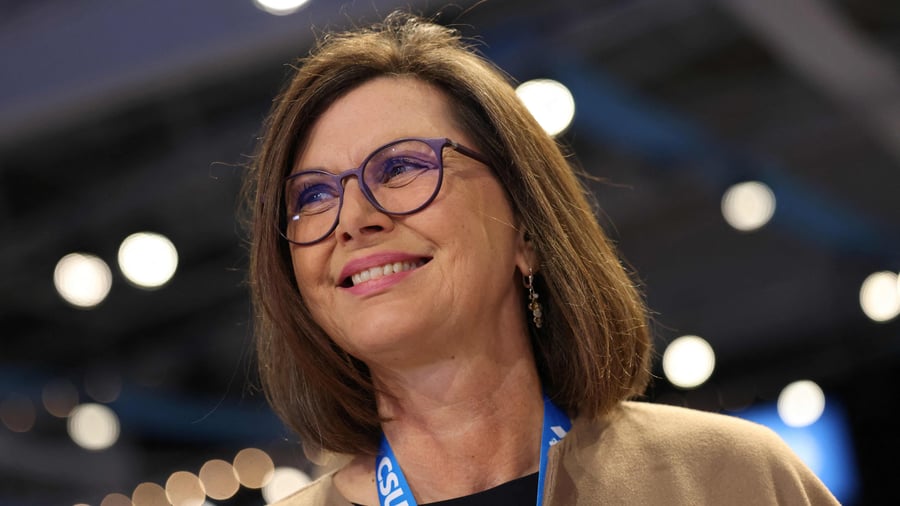
It was only on Sunday evening that the world learned officially what everyone had already suspected: Ilse Aigner is expected to become the next Federal President. The CDU headquarters announced this after a dinner with party leader Friedrich Merz and the Presidium. The 61-year-old will run as the joint candidate of the CDU and CSU at the end of January before the Federal Assembly – the first woman and the first from the CSU.
Both the SPD and the Greens had already signaled their support. And Merz? He once again acted like a cog being overtaken by facts. The Chancellor had avoided a firm decision on who should succeed Frank-Walter Steinmeier until the last moment. Merz finally stated on Monday that a woman should be elected. Since weeks, Markus Söder and the CSU had been pushing hard for Aigner.
While the Chancellor kept silent, more and more CDU politicians supported the CSU candidate. Even politicians from the SPD and Greens had rallied behind the CSU politician. Merz found himself in a dilemma: presenting a different candidate would have led to a conflict with the CSU sister party and the coalition partner SPD. The Chancellor had clearly expressed that he wanted a candidate backed by the political center, preferably by Social Democrats and Greens.
The sluggish decision-making of Merz was attributed to the "governing processes" in the CDU. Merz wanted to talk about a "common proposal" at the CDU Presidium on November 9th. He wanted a "well-ordered process." The entire process was described as "pretty disastrous" by a member of the Federal Executive. Merz had known since the beginning of 2025 that Steinmeier's term would end in March 2027.
On January 31st, it was to be decided by the Federal Assembly who the new head of state would be. Instead of pushing ahead with the plan, Söder brought Aigner into the public eye in April for the first time. Some say he wanted to distract from the CSU's poor performance in the local elections. Others believe Söder knew Aigner had a lot of support in the CSU and wanted to be at the forefront of the movement, knowing that an early announced name rarely ends up being the last one.
Merz has stayed silent since then. "In this case, you really can't blame Söder," said a CDU politician, who tends to be critical of the Bavarian Minister President. The CSU knows that a possible candidacy for Aigner would have been a big topic at the party congress at the end of October. They say they did not manipulate the agreement to clarify the personnel after the state elections in the autumn.
What surprised the CSU was that Merz's environment then announced to the public that Merz still had a personal choice. When Merz, as a speaker at the party congress, mentioned Aigner's name in his welcome speech, there was enthusiastic applause. The debate over the succession was no longer to be stopped. "We have an exceptional person for the role of Landtag President and former Federal Minister, who also has empathy and charm," Söder made clear.
"That is our offer." Merz's lengthy hesitation The Chancellor continued to stay silent. In his surroundings, it was emphasized that the CDU, as the strongest force in the Federal Assembly, "has the right to put forward a candidate or a candidate." There were "a number of suitable options." CDU members were repeatedly named as possible candidates, including CDU President Julia Klöckner, Education Minister Karin Prien, and former party chair and former Defense Minister Annegret Kramp-Karrenbauer.
However, as more politicians from the Union, SPD, and Greens began to support Aigner, the room for maneuver for Merz narrowed. Why did Merz hesitate so long? There are various speculations within the CDU. Some believe the Chancellor had been preoccupied with his office after the disastrous election losses in Berlin, Saxony-Anhalt, and Mecklenburg-West Pomerania.
He simply didn't have the capacity to negotiate an agreement with Söder. Others point to Merz's declining authority: he could not enforce the CSU candidate Aigner within his own ranks, so he played for time. In North Rhine-Westphalia, there were still reservations against a CSU Federal President. Merz might have also underestimated the mood in the CDU, said a leading Union politician: The Chancellor feared that there would be strong resistance in the party against a CSU Federal President, which was not the case in Aigner's case.
Whatever the reasons, in the end, Merz seemed like a cog. He didn't have the strength to enforce his own candidate, but had to accept Söder's proposal. This could also mean his candidacy for the chancellorship.
Written by urgent.news from Handelsblatt's reporting — not their text. Machine-written — may contain errors; check the original before relying on it.
This story
This is one outlet's version. Read the fullest account.