UCC crop scientist calls for investment in neglected crops to boost food security
Professor Michael Osei Adu, a Professor of Crop Ecophysiology and Improvement at the University of Cape Coast (UCC), has called for more research and increased investment in neglected and underutilised food crops to strengthen food security in Ghana and Africa. The post UCC crop scientist calls for investment in neglected crops to boost food security appeared first on Ghana Business News .
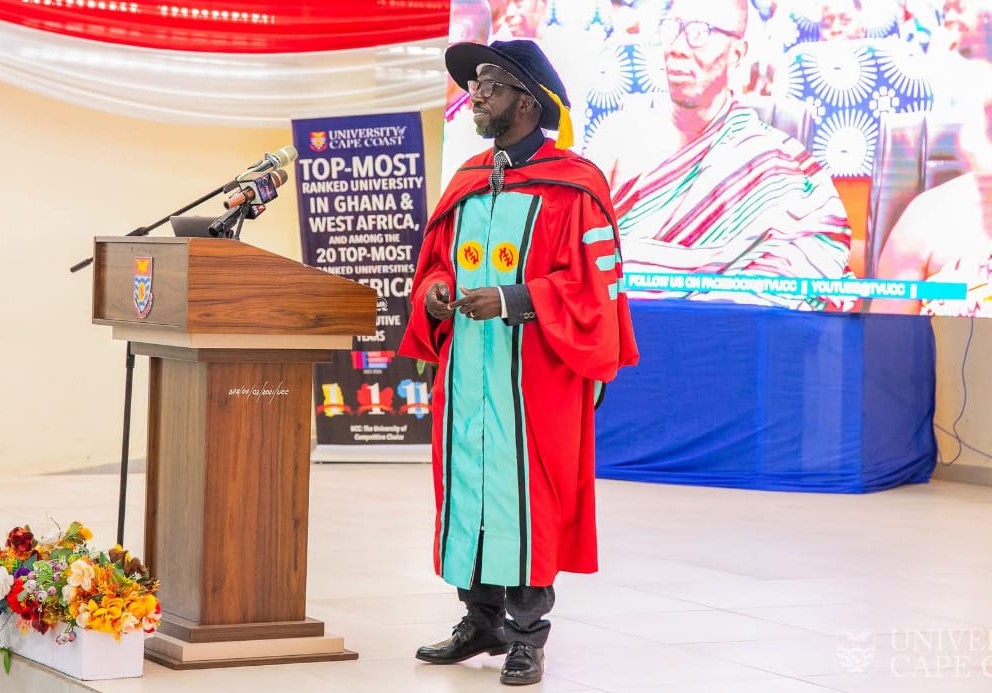
Professor Michael Osei Adu, a crop ecophysiology and improvement expert at the University of Cape Coast (UCC), has urged increased research and funding for neglected food crops to enhance food security in Ghana and Africa. Acknowledging that 60% of the world's food energy stems from just three crops—rice, maize, and wheat—he cautioned that excessive reliance on these staples could jeopardize global food security.
Consequently, he advocated for diversifying food production by prioritizing neglected staples, particularly those that had been previously overlooked.
During his inaugural lecture, titled "The underground gospel: roots, the neglected, and the tuberous route to Africa’s food security," Professor Adu argued that many neglected crops like cocoyam, taro, water yam, and garden eggs hold untapped potential due to insufficient research, limited crop improvement, and weak seed systems.
These crops possess attributes such as high nutritional value, environmental resilience, cultural heritage preservation, and support for rural livelihoods. He emphasized that food security entails not only boosting crop yields but also ensuring access to nutrient-rich food, asserting that their value has been neglected rather than lacking it.
Professor Adu underscored the significance of studying plant root systems, as they dictate how crops absorb water and nutrients from the soil. By comprehending root architecture, scientists could develop crop varieties more adept at withstanding challenges such as erratic rainfall, drought, poor soil fertility, and pest infestations. He specifically highlighted the need for research into neglected root and tuber crops to boost their productivity and resilience against environmental stresses.
Citing issues like erratic rainfall, drought, and poor soil fertility in Ghana and numerous African regions, Professor Adu urged for more research to enhance crop roots' resilience and productivity. To aid this endeavor, he said his team has been conducting studies and gathering data to predict and improve yields of crops including maize, cowpea, yam, cassava, sorghum, millet, and okra.
A recent study by his team discovered that only 17% of 893 reviewed research works focused on root systems of roots and tubers. The study also revealed that countries like the United States and Asia conducted more research on cassava than Ghana and Nigeria, despite the crop's importance to their food systems.
Professor Adu called for establishing dedicated crop-breeding programs to create improved varieties of root and tuber crops with higher yields and enhanced resistance to pests, diseases, and shifting climatic conditions. He stressed the importance of deliberate efforts to diversify food production and invest in neglected crops to build resilient food systems and safeguard Africa's food security.
Written by urgent.news from Ghana Business News's reporting — not their text. Machine-written — may contain errors; check the original before relying on it.