The Problem With Mississippi’s Voter Rolls
Tens of thousands of voters in the state were shifted to “inactive” status.
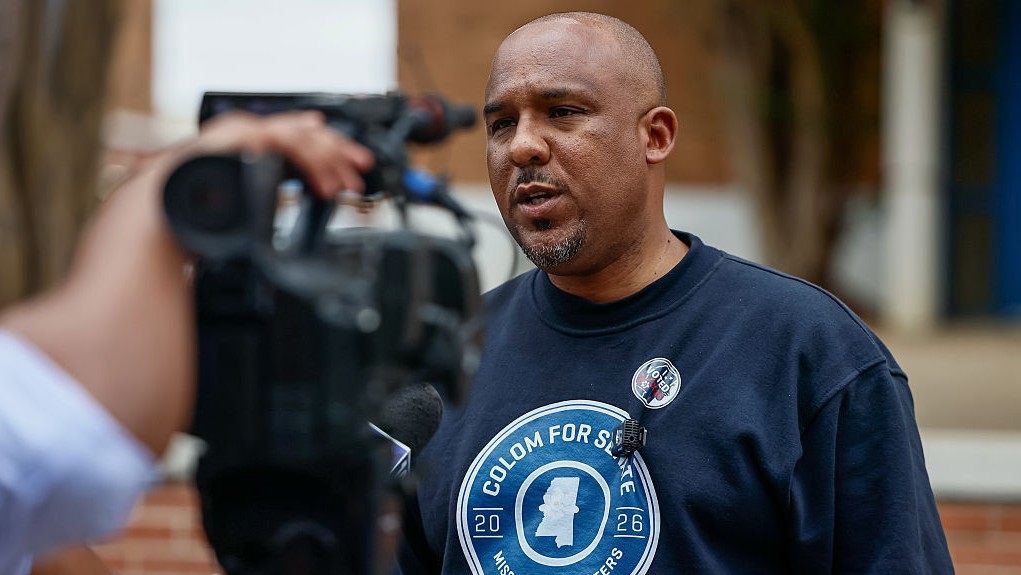
Last summer, Mississippi embarked on an initiative to enhance the accuracy of its voter rolls and bolster election integrity, according to Republican Secretary of State Michael Watson. Utilizing data from Experian, the state reviewed its list of registered voters, identifying those who had moved, left the state, or passed away. As a result, tens of thousands of Mississippians had their active registrations marked as inactive, paving the way for their removal from the rolls.
On Tuesday, many of these inactive voters arrived at polling stations, only to be informed that they were not properly registered. Their only recourse was to complete an affidavit ballot, a more involved process that significantly reduces the chances of their vote being counted. The outcome of this process is now being scrutinized, as a Senate seat hangs in the balance, with Democratic challenger Scott Colom leading Republican incumbent Cindy Hyde-Smith by approximately 2,500 votes.
Voting-rights advocates argue that Mississippi, a state with a history of voter suppression and discrimination, has yet again undermined a fundamental right of its citizens. Experian now asserts that its data were never intended to be utilized in this manner to cleanse Mississippi's voter rolls. Watson claimed on social media that the inconvenience of filling out an affidavit ballot was "well worth the election integrity gained by having cleaner voter rolls!"
The post-election legal battle over the affidavit ballots is intensifying, with lawyers from both campaigns and voting-rights groups debating how these ballots should be treated. Hyde-Smith's campaign has advocated for them to be segregated from regular ballots, potentially seeking to contest their validity in the coming days. Conversely, Colom's team maintains that there is no legal justification for treating affidavit ballots differently once they have been processed.
The ongoing dispute echoes past efforts by Mississippi to systematically disenfranchise Black voters. In DeSoto County, located south of Memphis and populated by one of the state's largest Black populations, inactive voter registrations surged in recent months, resulting in a nearly 10,000-person drop in active voters between September and October, according to state data.
A 2025 review conducted by the U.S. Election Assistance Commission revealed that areas with a higher proportion of Black residents were more prone to flagging residents' addresses for change, potentially leading to voter inactivations. Experian, which possesses a national database to identify potential moves to new addresses, has severed ties with Mississippi since early 2025.
Scott Anderson, Experian's vice president for corporate communications, revealed that the company had provided the state with supplemental address information, not designed to validate voter records. Despite warnings that the data might be erroneous and potentially exacerbate issues, Mississippi proceeded with its aggressive approach.
Scott Anderson stated that Experian ceased providing services to Mississippi following this incident. Mississippi proceeded, notwithstanding warnings from officials and voting-rights advocates that the data were prone to errors and could introduce more problems than they resolved. One such official, Jim Hood, a Democrat who served as Mississippi's attorney general from 2004 to 2020, sued Experian in 2014 over inaccuracies in its credit reports, ultimately settling for $7.2 million.
Hood expressed reluctance to engage with Experian, especially concerning citizens' constitutional right to vote. Hood's daughter was among those told on Tuesday that she was no longer an active voter, despite her regular attendance at her usual polling station. The extent of other Mississippians who arrived to vote and discovered they had been inactivated remains uncertain, with some advocates estimating that between 10,000 and 25,000 affidavit ballots may remain uncounted, potentially shifting the outcome of the race.
Half a dozen voters who had to fill out affidavit ballots expressed uncertainty about whether their votes will be counted; the state reports that nearly a quarter of such ballots are being rejected. Watson stated in a statement last week that his office received "multiple calls" regarding inactive voters on Election Day, but he seemed to downplay the impact.
"Voter roll maintenance is the cornerstone of election integrity," he wrote on X. He has since assured Mississippians that every legal vote will be counted, describing the affidavit-ballot process as a "safety net for errors." Attempts to contact his office and cellphone yielded no response. For Virginia Gordon-Lang, whose mother instilled in her the importance of voting, the situation is particularly disheartening.
Gordon-Lang recounted her mother's guidance as they attended church or school to cast their ballots. On Election Day, she visited three different locations to vote for Colom but was not found on any eligible voter lists. At the final precinct, a poll worker informed her that she was not on the active-voter list. Gordon-Lang, a Marine Corps veteran who had relocated in April, told the worker that she had completed the necessary paperwork weeks earlier, confirming her home address.
Written by urgent.news from The Atlantic's reporting — not their text. Machine-written — may contain errors; check the original before relying on it.