The Continuing Threat Of El Nino Is Quite Ominous In 2027
Uneven temporal and spatial distribution of the southwest monsoon during the June-September cycle has already resulted in a significant decline in production of major agricultural crops, including rice, pulses, coarse cereals, oilseeds, cotton, and sugarcane. Surprisingly, even by early November, the Union Ministry of Agriculture has not released the first advance estimate of Kharif 2026-27 crop…
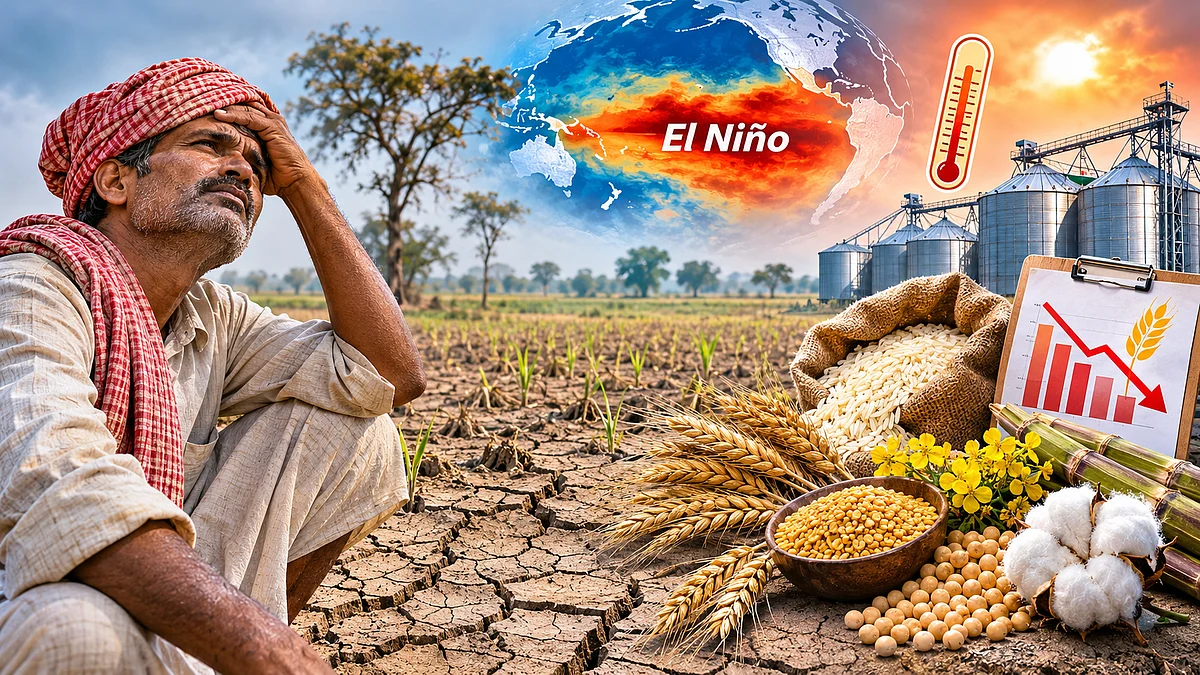
The potential impacts of El Nino in 2027 are growing increasingly ominous, according to recent forecasts. The southwest monsoon's uneven distribution during the June-September cycle has already caused a significant drop in major crop production, including rice, pulses, coarse cereals, oilseeds, cotton, and sugarcane. As of early November, the Union Ministry of Agriculture has not yet released the first advance estimate of Kharif 2026-27 crop production, typically done by the last week of September.
A more severe El Nino is expected during the October-December period, which overlaps with both the Kharif harvest and the planting of Rabi crops like wheat, oilseeds, and pulses. The key states for Rabi crops are Punjab, Haryana, Uttar Pradesh, Rajasthan, and Madhya Pradesh, all of which have experienced varying degrees of rain deficit and dry conditions. Many regions have seen reduced Rabi area coverage compared to the same period last year.
Farmers are hesitant to plant due to poor subsoil moisture in many areas that faced a significant precipitation shortfall by the end of September. Water levels in major reservoirs are below average, and there is no assurance that winter rains will materialize to improve soil moisture conditions. Additionally, a potential heatwave in February/March could negatively affect yields.
El Nino in 2026-27 is also increasing the drought risk in Southeast Asia and Southern Africa, where crops like rice, palm oil, and coffee face higher drought risks, potentially raising food inflation. While India's foodgrain stock in the central pool is currently 87 million tonnes, mostly above the buffer norm, the country is still vulnerable due to the adverse impact on Kharif rice production (down 8-10 million tonnes from the previous year's Kharif) and the looming threat to the upcoming wheat crop.
The government has taken some policy measures, such as mandating a weekly stock declaration for rice and paddy and authorizing southern states to impose stock limits on rice and paddy. The Open Market Sale Scheme target for domestic rice sales has been doubled to 5.0 million tonnes. However, there are concerns about potential export restrictions and restrictions on the diversion of rice for ethanol.
Despite the challenging farm situation, the outlook remains ominous, with geopolitical developments, such as the Persian Gulf region, driving up production costs for agricultural crops. Supply chains are disrupted due to the threat of military action, rising ocean freight costs, and longer voyage times. These factors coincide with elections in Uttar Pradesh, Punjab, and Gujarat in the first three months of 2027.
Written by urgent.news from Free Press Journal's reporting — not their text. Machine-written — may contain errors; check the original before relying on it.