The Broken Promise of a Home in Spain
The division in Spanish society today runs between those who can still envision a future and those who cannot. Housing is where this line is drawn most sharply.
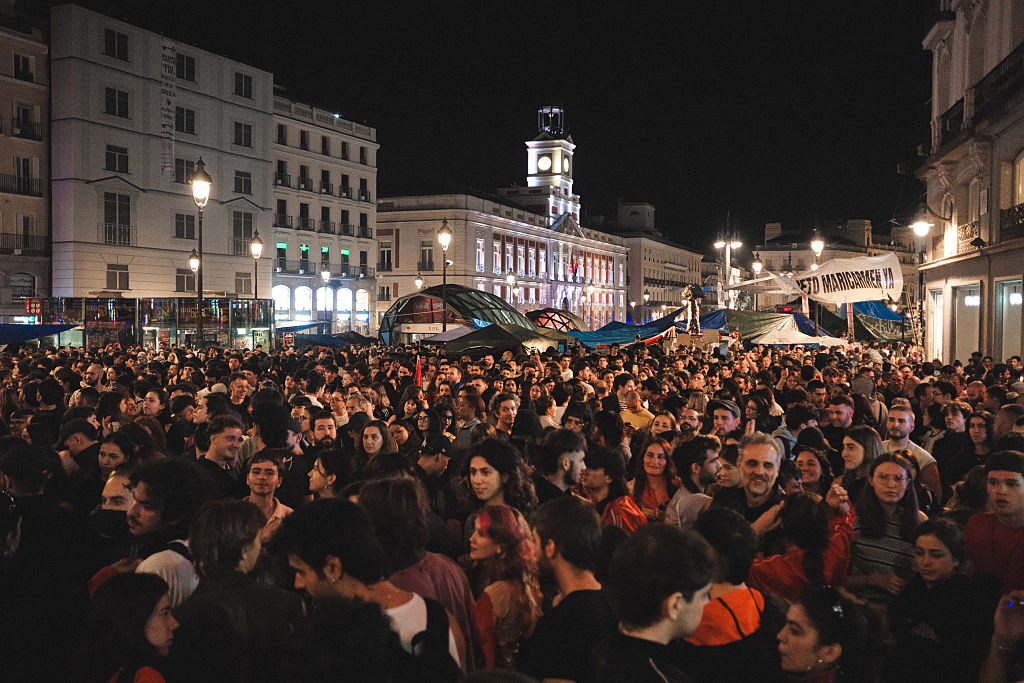
On October 2, 2026, demonstrators convened at Madrid’s Puerta del Sol to protest Spain’s housing crisis. This marked the moment when 87-year-old Maricarmen Abascal met her demise in a hospital, fourteen days after being removed from her home. For decades, Maricarmen dwelled in the apartment situated in the prestigious Ibiza district, near El Retiro park and the city center of Madrid.
The eviction of Maricarmen had sparked outrage on September 23, as she was forcibly removed from her dwelling while neighbors and activists attempted to halt the process. Her case was but one among many, as thousands gathered in the Puerta del Sol to voice their grievances, rallying under the slogan: "¡Ni una Maricarmen más!" (Not one more Maricarmen!).
Prime Minister Pedro Sánchez’s administration had hastily endorsed two decrees to cease evictions of vulnerable individuals; however, Congress subsequently thwarted these measures. The opposition stemmed from right-wing and far-right parties, including the Catalan pro-independence Junts, which had aided Sánchez's ascent to power in 2023, but later renounced its support, citing the concerns of small property owners.
Shortly after, Sánchez dissolved the parliament and announced general elections scheduled for November 29. It is uncommon for a European government to succumb to such a fate over a housing matter, typically falling to corruption, budget disputes, debt, or war. The Sánchez administration had maintained stability despite its narrow parliamentary majority and a contentious amnesty for Catalan separatist leaders responsible for the 2017 secession attempt, which secured its office.
Now, it has crumbled, at least in part, over a matter that often remains a private shame rather than a political issue: where and how individuals reside. The idea of owning one's home is not new in Spain, yet it has recently become a prominent political issue. Housing, previously a silent source of unease, has emerged as a significant inequality issue across developed nations.
In New York, Democratic Socialist Zohran Mamdani capitalized on rent freezes during his election campaign; in Berlin, Die Linke, an election-winning left-wing party, focused on housing. This highlights that housing has become a major catalyst for inequality in the developed world. In Maricarmen's case, she had lived in the apartment since her father’s lease in the mid-1950s, which was later transferred to her mother and, upon her passing in 2005, to her.
In 2018, a real estate company attempting to purchase the apartment for approximately €250,000 ($280,829) bid beyond Maricarmen's modest pension of around €1,400 ($1,573). Moreover, Urbagestión Desarrollo e Inversión S.L., another firm, acquired the property in 2020 and initiated eviction proceedings, arguing that the lease extension for Maricarmen was limited to two years post her mother's death in 2005.
Urbagestión demanded a rent beyond Maricarmen's pension, leading the courts to rule in favor of the owners. Maricarmen's predicament was not an isolated incident; millions of Spaniards find themselves in similar straits, maintaining financial stability while having no buffer against skyrocketing housing costs. In Spain, economic indicators suggest a robust economy, with growth rates even exceeding the eurozone average in 2025.
Yet, one in four people remains at risk of poverty or social exclusion, underscoring that the housing crisis transcends conventional poverty measures. Maricarmen's story is emblematic of this broader issue—a vulnerability born from the power wielded by real estate owners who fix housing prices, thus rendering many unable to afford a home without forfeiting their livelihoods.
It is a matter of political responsibility as well, as those with the capacity to impose limits have been reluctant to act. A home is more than a shelter; it is a repository of memories, a symbol of personal autonomy, and a manifestation of one's identity. The arrangement of one's belongings, the sentimental value of items stored away, and the familiarity of every corner are irrevocably lost when someone is forcibly displaced from their dwelling, especially at an advanced age.
Maricarmen's eviction from her beloved Ibiza neighborhood home at the age of 87 encapsulates the profound impact such a disruption can have.
Written by urgent.news from Time's reporting — not their text. Machine-written — may contain errors; check the original before relying on it.