Terracotta cockerel vase: A 2,600-year-old Etruscan inkwell featuring 26 letters of the undeciphered ancient language
This tiny inkwell contains an alphabetic inscription in ancient Etruscan, a language that has never been fully decoded.
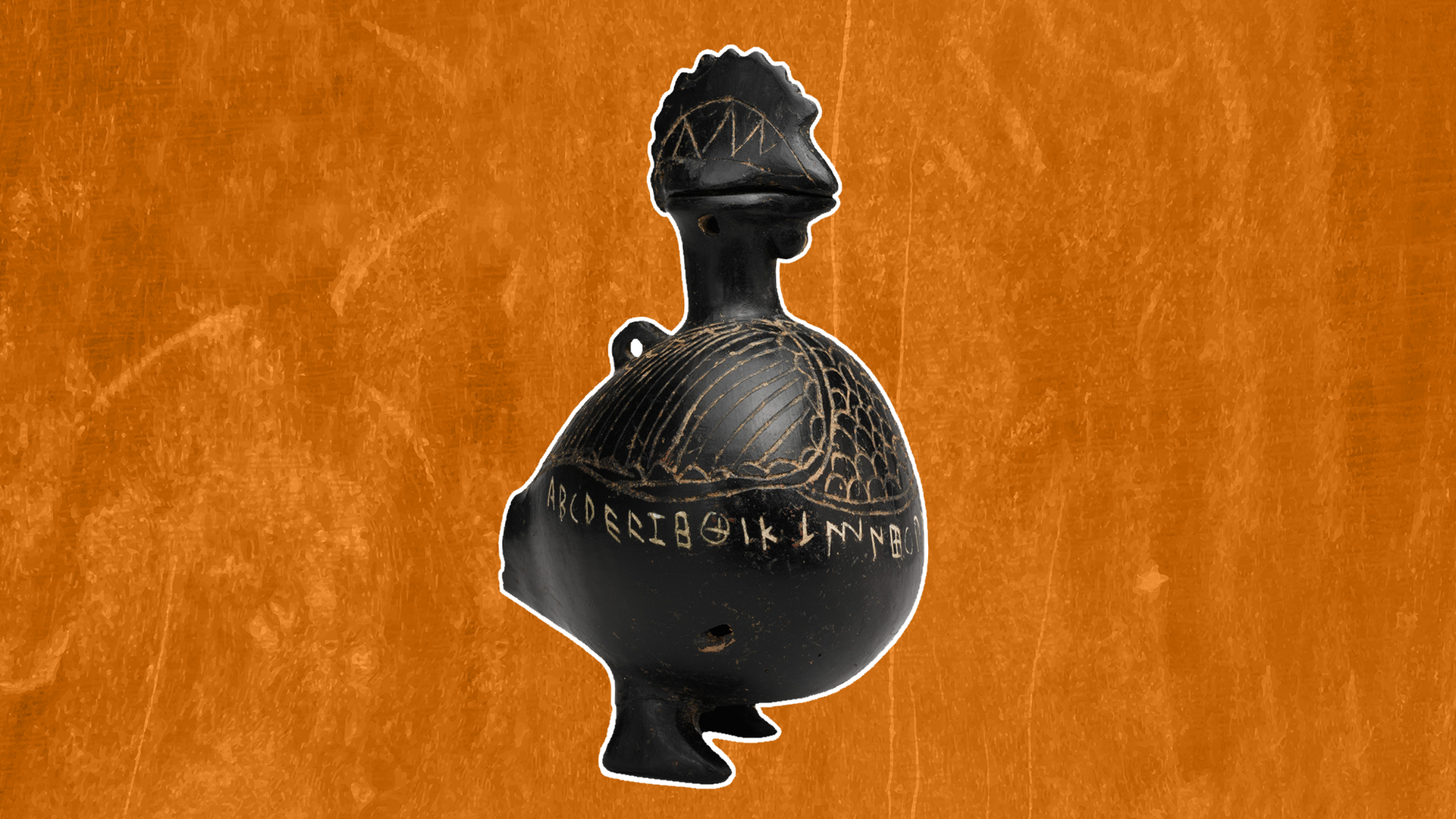
A 2,600-year-old Etruscan terracotta vase, shaped like a cockerel or young male chicken with human feet, has been discovered in Viterbo, Italy. The bird-shaped inkwell, known as a bucchero ceramic, was made using a unique firing method that resulted in the clay absorbing carbon. This rare black-glazed vase, measuring just over 4 inches (10 centimeters) tall, bears an inscription of the Etruscan alphabet on its body, providing clues to the language that has yet to be fully deciphered.
The vase's abecedarium, or sequential list of letters, is believed to have been used as a portable inkwell by an ancient Etruscan learning to write. The Etruscan alphabet, adopted from a regional version of the Greek alphabet in the early eighth century B.C., consists of 26 letters, but one in this abecedarium is incorrect, featuring an S that should resemble an X. This terracotta cockerel vase is part of the Metropolitan Museum of Art's collection in New York City, contributing to the understanding of this enigmatic ancient language.
Written by urgent.news from Live Science's reporting — not their text. Machine-written — may contain errors; check the original before relying on it.