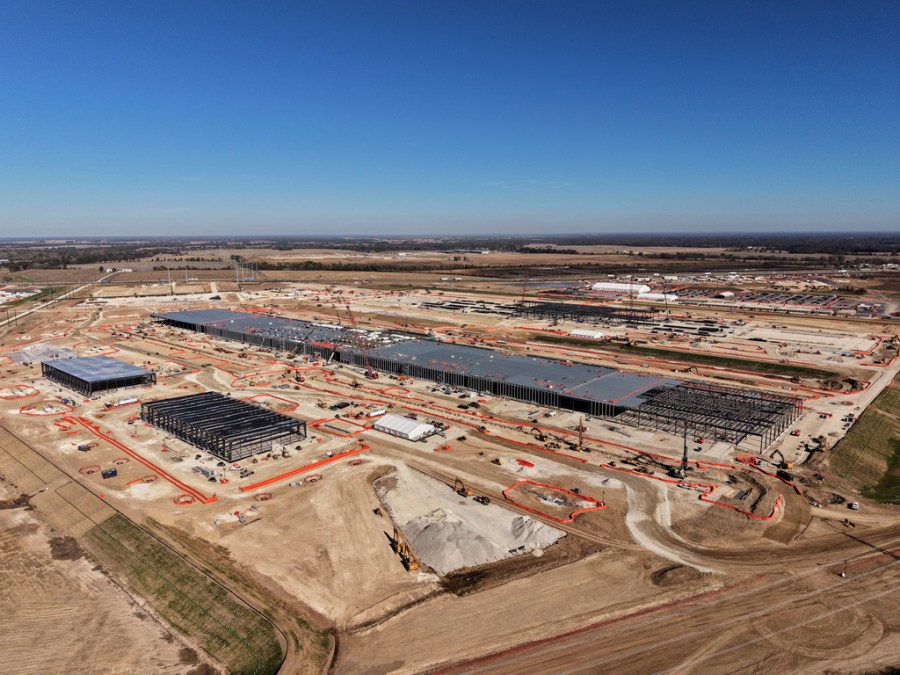
Supreme Court clears way for border wall construction in Texas’s Big Bend to resume
The Supreme Court cleared the way Monday for the Trump administration to resume border wall construction in the Big Bend region of Texas for now, a blow to…
The Supreme Court of Canada commenced hearing arguments on Monday regarding the legitimacy of a federal ban on numerous firearm models, claiming these weapons are unsuitable for civilian use. The hearings are expected to continue on Tuesday, offering opponents a final opportunity to present their case after previous court losses.
In May 2020, the Canadian government prohibited the use, sale, and importation of 1,500 firearm models and variants, including the AR-15 and Ruger Mini-14. Following the Federal Court's dismissal of an appeal in October 2023, the Federal Court of Appeal in April 2025 upheld the lower court's decision, deeming it "thorough and persuasive."
The list of banned firearms has since expanded to over 2,500 models. The Liberal government stipulated that owners of these prohibited firearms must dispose of or deactivate them by October 30, 2023, with the deadline subsequently extended until 90 days post-Supreme Court decision. During Monday's proceedings, judges questioned counsel about the specifics of the federal measures.
Chief Justice Yves de Montigny, writing for a unanimous three-judge panel, stated that the government's use of regulation to ban firearms was justified by public safety concerns. The federal cabinet, the highest decision-making body in government, plays a crucial role in policy development and assessing public interest. Federal lawyers argue that the Governor in Council's decision was reasonable and driven by significant public safety concerns, citing a regulatory impact analysis that supports this stance.
The appellants, including the Canadian Coalition for Firearm Rights, contend that the Federal Court and Federal Court of Appeal failed to evaluate whether the newly prohibited firearms were actually used for hunting or sport shooting. They emphasize the profound disruption of the lives of law-abiding Canadians who legally owned and used the banned firearms, including farmers, veterans, competitive athletes, Indigenous harvesters, and small businesses.
The Supreme Court's decision will determine whether the government's actions were authorized by law.
Written by urgent.news from Global News's reporting — not their text. Machine-written — may contain errors; check the original before relying on it.
This story
This is one outlet's version. Read the fullest account.
- Supreme Court allows border wall construction in Big Bend region cbsnews.com
- Supreme Court of Canada begins to hear arguments on feds firearms ban globalnews.ca
- Supreme Court appears wary of former inmate's quest for damages over prison medical care thehill.com
- Supreme Court says border wall construction can continue in west Texas npr.org
- Supreme Court Allows Construction of Trump’s Border Wall in Big Bend nytimes.com
- Supreme Court lifts pause on border construction in Big Bend, Texas abcnews.com
- Supreme Court allows Trump to proceed with border wall construction near Big Bend National Park in Texas hindustantimes.com
- Supreme Court clears the way for border wall construction in Texas’s Big Bend to resume winnipegfreepress.com