Scientists Stumped by Why Mysterious Object Is Accelerating as a Japanese Spacecraft Rushes to Catch It
They're racing to catch up with it for a closer look. The post Scientists Stumped by Why Mysterious Object Is Accelerating as a Japanese Spacecraft Rushes to Catch It appeared first on Futurism .
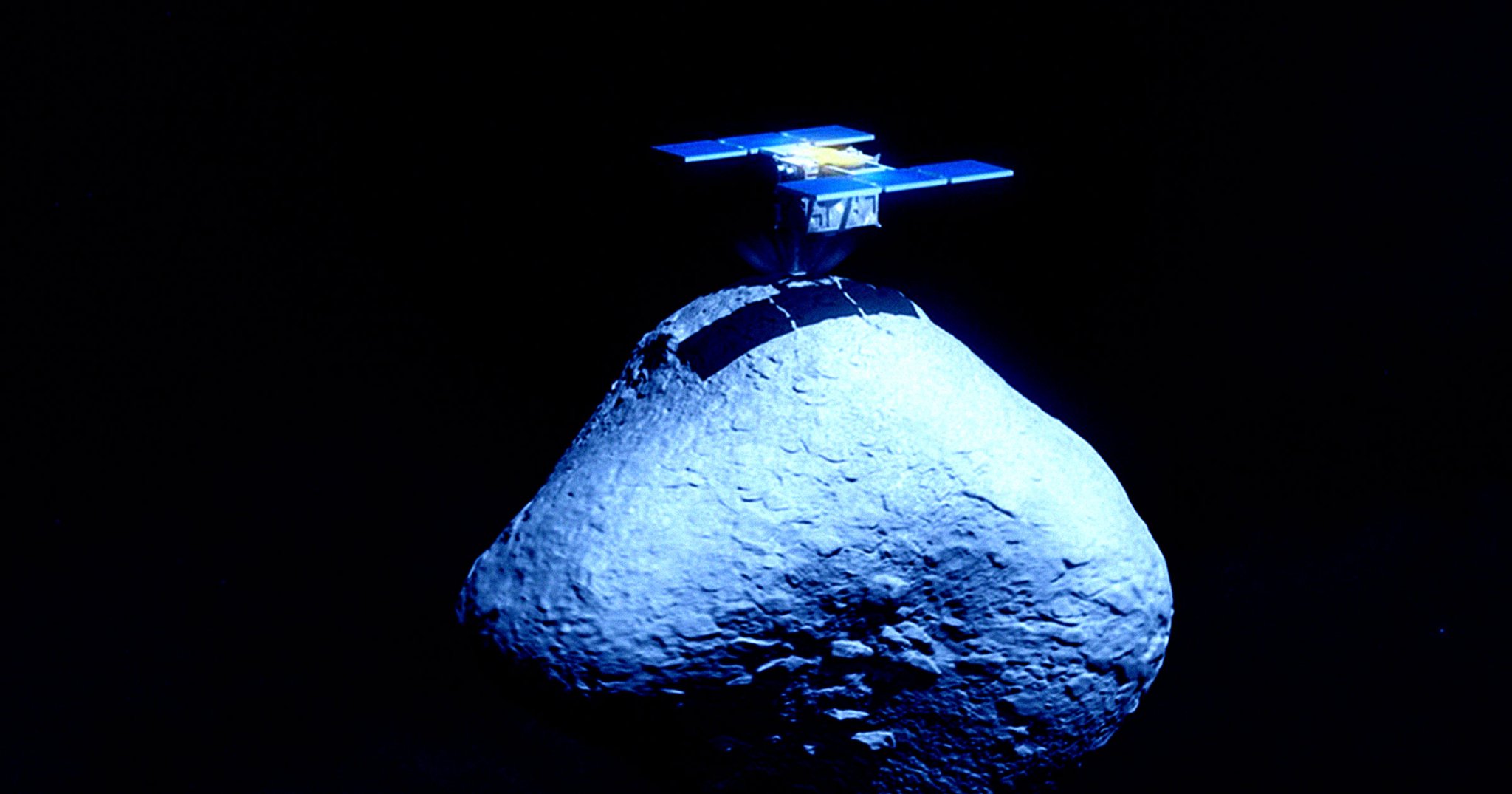
Scientists are puzzled by the acceleration of 1998 KY26, a mysterious object that the Japanese space agency's Hayabusa2 spacecraft is set to visit. The phenomenon isn't entirely uncommon for asteroids and comets, but the cause remains a mystery, as ScienceAlert reports. One hypothesis, proposed by Harvard astronomer Avi Loeb, is that 1998 KY26 is a derelict Soviet spacecraft from 1979.
Researchers from the Georgia Institute of Technology attempted to explain the object's acceleration using conventional methods. They suggested that it could be a "dark comet," an object that appears to be a rocky asteroid but has an inexplicable acceleration that can't be attributed to gravitational forces alone. However, new research published in the journal Icarus challenges this idea, as the object is too warm to be a dark comet.
Dark comets can accelerate by releasing ice that sublimates into gas, but observations show that 1998 KY26 would have depleted its ice reserves long ago.
Georgia Tech aerospace engineers Korbin Hansen and Masatoshi Hirabayashi conducted a temperature model based on pre-existing data, finding that the object's temperature was consistently above -77 degrees Fahrenheit. Even its coldest regions were warmer than expected. This warmth suggests that the object would have run out of ice reserves in just 62 years, which is short for an object suspected to be billions of years old.
The researchers conclude that 1998 KY26 is likely a "dehydrated asteroid," meaning that it lost its store of water ages ago. Other possible explanations for the object's acceleration could include solar radiation or "thermal emission forces." Fortunately, Hayabusa2 is on track to rendezvous with 1998 KY26 in July 2031, providing scientists with an unprecedented opportunity to study the object up close.
Written by urgent.news from Futurism's reporting — not their text. Machine-written — may contain errors; check the original before relying on it.