Prehistoric Britons may have made giant stone axes to show off
Unusually large handaxes weighing up to 3 kilograms have puzzled archaeologists because they are so unwieldy, but their function may have been purely symbolic
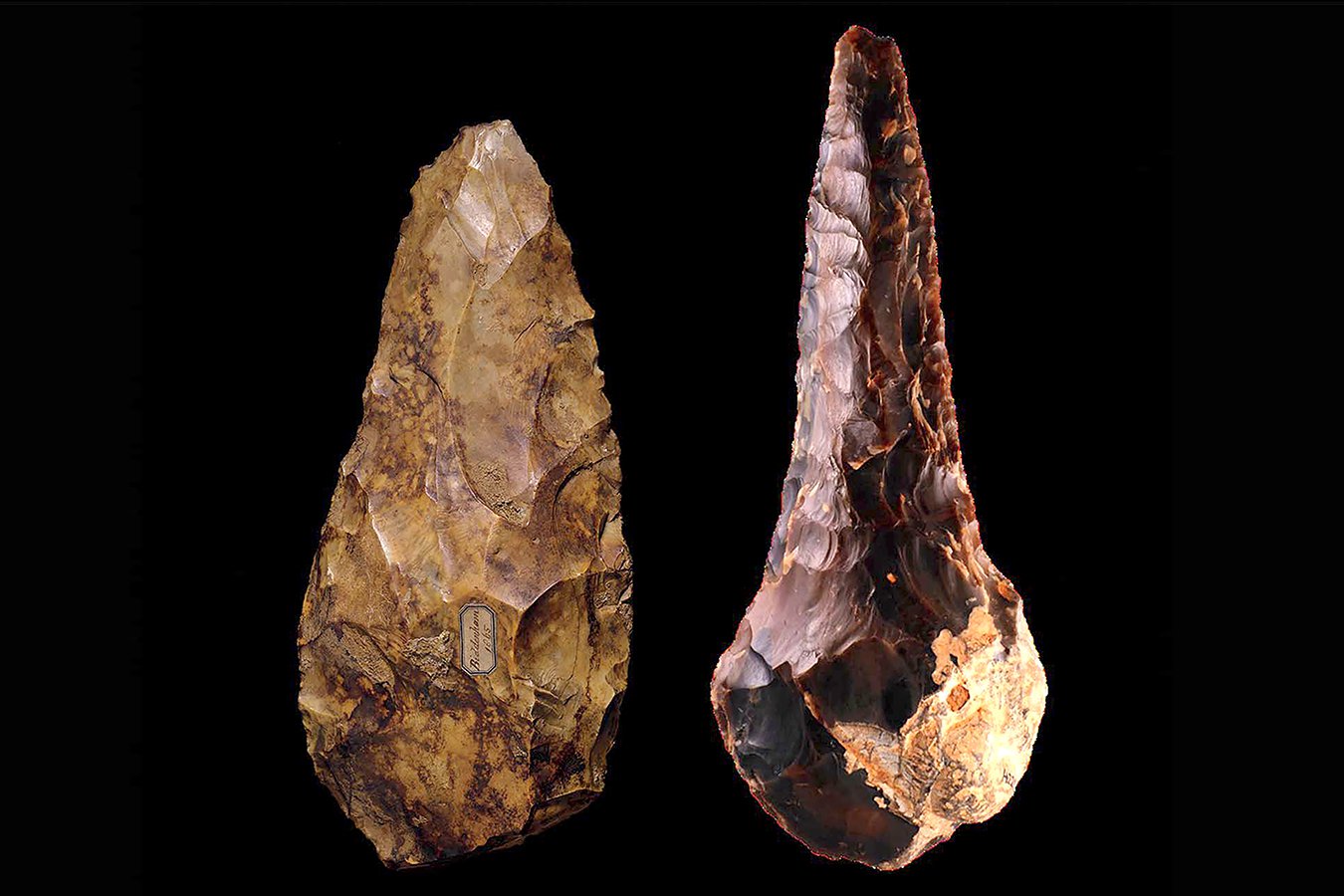
Around 300,000 years ago, prehistoric Britons crafted massive handaxes known as ficrons. These tools, weighing up to 3 kilograms and measuring up to 30 centimeters long, were skillfully shaped but difficult and time-consuming to create. According to Malaika Standley Barrow from University College London, these rare knives were likely not used for practical purposes like cutting, but rather as a display of status or a means to create social bonds.
Ficrons are characterized by their curved sides, rounded bases, and pointed tips, resembling iron tips of poles used in French boats. Discovered in archaeological sites along the Thames and its tributaries, these giant ficrons are significantly larger and more symmetrical than regular ones, indicating they were crafted with greater care and precision.
Experiments revealed that knapping a giant ficron required about 45 minutes, while smaller ones took only 20 to 30 minutes. Despite the extra effort, the giant ficrons proved impractical for tasks such as cutting, butchering, or digging, as their tips would easily break under pressure. However, it is possible that these ancient tools were used ceremonially or for delivering a killing blow to a wounded prey, known as the coup de grâce.
The craftsmanship of these ficrons suggests that early Neanderthals possessed a keen interest in aesthetics and social interactions, highlighting their intelligence and sophistication.
Written by urgent.news from New Scientist's reporting — not their text. Machine-written — may contain errors; check the original before relying on it.