Penjelasan mahkamah cegah pertikaian berlarutan terhadap Najib
Penjelasan mengenai 'perintah pelepasan' itu mampu kekang pertikaian masa hadapan berhubung dua hukuman penjara Najib Razak.
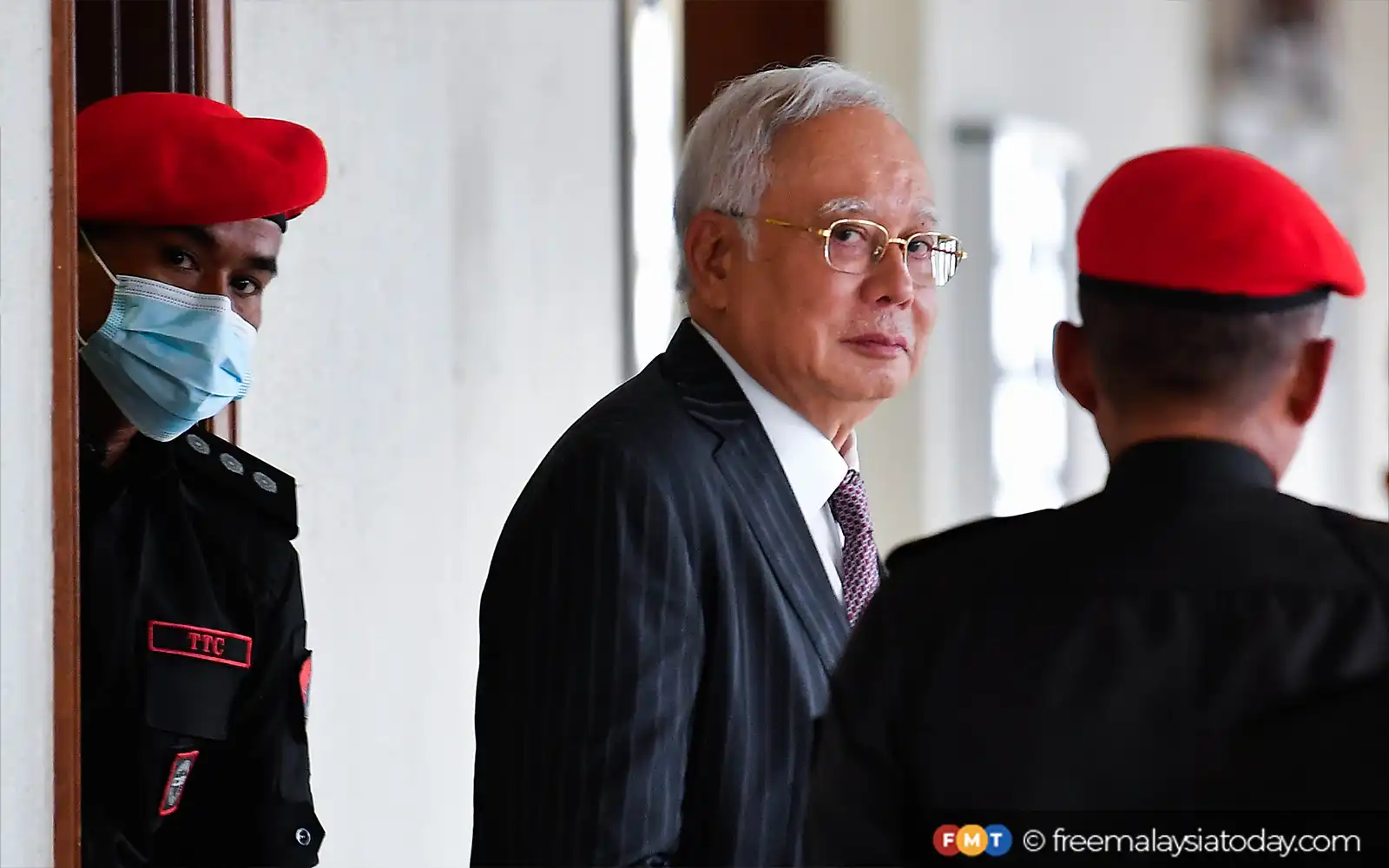
The Malaysian court's injunction preventing Najib Razak's house arrest has sparked heated debate over whether the Attorney-General's Chambers (AGC) is acting arbitrarily. However, the legal issue goes much deeper. While the legal challenge surrounding its enforcement raises concerns about how it could undermine already imposed prison sentences for Najib, the real question is what might happen if he were moved to house arrest today only to see the court spend years hearing arguments about whether the death penalty for the SRC International case has actually expired.
Words in the court documents suggest not only that they could affect services for Najib under house arrest, but also determine when subsequent prison sentences should begin. Clarified now, the dispute opens the door to further legal uncertainty. With two sentences, one for the SRC International case scheduled to end on August 23, 2028, and another for the 1MDB case still in appeal, the court orders the 1MDB sentence to begin immediately after the SRC sentence ends.
Under existing rules, this means it would start on August 23, 2028. The problem arises because the "release" wording in the court document can mean either complete freedom or simply moving the individual to house arrest. In this case, being under house arrest means Najib remains a convict; only the location changes. This ambiguity arises due to unclear exceptional circumstances as interpreted by the law.
The wording in the court documents appears to exploit the mechanism for releasing convicts to situations not originally intended by the written provision. Whether Najib's house arrest is legally justified in this context is a matter for the court to decide. However, the legal question is far more significant than the implementation of house arrest.
If the order for release is not finalized, it could have implications for the commencement and enforcement of Najib's remaining 1MDB prison sentence. The risk of future legal disputes needs to be considered if Najib is moved to house arrest without further clarification. Such a move could lead to the argument that the release order has already completed his SRC sentence on November 6, 2026.
If accepted, would the death penalty for Najib's 1MDB case be considered to have started on that date, rather than August 23, 2028? Consequently, making the enforcement of sentences nearly two years earlier. Could Najib argue that the time spent under house arrest should be counted towards his 1MDB sentence? This is not an automatic outcome, and there is no evidence that Najib's lawyers are seeking such an argument.
However, the possibility creates uncertainty. The court faces the risk of receiving and hearing appeals regarding when a single sentence ends, when subsequent sentences begin, and how time already served should be counted. The 1MDB sentence already faced a challenge from Najib to postpone its execution, pending appeal. The supreme court rejected Najib's application to postpone 15-year prison sentences facing him, while awaiting further appeal.
If the court's ruling on the release order is interpreted as ending the SRC sentence on November 6, does this change the 1MDB sentence to be automatically enforced? Could Najib then argue that he has already begun serving the 1MDB sentence while under house arrest? The court's refusal to delay the execution does not prevent Najib from serving the remainder of his SRC sentence at home.
However, will the Supreme Court delay the start of Najib's prison sentence for 1MDB if house arrest has already taken effect during that sentence? The lawyers for Najib acknowledge that paying the fine does not automatically end prison sentences. This aligns with Section 283(1)(e) of the Criminal Procedure Code. Paying the fine only cancels the prison sentence imposed for non-payment.
It does not automatically cancel the original prison sentence. Based on this interpretation, Najib's SRC prison sentence will continue until August 23, 2028. However, his lawyers maintain a legal position on the broader implications of royal pardons and their sentences. The issue does not address the intention behind challenging the start date of the 1MDB sentence, but it strengthens the need for clear judicial interpretation.
A clear decision will help ensure that the royal pardon is implemented without undermining Najib's separate sentences, thereby preventing the judiciary from repeatedly interfering with Najib's legal proceedings.
Written by urgent.news from Free Malaysia Today's reporting — not their text. Machine-written — may contain errors; check the original before relying on it.
This story
This is one outlet's version. Read the fullest account.