OpenAI Buys Orchestra Bio to Push Rosalind From Lab Science Into Drug Program Operations
OpenAI acquired Orchestra Bio and folds its drug-program agents into Rosalind, moving its life-sciences push from lab reasoning into operations.
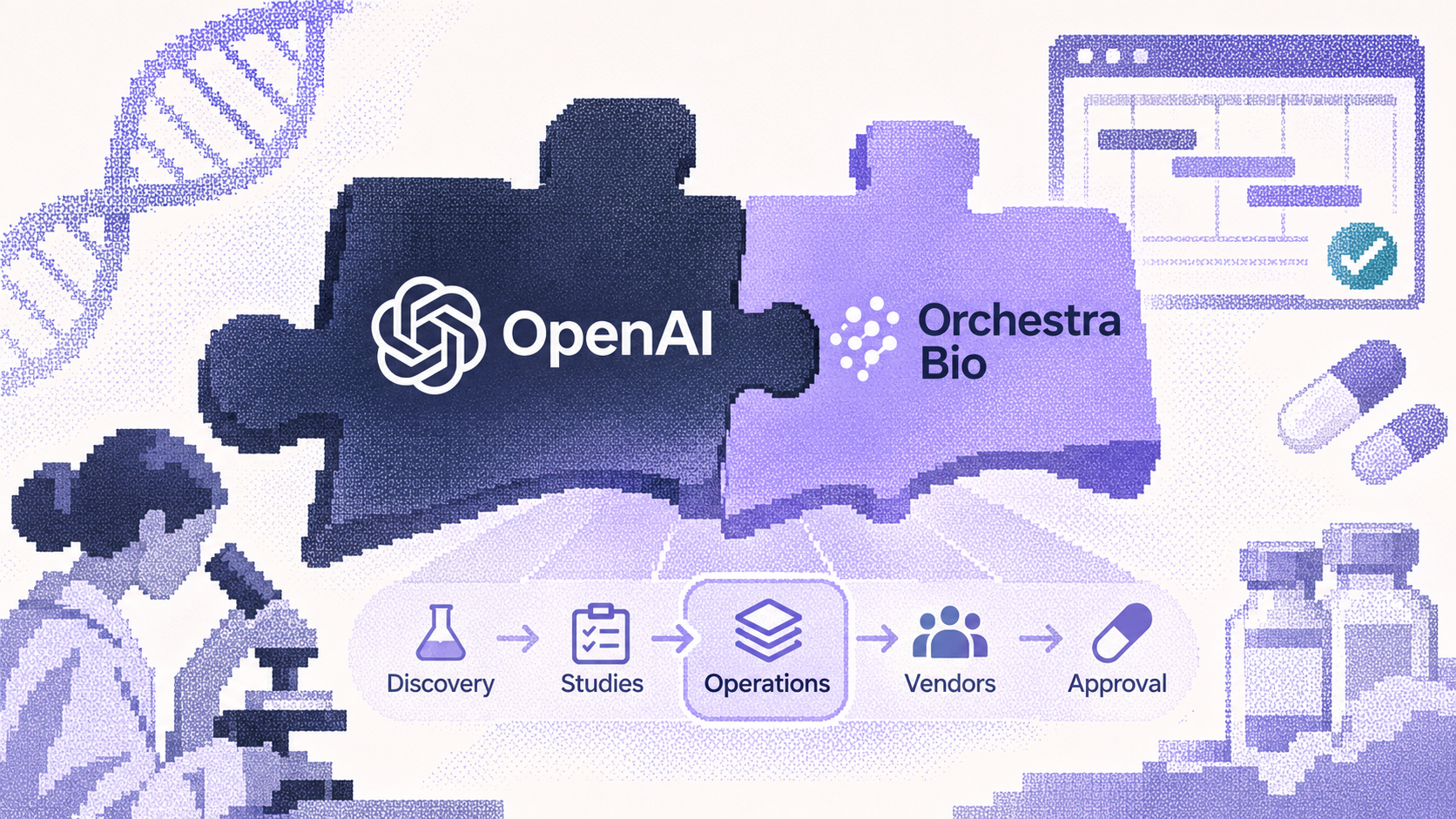
On October 20, 2026, OpenAI announced the acquisition of San Francisco-based Orchestra Bio, a platform that utilizes AI agents to facilitate the coordination of drug development within biopharma teams. The terms of the deal were not disclosed, but Axios was the exclusive source. This acquisition is a significant indication that life sciences have become a core market for frontier labs, rather than a mere demonstration domain.
Orchestra Bio developed an agentic operating layer for drug programs, focusing on addressing the operational complexity between scientific insights and approved treatments. Their agents managed studies, vendors, and timelines, allowing scientists and program leads to delegate tasks such as monitoring studies, tracking development timelines, and flagging delays before they escalate.
Orchestra's technology identified which studies and timelines were affected by issues like a failed manufacturing batch, gathered relevant data, and presented options for the next steps, while humans retained decision-making authority.
Rosalind, OpenAI's life-sciences suite, hosts Orchestra Bio's technology and team. Rosalind includes GPT-Rosalind, a model specialized in reasoning about biology and chemistry, and Rosalind Workbench, a research-preview environment that integrates the model with scientific tools and data. API access to Rosalind requires eligibility review and organizational approval, and OpenAI already collaborates with Novo Nordisk and Moderna.
The acquisition of Orchestra Bio is a strategic move for OpenAI to extend Rosalind beyond scientific reasoning to encompass the operational workflows required to transform discoveries into advancing programs. A new medicine typically takes 10 to 15 years to develop, with thousands of decisions spanning various teams, contract research organizations, manufacturers, and regulators.
Orchestra Bio aimed to address the significant gap between scientific breakthroughs and successful drug development, where 90% of candidates entering clinical trials never reach approval due to fragmented information, decisions spanning functions, and delays that ripple across entire programs.
OpenAI's acquisition of Orchestra Bio signifies their commitment to not only increase productivity in AI but also to demonstrate their responsibility in curing diseases and transforming critical industries. However, the actual impact of Orchestra Bio's agents coupled with OpenAI's models on drug development timelines and success rates remains to be seen, as no integration timeline has been announced.
Rewritten by urgent.news; may contain errors — check the original.
Source: hackernoon.com