Nearby Dwarf Galaxies Show Surprising Lack Of Oxygen, Says Paper
A new study of more than three dozen dwarf galaxies has surprised researchers with just how little oxygen they have been able to retain over cosmic time. The results reveal that we still have major gaps in our understanding of galaxy evolution.
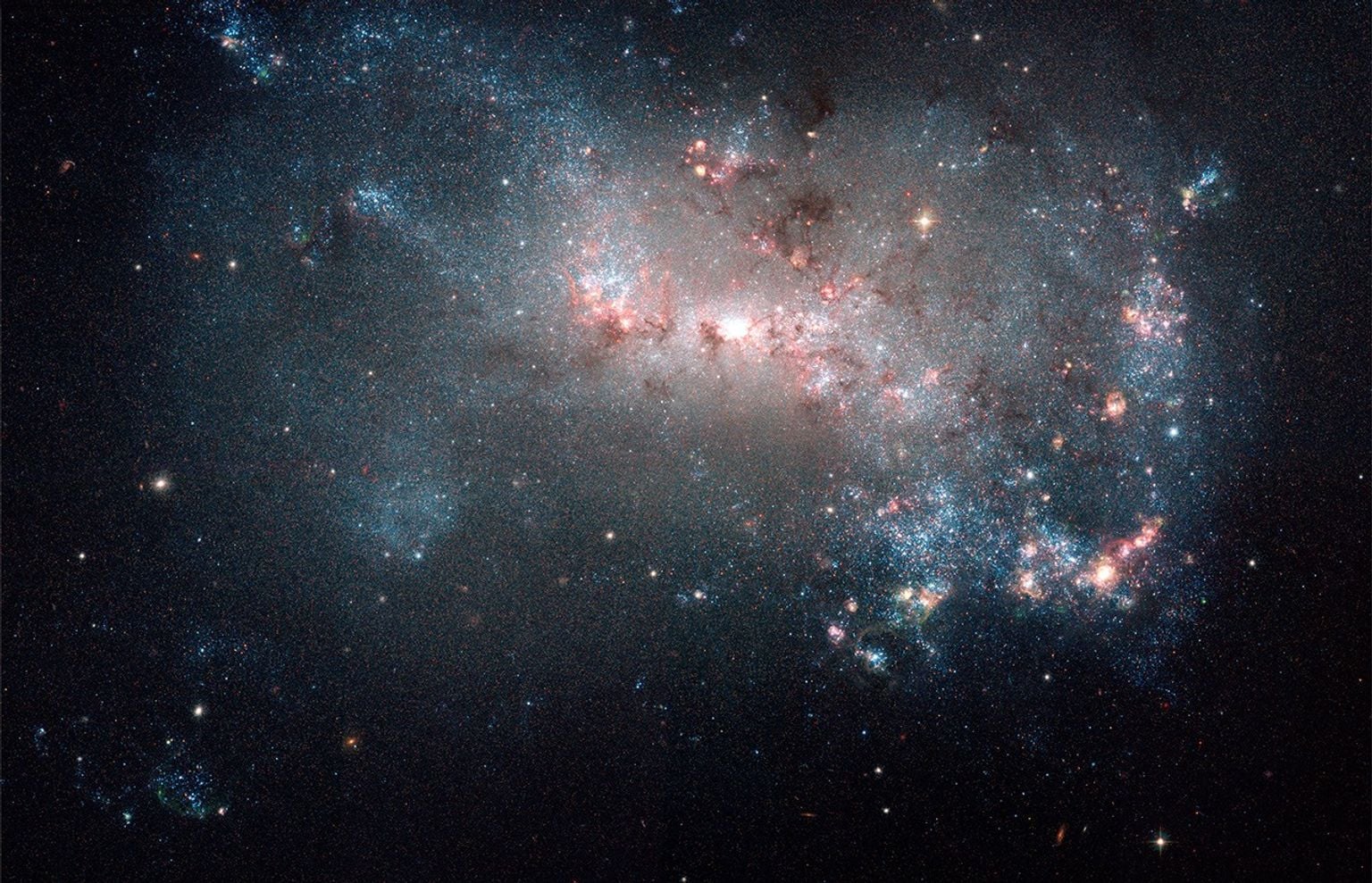
Oxygen, essential for life as we know it, has been used to study the cosmic chemical evolution. A new study of 37 nearby dwarf galaxies, published in The Astrophysical Journal, reveals a surprising lack of oxygen compared to expectations. Grace Telford, the paper’s second author, explained that researchers from the University of Utah found that only a small fraction of the oxygen produced by stars remains in these low-mass galaxies.
Most of the oxygen, about 15 percent, is lost from the galaxies, mostly through energetic radiation from massive stars and supernovae, which drives the oxygen-rich gas out. This missing oxygen is likely in the surrounding gas halos, known as the Circumgalactic Medium (CGM). The GLOW project, funded by NASA and the National Science Foundation, aims to understand how gas and heavy elements move between low-mass galaxies, their CGM, and the intergalactic medium.
The findings show that low-mass galaxies lose oxygen more easily than massive galaxies due to their smaller gravity, implying that our understanding of massive star interactions with host galaxies may need refinement.
Written by urgent.news from Universe Today's reporting — not their text. Machine-written — may contain errors; check the original before relying on it.