Los sindicatos se preparan para un seguimiento “desigual” de la huelga por territorios, sectores y edades
Las centrales anticipan manifestaciones masivas y buscan detener la actividad, pero prevén un respaldo “asimétrico” en función del impacto de la crisis de la vivienda y del conflicto ya en marcha
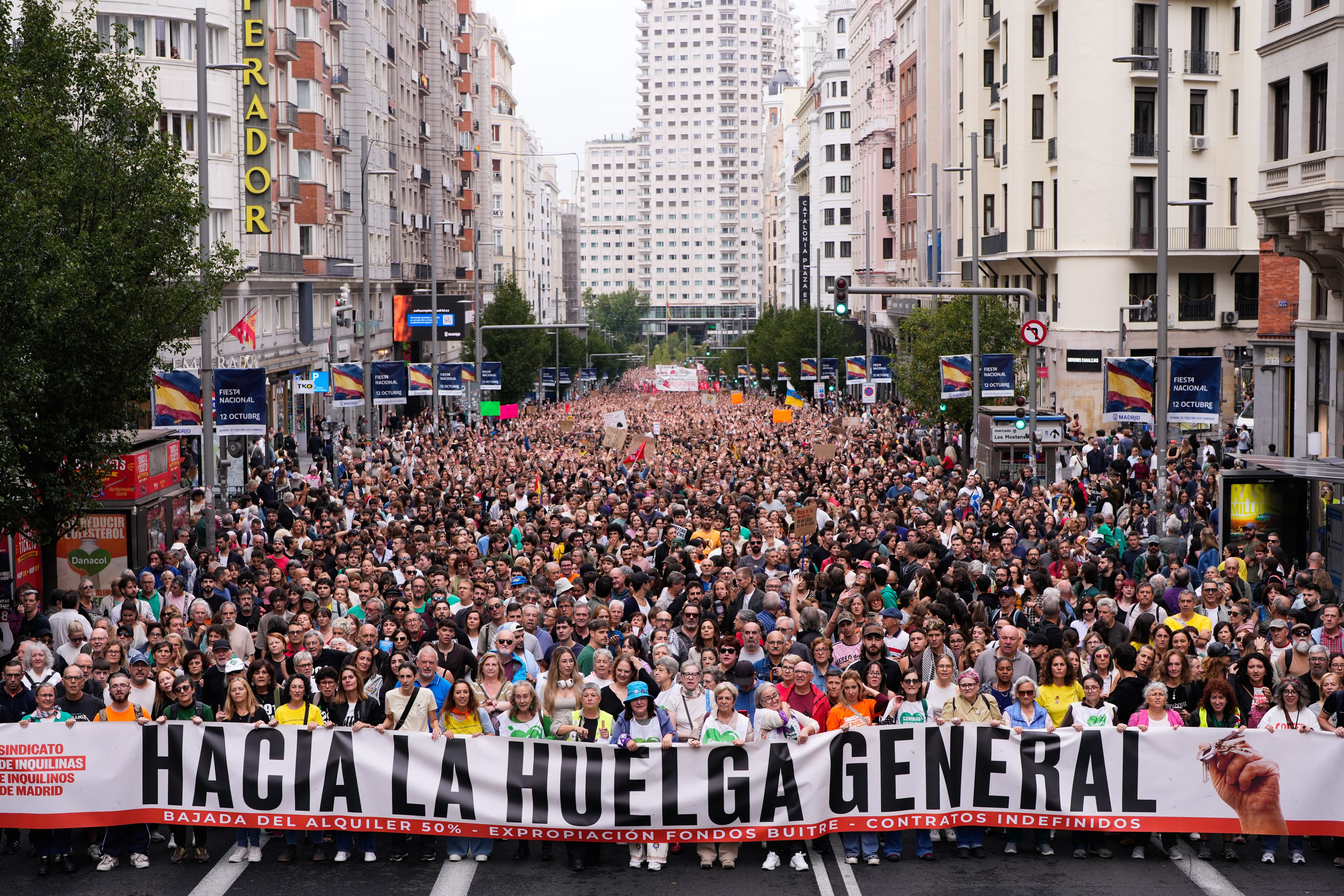
The upcoming general strike in Spain is being organized with a focus on different territories, sectors, and ages. The success or failure of the strike depends on meeting expectations, as outlined by over a dozen key unionists consulted for this report. The November 11th general strike does not appear to be on track to halt Spain, unlike previous major strikes, according to these insiders.
However, they do not consider this a sign of weakness, as the visual impact of the strike may still influence public consciousness regarding housing issues, similar to the March 8th feminist marches in 2018.
Sergio Jaramillo, a 35-year-old architect from Getafe, is one of the participants in Madrid's strike committee. He explains that there are two main working teams: one for preparing the strike and the other for dissemination. The strike has drawn a significant number of young people who are eager to participate despite not belonging to any specific organization due to their dissatisfaction with the current situation.
Although there have been some tensions between different groups in organizing the protests, these tensions have diminished over time, leading to greater alignment than initially expected.
The organizations on both sides emphasize the intermediary role of the Inquilinas Union, which has generally worked in their favor. In most cities, the mobilizations will bring together almost the entire movement, with CC OO and UGT joining forces with the Sindicato de Inquilinas and CGT, CNT, and most small unions. This unity is replicated in many other capitals, except in Zaragoza, where the Inquilinas march independently of CC OO and UGT, and in Granada, Valladolid, and Pamplona, where small unions do not align with large ones.
In Madrid and Barcelona, the Coordinadora Juvenil Socialista (CJS) is leading its own call for the strike at 5:00 PM, an hour before the main strike, alongside CO.BAS and other smaller unions. The CJS has been consistently critical of the majority unions in recent days, a stance that has been publicly refuted by some prominent members of the Inquilinas Union.
Another division issue is the lack of understanding in some strike committees and organizational spaces, with Madrid's Mesa Sindical accusing CC OO and UGT of hindering strike preparations in certain companies. They assert that they are not seeking to turn the general strike into a pre-election campaign and stress that the unity with the Inquilinas Union is the norm.
Representatives of these unions stress that the importance of their role in the strikes should not be underestimated, as the image of everyone coming together is very positive, even if it means ceding more space than usual.
Written by urgent.news from El Pais's reporting — not their text. Machine-written — may contain errors; check the original before relying on it.