Lahore remains world’s most polluted major city as AQI crosses 600
LAHORE: Lahore was ranked the world’s most polluted major city on Monday as its Air Quality Index (AQI) reached 590, according to IQAir. A separate historical reading on the platform, however, showed an hourly index of 647, placing the city in the hazardous category. The IQAir live global major city ranking for 9am to 10am on Nov 9 placed Lahore at the top, followed by Ulaanbaatar with an AQI of…
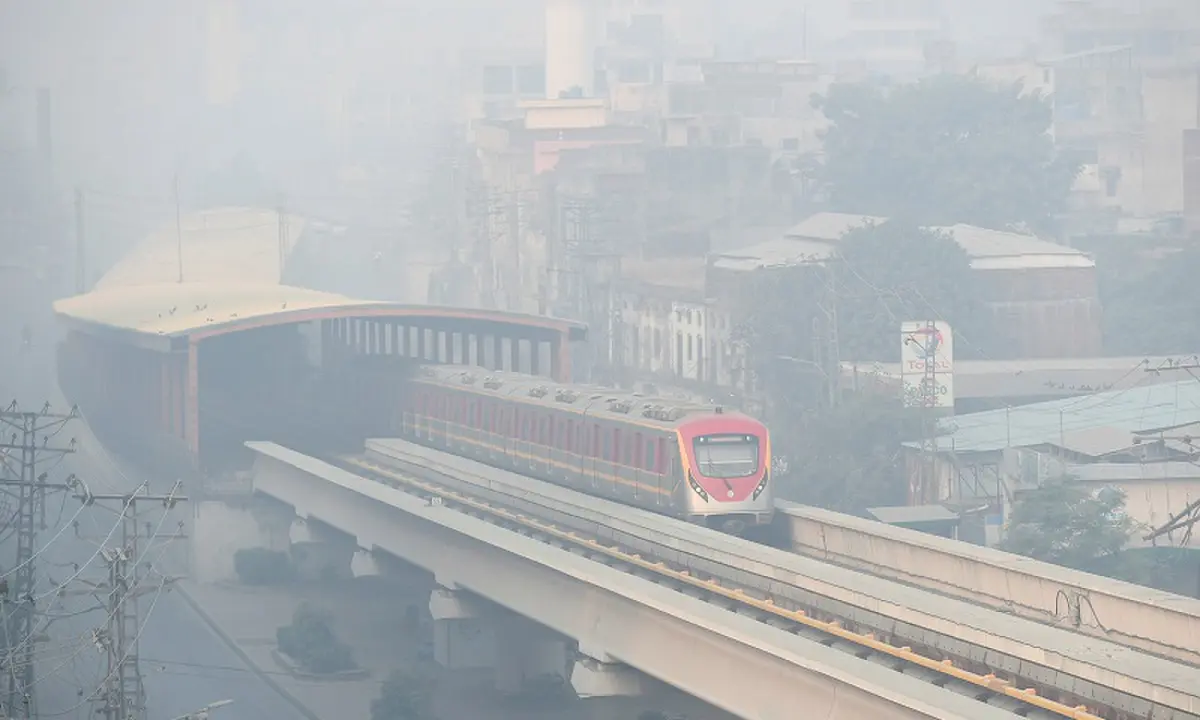
LAHORE, Pakistan - The city of Lahore has been identified as the world's most polluted major city, with its Air Quality Index (AQI) surpassing 600, according to IQAir. This alarming reading places Lahore in the hazardous category. The AQI reached 590, while a previous hourly measurement showed an even more severe level of 647, indicating a hazardous pollution level.
Lahore topped the global ranking for major cities, with Ulaanbaatar, Delhi, Kolkata, and Sarajevo following in second, third, fourth, and fifth place, respectively. The AQI in Lahore was more than three times higher than that of the second-ranked city, Ulaanbaatar.
Air pollution, both outdoor and indoor, is the second-leading risk factor for deaths worldwide, causing an estimated 8.1 million deaths annually. In Lahore, the pollution crisis affects various neighborhoods, with Allama Iqbal Town recording an AQI of 1,033, and CERP Office and Burki Road Paragon reporting hazardous levels of 864 and 748, respectively. Hourly historical graphs reveal that pollution levels peak during early morning and late-night hours, resulting in dense smog that forces residents to remain indoors.
The situation extends beyond Lahore, as other regions in Punjab are also grappling with hazardous air quality. IQAir's real-time Pakistan city ranking shows Raiwind, Multan, Lahore, and Faisalabad all recording air quality levels in the hazardous category. The deterioration of air quality has been attributed to factors such as smoke from Diwali fireworks in neighboring Indian Punjab, crop-residue burning, and easterly winds.
According to the Punjab government's special report, smoke from Diwali fireworks could reach Lahore within five to 13 hours.
The report also highlights the role of crop-residue burning and stagnant air during the night in contributing to Lahore's deteriorating air quality. Amritsar, located around 50 kilometers from Lahore, is identified as a potential source of cross-border pollution. However, a measurement-based assessment is required to determine the extent of Lahore's pollution that can be attributed to fireworks and other sources across the border.
Indian media reports indicate that the air quality in Amritsar, Ludhiana, Jalandhar, and Patiala has also worsened following the Diwali celebrations. Meanwhile, satellite-based fire detections reveal that agricultural fires are a significant concern in Pakistan. An analysis by Hamari Hawa using NASA's VIIRS satellite data recorded 13,241 fire detections in Pakistani Punjab between October 1 and November 29, 2026, compared to 3,158 in Indian Punjab.
The analysis found that 92% of the detections in Pakistani Punjab occurred on farmland, with 7,130 crop-associated fire detections within a 100-kilometer radius of Lahore on both sides of the border.
Written by urgent.news from Dawn's reporting — not their text. Machine-written — may contain errors; check the original before relying on it.