Jupiter and Mars are set for a breathtaking close approach later this week: Here's how to see it
Jupiter and Mars will appear incredibly close as they shine in the constellation Leo on Nov. 15.
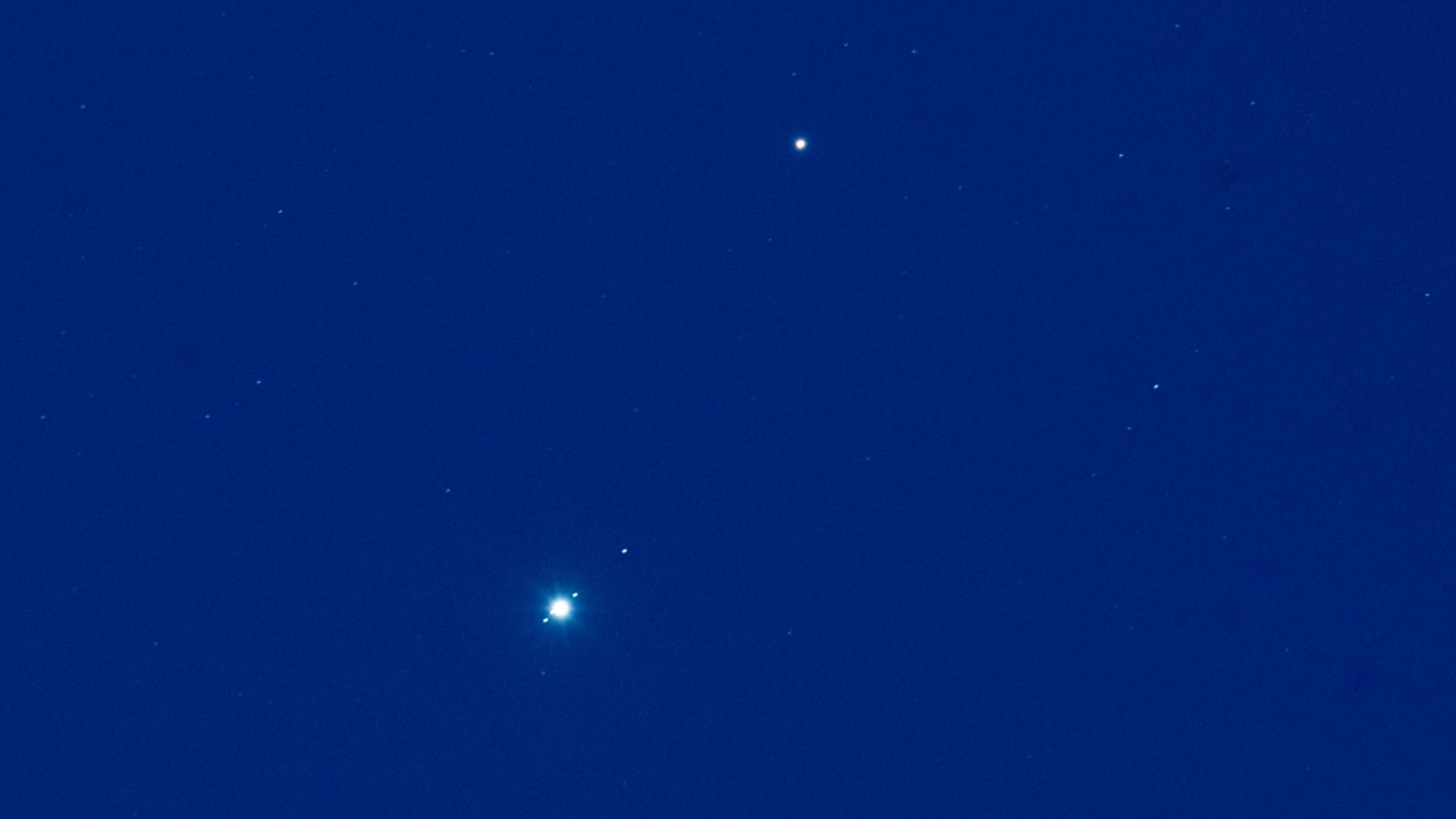
Jupiter and Mars will appear in a spectacular close approach in the sky this week, leaving stargazers in awe. The celestial event will occur on November 15, with the planets reaching their closest apparent separation at 9:04 p.m. EST (0204 GMT on November 16). Unfortunately, U.S. observers will not witness the planets at their closest, as they will be below the horizon at that time. However, they can still catch the pair rising above the eastern horizon around midnight local time.
Jupiter will be the brightest of the two, appearing just over 1 degree away from the red light of Mars. The star Regulus will also be nearby, forming the dot of a backward question mark that represents the head of the lion in the constellation Leo. To witness this celestial show, you can use the Celestron StarSense Explorer LT114AZ to get a closer look at Jupiter, Mars, and Saturn. This telescope features a 4.5-inch aperture and a high 1000mm focal length, making it easy to spot these planets.
These planets will be close enough to share the field of view of a pair of 10x50 binoculars, creating a breathtaking sight. Moreover, the Great Red Spot of Jupiter will rotate into view in the predawn hours of November 16, and can be observed through a backyard telescope with an aperture of just 4 inches. To enhance the visibility of the storm, consider using a light green color filter, while an orange filter will help bring out the detail in Jupiter's sweeping cloud belts.
After their close approach, the two planets will gradually drift apart, and will not appear as close again for another 2.5 years, on July 2029, when they will be together in the constellation Virgo. For those interested in photographing the night sky, Space.com offers a guide, along with recommendations for the best cameras and lenses for astrophotography. If you'd like to share your astrophotography with Space.com's readers, please send your photo(s), comments, and your name and location to spacephotos@space.com.
Written by urgent.news from Space.com's reporting — not their text. Machine-written — may contain errors; check the original before relying on it.