Indian capital chokes with pollution after Diwali fireworks
NEW DELHI: Toxic air in parts of India’s capital New Delhi soared to more than 58 times the World Health Organisation’s recommended daily limit Monday, after fireworks for the Hindu festival of Diwali, air monitor data showed.
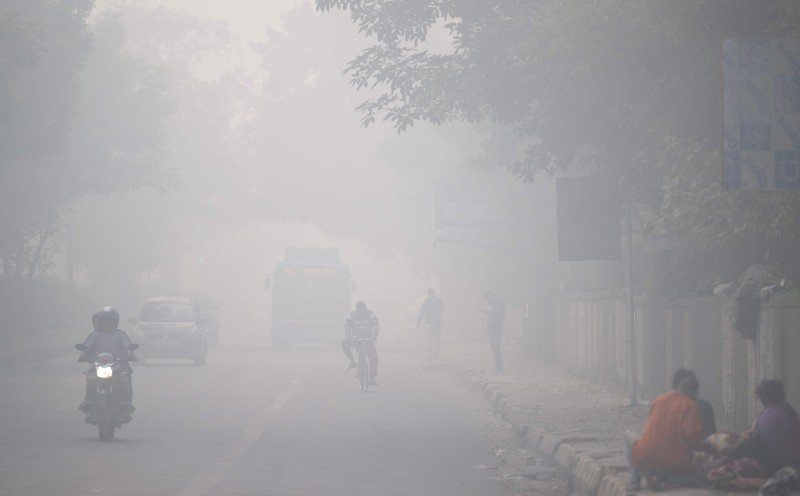
New Delhi's air quality plummeted to hazardous levels following Diwali fireworks, the city's air monitor data revealed on Monday. Millions observed the annual festival of lights with fireworks, intensifying winter smog exacerbated by vehicle emissions, farm fires, and industrial activities. The Supreme Court recently permitted limited use of "green" firecrackers, designed to emit fewer pollutants during Diwali; however, such restrictions are often disregarded, leading to continuous explosions throughout the city.
At around 8 a.m. on Monday, PM 2.5 microparticles levels in Mandir Marg locality soared to 879 microgrammes per cubic metre, according to monitoring organization IQAir, citing data from a government station. This is nearly 59 times the World Health Organization's recommended daily maximum. In recent weeks, authorities have imposed restrictions on traffic and construction in a bid to mitigate the smog crisis in New Delhi, home to over 30 million inhabitants.
Vehicles contribute to 23% of Delhi's winter pollution, while biomass burning, including stubble burning, accounts for 20%, according to India's environment ministry. Industry, including coal-fired power plants, accounts for approximately 9%. The most significant contributor, making up 27%, is secondary particles, which arise when gases released by vehicles, industry, power plants, and biomass burning react in the atmosphere.
A study published in The Lancet Planetary Health in 2024 estimated that 3.8 million deaths in India between 2009 and 2019 were attributed to air pollution.
Written by urgent.news from New Straits Times's reporting — not their text. Machine-written — may contain errors; check the original before relying on it.