I ran Ethernet to every TV and console in my house, and Wi-Fi got faster for everyone else
Took a load off the wireless network
The author began treating Wi-Fi as the default solution for all wireless devices in their house, from phones and laptops to TVs, consoles, and streaming boxes. While the Wi-Fi 6 router provided decent performance, the author started experiencing issues when demanding tasks were performed by specific devices, such as the living room TV streaming 4K content through Jellyfin, Moonlight, and PS5 Pro.
These tasks heavily relied on the wireless connection, which eventually led to congestion and slower speeds for other devices in the home.
To address this issue, the author decided to connect the TV, PS5 Pro, and secondary TV to the network using Ethernet cables instead of relying on Wi-Fi. This change required only five Cat6 LAN cables, a $10 2-port Gigabit Ethernet network switch, and minimal effort to run the cables along the walls and through doorframes. The cost of this upgrade was under $40, and it significantly improved the overall Wi-Fi performance in the home.
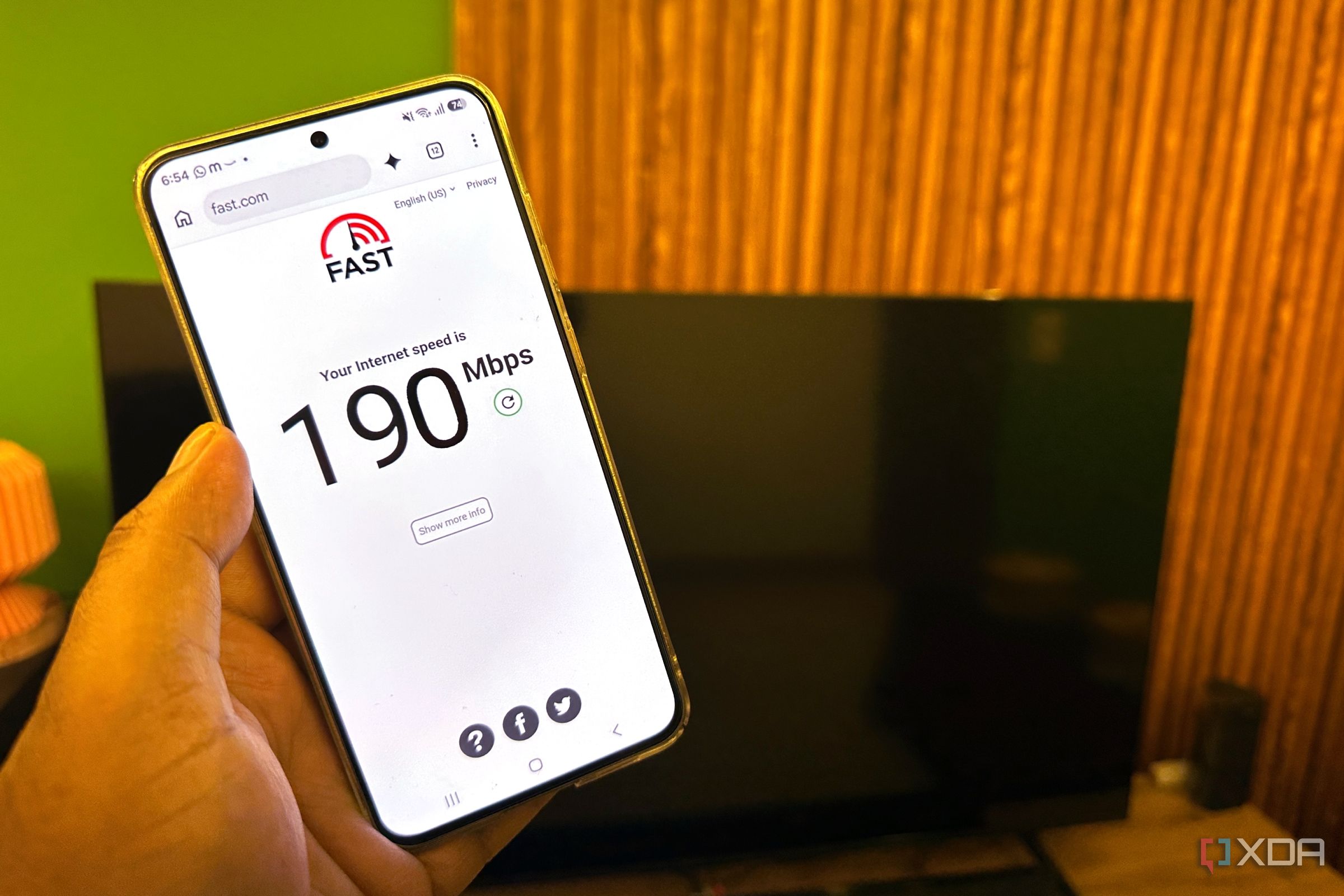
After connecting the demanding devices to Ethernet, the author retested their mobile devices (phone and laptop) and found a noticeable improvement in their download speeds. The devices that had been competing for wireless airtime with multiple screens were now experiencing a quieter Wi-Fi network, resulting in better performance.
However, the author also discovered a limitation of their TV's wired connection. Despite having a 300 Mbps internet connection, the TV could only achieve around 100 Mbps through its Ethernet port. To overcome this issue, the author purchased a USB 3.0-to-Ethernet adapter and connected it to the TV, which improved the connection speed to approximately 200 Mbps. This experience demonstrated that Ethernet does not automatically guarantee gigabit Ethernet, as the maximum speed is determined by the slowest link in the chain.
Written by urgent.news from XDA Developers's reporting — not their text. Machine-written — may contain errors; check the original before relying on it.