Huawei develops 'entirely Chinese' homegrown desktop PC system
Huawei's 'entirely Chinese' desktop system does not use components made outside of China, yet they still rely on semiconductor supply chain that includes tools and materials from America, the Netherlands, and Japan.
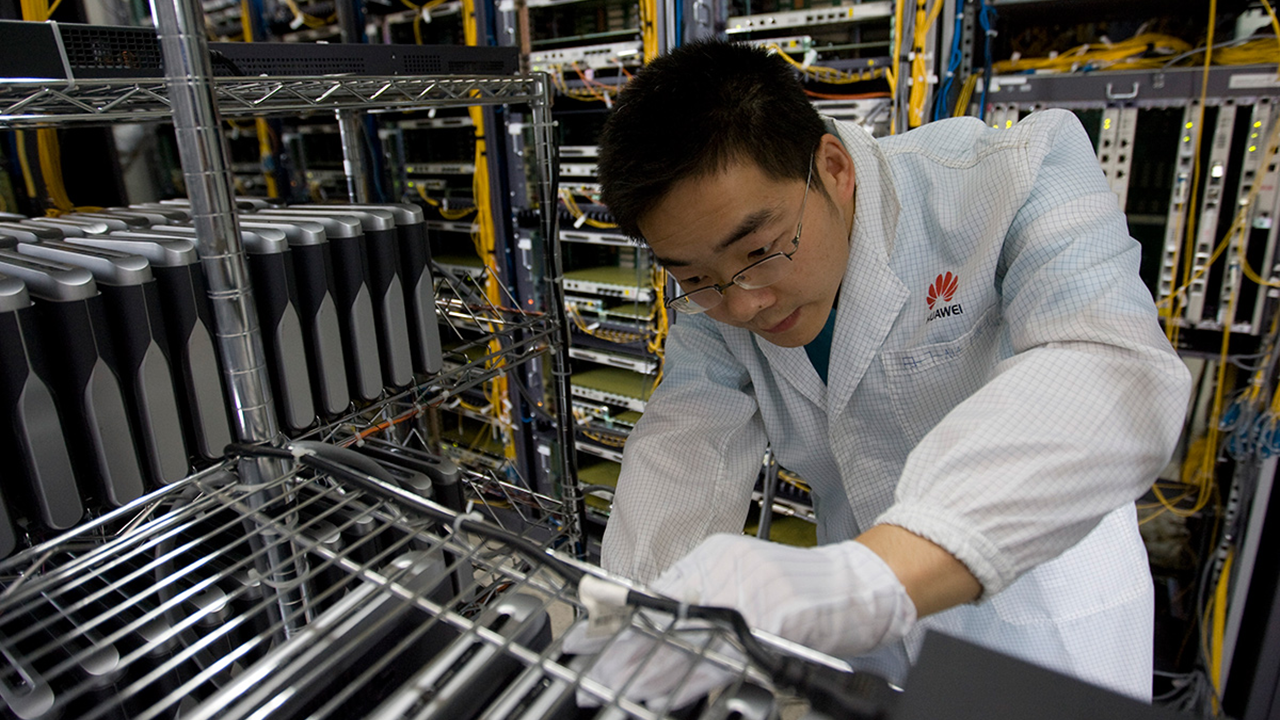
Huawei has unveiled its inaugural desktop PCs, powered by a domestically manufactured 10-core processor and proprietary HarmonyOS operating system, according to the Southern China Morning Post. The company asserts that every component, including the processor, memory, storage, power supply, and wireless connectivity, is produced within China, a factor of significant importance for national security and domestic supply chains in the sanctioned nation.
However, the extent to which these machines are truly entirely domestic remains uncertain. The Huawei Qinyun HM650 and HM650g desktop PCs are equipped with 16 GB of LPDDR5 memory and either a 256GB or 512GB SSD, both likely manufactured by Chinese companies CXMT and YMTC, respectively. These systems are driven by Huawei's Kirin X90 system-on-chip, initially introduced in Huawei's consumer devices in 2025.
The standout feature of the system is its processor, which boasts 10 Huawei-designed Armv8-based Taishan CPU cores arranged in a 4+4+2 configuration and supports simultaneous multithreading (SMT), enabling up to 20 threads to execute concurrently. The chip also incorporates Huawei's Maleoon graphics processing unit (based on Arm Mali architecture) and a dedicated neural processing unit for AI tasks.
The Kirin X90 processor's manufacturing process is a point of contention; while Huawei does not officially disclose it, a teardown analysis by TechInsights revealed that the CPU is manufactured by SMIC using a 7nm-class N+2 process technology. Despite this advancement, the X90 represents Huawei's capability to develop PC-class processors using domestically available semiconductor manufacturing capabilities, though on a process technology that lags behind the leading-edge nodes of Intel, TSMC, and Samsung.
The most noteworthy aspect of the Qinyun HM650 series is Huawei's claim that all components, including the processor, memory, storage, power supply, and wireless connectivity, are manufactured domestically. This certification, while impressive, does not guarantee that the entire semiconductor supply chain behind the machine is entirely Chinese.
While the CPU, memory, and storage chips are fabricated domestically, they are still produced using foreign manufacturing equipment, materials, intellectual property, and electronic design automation (EDA) software. The claim regarding the operating system developed in China appears ambitious. The machines run Huawei's HarmonyOS Enterprise Edition, reducing dependence on foreign technology suppliers.
Unlike typical PCs that use Microsoft's Windows operating system, Huawei's desktops utilize a software platform developed and maintained by a Chinese company. Unlike earlier HarmonyOS versions that incorporated Linux components, the latest version utilizes Huawei's own kernel and software architecture, granting the company greater control over operating system development, security updates, and integration with its hardware.
However, compatibility with existing Windows applications could pose a limitation for enterprise customers reliant on software from multinational corporations for Windows. These factors considered, can we confidently state that Huawei's Qinyun HM650 series relies entirely on components developed and manufactured in China? Likely, yes.
However, with the caveat that the semiconductor supply chain relies on tools and software designed and produced elsewhere. Moreover, the operating system's incompatibility with Windows software could be a hindrance for certain customers.
Written by urgent.news from Tom's Hardware's reporting — not their text. Machine-written — may contain errors; check the original before relying on it.