How To Check AQI Near Your Home, Office Or Child's School: 5 Smart Ways
Mumbai's air does not behave like one number. On a recent Friday, CPCB's (Central Pollution Control Board) Sameer app showed Worli at 169, Mazgaon at 143 and Bhandup at 125. Weather matters too. FPJ reported on Sunday that the city had its cleanest Diwali afternoon in four years , helped by a sea breeze. So the headline figure for 'Mumbai' may say little about your lane, your office tower or your…
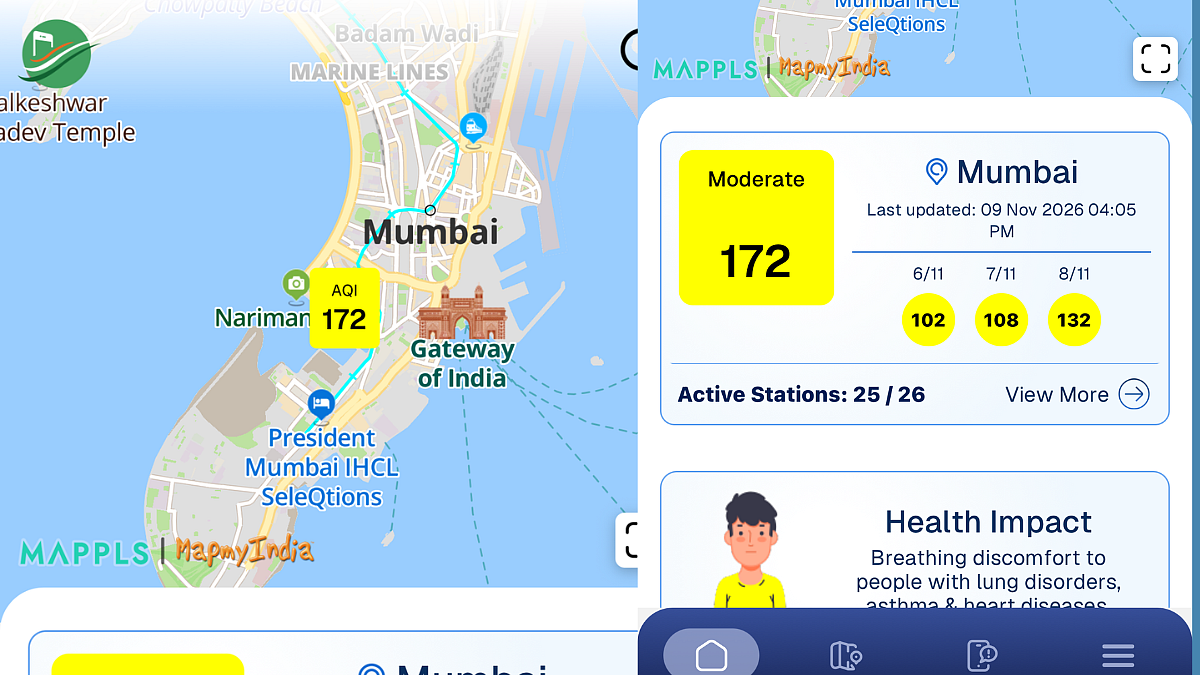
Mumbai's air quality can vary significantly depending on the location. On a specific Friday, readings from the Central Pollution Control Board's (CPCB) app ranged from 125 in Bhandup to 169 in Worli. Weather conditions also play a crucial role; a recent Diwali afternoon was the cleanest in four years due to a sea breeze. Therefore, a single headline figure may not accurately represent the air quality in your immediate area.
To get a more precise understanding, consider these five methods:
1. Use the official Sameer app, which provides hourly updates and an interactive map. The app automatically selects the nearest monitoring station but allows you to search for any other station. Ensure you're looking at the correct station for your desired location, such as your school or office.
2. Visit the CPCB website for detailed, station-specific information. Mumbai's data comes from 30 monitoring stations, including 30 across the city. If you're interested in the composition of pollutants, open the station-level view to see whether PM2.5 or PM10 is contributing more.
3. Check Google Maps for an air quality layer. Tap the Layers button, select Air Quality, and choose any spot on the map. Alternatively, use the Weather widget on the Explore tab for your current location's reading. Google's model combines various inputs, including sensor data, satellite information, government sources, and weather conditions, making it a good local estimate.
4. Utilize Mumbai's own networks, such as the SAFAR app, a collaboration between the Brihanmumbai Municipal Corporation (BMC), India Meteorological Department (IMD) Mumbai, and IITM Pune. LED boards displaying local station data can be found at various locations like Chembur, Colaba, Kurla, Powai, and Sion. The network is set to expand with the addition of five more reference-grade continuous monitoring stations.
5. Cross-check with private platforms like IQAir, which supplement government station data with their own validated sensors. While these platforms can provide additional insights, be aware that the numbers may differ from official reports. Instead of focusing on absolute numbers, compare trends throughout the day to gauge whether the air quality is improving or deteriorating.
Written by urgent.news from Free Press Journal's reporting — not their text. Machine-written — may contain errors; check the original before relying on it.