How governmentality exacerbates the problem of farmers’ stubble burning
A new study by researchers Sujit Raghunathrao Jagadale and Javed M. Shaikh at the Indian Institute of Management, Amritsar analyses the problem of stubble burning from the lens of ‘governmentality’ and market failure
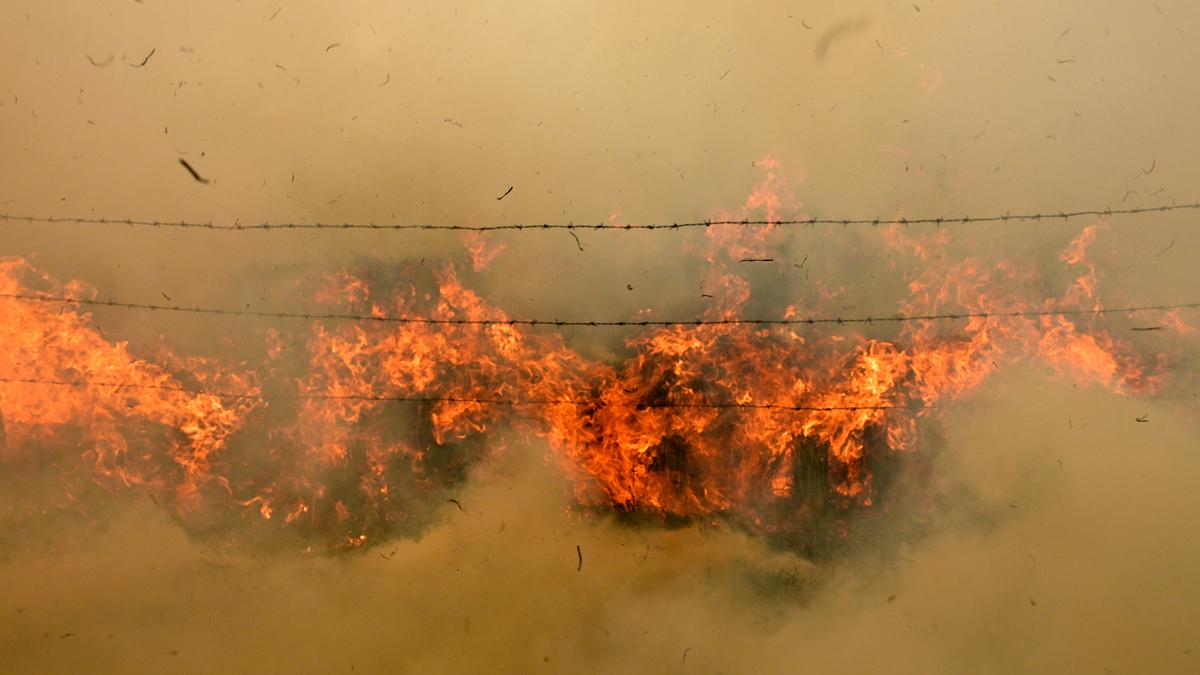
Jagadale and Shaikh's research highlights the exacerbation of air pollution in India due to the practice of stubble burning by farmers. In the Indo-Gangetic Plain, pollutants from various sources like vehicles, power plants, and construction dust accumulate during the monsoon season due to the formation of an inversion layer, trapping these particles in the region.
The burning of farm stubble, primarily rice chaff, in October and November further worsens the situation. This practice serves as a cost-effective method for farmers to prepare their soil for Rabi wheat cultivation. The stubble burning contributes to the haze that envelops cities such as Delhi and other north Indian urban areas, leading to poor air quality.
The authors argue that government policies and agricultural marketing systems fail to address this issue, highlighting the need for effective governance to mitigate the environmental impact of stubble burning.
Written by urgent.news from The Hindu's reporting — not their text. Machine-written — may contain errors; check the original before relying on it.