Hitler’s ‘retreat’ sparks debate over Germany’s past and present
PERCHED on a ridge high in the German Alps lie the burned-out ruins of a mountain house frequented by Adolf Hitler, which is now at the heart of an intense debate about Germany’s Nazi past. Called The Eagle’s Nest, or Kehlsteinhaus in German, the retreat was built by the Nazis in 1938. After World War II it was classified as a historical monument. But after it was gutted in a suspected arson…
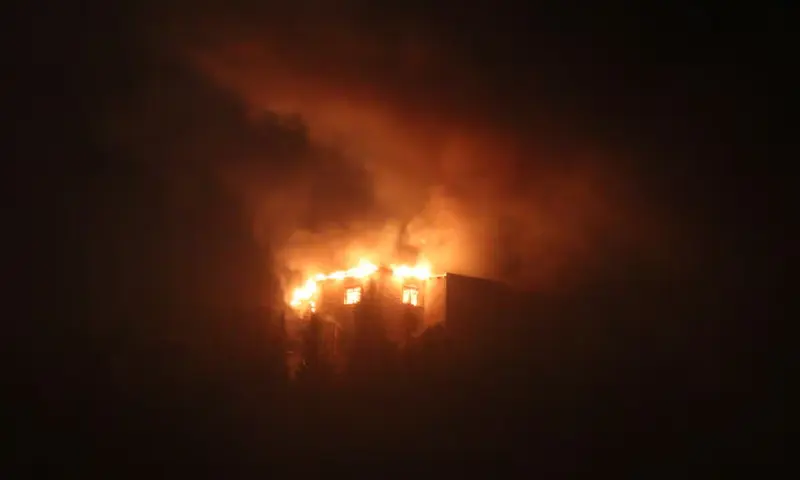
Perched on a ridge in the German Alps, the burned-out ruins of Adolf Hitler's mountain retreat, known as The Eagle’s Nest or Kehlsteinhaus in German, has ignited a heated debate about Germany's Nazi past. Constructed by the Nazis in 1938, the site has been designated as a historical monument since the conclusion of World War II. However, following a suspected arson attack in October, some argue that the structure should be demolished entirely to sever its ties to the Nazi regime, according to BBC News.
Thoughts on the matter vary, with some advocating for the complete destruction of the site, while others propose either partial or full reconstruction. The Eagle’s Nest had been a popular tourist destination, operated as a restaurant by the Bavarian state, offering visitors breathtaking views above the town of Berchtesgaden. Unlike its nearby counterpart, the Berghof, which was destroyed during World War II and subsequently torn down in 1952, the Eagle’s Nest survived the war.
In the 1990s, to address concerns over the site's failure to confront the atrocities of the Nazi era, a museum called the Obersalzberg Documentation Centre was established nearby. Although the Eagle’s Nest was largely destroyed by the fire, the documentation center emerged unharmed. The authorities have not disclosed any possible motive behind the arson, but a 33-year-old man with a history of mental illness has been taken into custody on suspicion of the crime.
Some observers, like Prof. Sir Richard J. Evans, a specialist in Nazi Germany at the University of Cambridge, contend that this incident presents an ideal opportunity for the site to become part of history. Evans argues that this approach has been adopted with "quite a few other Nazi sites," including the Berlin bunker where Hitler took his own life.
However, Bavarian authorities maintain a different stance on the site's future, with both the state's interior minister, Joachim Herrmann, and the minister for the arts, Markus Blume, advocating for its reconstruction.
The debate over Germany's approach to dealing with the legacy of Nazi-era buildings and sites has become increasingly contentious in recent years, particularly with the resurgence of far-right parties. The recent installation of "stumbling stones" memorials commemorating Nazi victims in Germany has sparked controversy, while Austria recently opened a police station in Hitler's birthplace to deter neo-Nazi "pilgrims."
Some argue that such actions aim to actively confront the Nazi past, while others fear they may inadvertently foster a welcoming environment for neo-Nazi sympathizers.
Written by urgent.news from Dawn's reporting — not their text. Machine-written — may contain errors; check the original before relying on it.