Frankreich: Der einsame Präsident – diese Alleingänge kosteten Macron das Vertrauen
Er regierte an Parlament, Gewerkschaften und Vertrauten vorbei. Jetzt, sechs Monate vor seinem Amtsende, treffen Ausschreitungen und Streiks einen Präsidenten, der kaum noch Rückhalt hat.
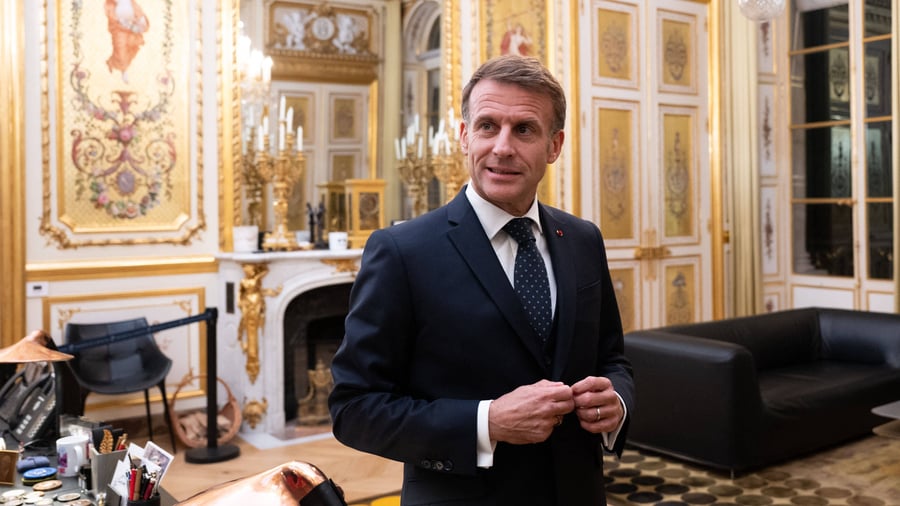
Emmanuel Macron, the President of France, is alone and isolated. Recently, the French President visited security forces in Marseille, visibly shaken by the deep eye circles. At the town hall, he displayed the aftermath of violent riots in mid-October: graffiti on the wall, broken doors, and damages to the Marianne statue – symbol of the French Republic.
He once said something rare: "We did not foresee this." Macron tries to regain lost trust. In six months, his presidential term ends. He cannot run again. The situation becomes increasingly tense. Weeks of anger over education and living costs have led to mass protests and nationwide strikes. Central to the crisis is a President who once wanted to bring divided France together – and now finds himself almost alone.
While Germany still portrays Macron as the eloquent, talented politician, in his own country, he encounters mostly anger and rejection. How did this happen? Disappointment even within his own party The images went viral. Young Emmanuel Macron, elected in 2017, stood before tens of thousands of supporters at the Louvre Pyramid, full of hope.
"I commit to your trust. I will not let you down," he cried. Today, many who voted for him in 2017 look away when Macron's name is mentioned. "He has lost control," some say. "Ten years are too many," others claim. Even in his own party, many are simply disappointed. Macron's downfall is particularly deep in his party. According to an Ipsos-Cesi survey for "La Tribune du Dimanche" in October, only 15% of respondents are satisfied with his work, a historic low since his inauguration.
Macron is typically a people's champion. When he speaks to a group of 50, he manages to make each person feel personally addressed. Yet to win people, he must bring them closer. And that happens less and less. Few know this better than Ania Nussbaum, a Bloomberg journalist covering Macron's every move. She writes a book titled "Accreditée," or "Accredited" in English.
Before joining as a journalist in 2019, Macron decided to expel journalists from the heart of the palace. The press room, existing for over 40 years, was moved outside. A month-long dispute ensued between journalists' organizations and Macron, ending with a smaller room but a clear distance: "Macron mistrusts journalists more than his predecessors," she recounts.
Nussbaum describes Macron as an aspiring risk-taker who wants to impress his conversation partners. He is hard to grasp and reflects what others see. "The more time passes, the harder he is to see through," she says. "Jupiter President" – so called himself Macron once, after the Roman god. The title was supposed to symbolize a detached, elevated, and strongly presidential leadership style.
However, Macron increasingly spins around himself. Criticism is hard for him to endure, Nussbaum explains. "There have been instances where he ghosted advisors who criticized him," she says. In Macron's world, it increasingly meant disregarding losses. He even angered local politicians by abolishing housing tax revenues without consulting lower decision-making levels.
Since the Senate, the upper parliamentary chamber, is directly linked to local levels, he made his reforms significantly harder. Moreover, he bypassed traditional intermediaries like employer associations or trade unions, such as in the retirement reform. "Short-term, this may work," Nussbaum explains. "But long-term, unresolved social conflicts will manifest again and again on the streets."
Allies abandon him Many longtime companions turn away. The most prominent examples are former Prime Minister Édouard Philippe, who openly demanded his resignation in November 2025. But even Gabriel Attal, leader of Macron's own party "Renaissance" and former Prime Minister, is also running for the presidential election and tries to distance himself from the unpopular President.
The rift originated with the dissolution of the National Assembly in 2024. After Macron's party performed disastrously in the European elections, he dissolved the parliament without consultation. Former Prime Minister Attal, who must have been consulted by law, later claimed he was "kept in the dark" in the days before the decision.
Even the Republican Senate President, Gérard Larcher, a longtime close confidant, was informed "in one and a half minutes" before Macron's announcement. Since then, he has taken an openly critical stance against the President, criticizing the "chaos" caused by the dissolution. In just a few weeks, a new election had to be organized, leaving no time for campaign preparations.
Written by urgent.news from Handelsblatt's reporting — not their text. Machine-written — may contain errors; check the original before relying on it.
This story
This is one outlet's version. Read the fullest account.