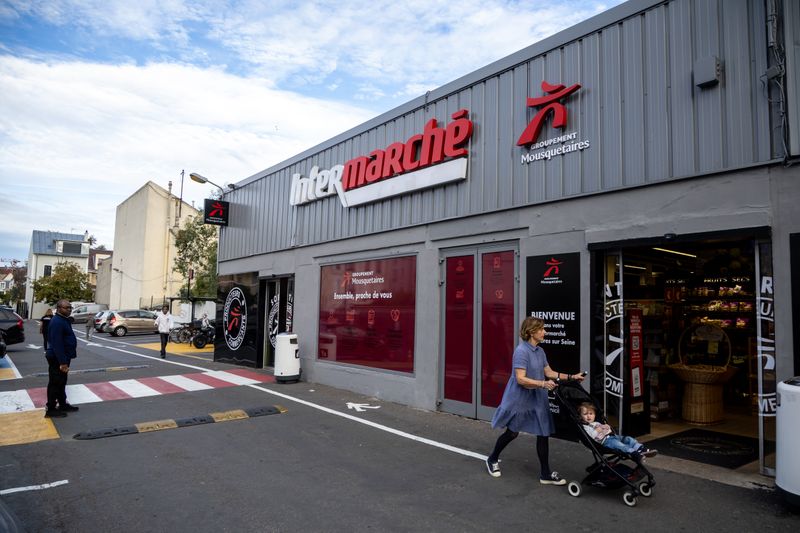
Cyber-attack on French supermarket freezers has geopolitical context
‘Not particularly complex’ defrosting hack has been attributed to Iran, with presumption it is linked to others across Europe Iranian hackers like to send a message. In 2023 a state-backed group interrupted TV streaming services in the United Arab Emirates to broadcast a deepfake report on the war in Gaza. In the same year, hackers affiliated with Iran displayed the slogan “down with Israel” on…

A cyber-attack targeting French supermarket freezers has drawn attention, with speculation linking it to Iran and its broader geopolitical implications. In the past year, there have been instances of state-backed groups disrupting services, such as interrupting TV streaming in the UAE to broadcast a deepfake report about the war in Gaza.
In May, hackers linked to Iran defaced the screens of Israeli water-control equipment, displaying the statement "down with Israel." France has now attributed a supermarket fridge attack to Iranian hackers, specifically the Islamic Revolutionary Guard Corps, a prominent military arm of Iran. The hack caused some refrigerators to overheat, leading to fires and the spoilage of food items such as meat and ice-cream.
French Foreign Minister described the incident as "unprecedented scale and aggression," vowing that Europe-wide sanctions would be imposed upon those responsible. This marks the first time a major European power has officially implicated Iran in such an attack. Cybersecurity experts suggest that the relatively unsophisticated nature of the hack, which involved using default passwords to access fridge controls, aligns with Iran's capabilities.
Iran's cyber operations are often aimed at projecting power internationally and signaling political displeasure toward adversaries, according to Rafe Pilling, a senior director at Sophos, a cybersecurity firm. The attacks are not new, with similar incidents occurring in the UAE, against Israeli food production plants, and at US military bases, which are now being treated as potential hacking incidents.
These events suggest that hostile cyber operations against the west are increasingly common and typically come from China, Russia, Iran, and North Korea, each with distinct objectives and characteristics. Iran, in particular, uses cyber-attacks to project power and signal political displeasure with regional and international adversaries.
While the underlying cause of the fridge attacks is not AI, the geopolitical context surrounding the hacks creates a concerning landscape, with AI technology further exacerbating the threat.
Written by urgent.news from Guardian Technology's reporting — not their text. Machine-written — may contain errors; check the original before relying on it.
This story
This is one outlet's version. Read the fullest account.
- France says Iran behind costly grocery store refrigeration hacks cbsnews.com
- French officials say Iran's Revolutionary Guards were behind the cyberattacks that knocked out commercial refrigerators and freezers across France in October (Reuters) reuters.com
- France accuses Iran of being behind massive cyber attack on supermarket fridges news.sky.com