COP31 must turn climate commitments into local action
COP31 must be judged not only by the commitments made in Antalya, but by whether communities receive the skills, finance and partnerships needed to turn climate goals into measurable local action.
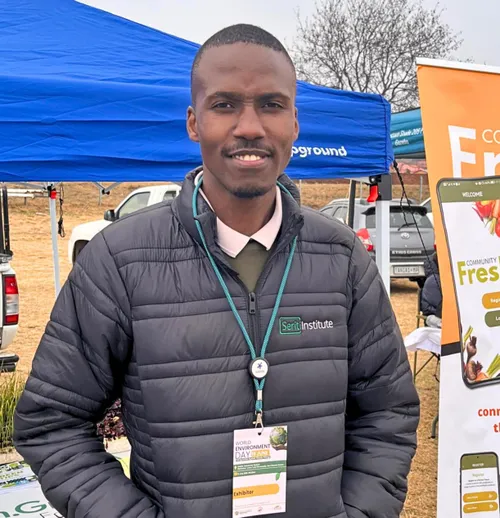
As the world prepares for the 31st Conference of the Parties (COP31) in Antalya, Türkiye from November 9 to 20, 2026, the focus must shift from global climate commitments to their practical implementation at the local level. Climate goals will only yield lasting results when communities possess the knowledge, resources, finance, and opportunities to execute them.
While global targets, climate finance, and international agreements dominate discussions, their real-world impact lies in how communities handle waste, conserve water, restore ecosystems, and manage resources responsibly. Sustainability cannot be achieved through mere policy commitments; it necessitates informed communities capable of turning environmental knowledge into tangible actions.
Seriti Institute's environmental programs illustrate the importance of bridging environmental education with practical implementation. By engaging communities, raising awareness, and employing project-based learning, people are encouraged to view environmental challenges as issues directly affecting their health, livelihoods, and local ecosystems.
While education lays the foundation, it must be participatory, context-specific, and action-oriented for knowledge to translate into meaningful impact. Communities that grasp the environmental implications of their daily actions and have opportunities to adopt sustainable alternatives become active participants in local environmental management rather than passive recipients of information.
Circular economy training sessions highlight the importance of this approach. Unlike the linear "take, make, use, dispose" model, the circular economy promotes resource efficiency, reuse, repair, recycling, and material recovery. This concept transforms waste from a disposal problem into valuable inputs for new production processes and livelihoods.
At the community level, this can be achieved through waste separation, recycling, composting organic material, and producing eco-bricks from non-recyclable plastic waste. Composting enriches soil and supports agroecological production, while material recovery reduces landfill pressure and pollution. Eco-brick initiatives, when executed with proper material selection, quality control, and safe end-use applications, demonstrate how communities can engage in waste reduction and acquire practical environmental skills.
However, the success of these initiatives hinges on systems connecting waste generators, collection networks, processors, local enterprises, and end markets. Key indicators, such as waste diverted from disposal, composted organic material, reused materials, and supported livelihoods, help determine whether interventions yield meaningful outcomes.
For environmental participation to be accountable, scalable, and sustainable, it requires governments, civil society, development institutions, and the private sector to fund environmental education that translates into practical implementation. This involves supporting community-led initiatives, building local technical capacity, creating markets for recovered resources, fostering green entrepreneurship, and measuring progress through tangible outcomes.
Moreover, climate action must address who benefits from the transition to a sustainable future and who may be left behind. Communities cannot achieve true resilience if environmental improvements are not paired with efforts to alleviate poverty, ensure meaningful participation in decision-making, and mitigate the unequal impacts of climate change.
Young people and women should not only have opportunities to participate in environmental programs but also gain access to the necessary skills, resources, financing, and economic opportunities to actively shape and benefit from the transition. Climate change is not solely an environmental crisis; it exacerbates existing social inequalities by dictating how resources, risks, and power are distributed.
Therefore, recycling, composting, water conservation, and renewable energy should be viewed not only as technical interventions but also as opportunities to reevaluate resource control, the distribution of benefits, and the costs of inaction. Communities must not merely become less vulnerable to climate impacts; the ultimate goal should be a world where environmental risks are minimized, communities are better prepared to withstand them, and no group is systematically denied the ability to adapt and thrive.
COP31 offers a chance to advance this dialogue, but its success hinges on translating global climate commitments into locally financed projects, accessible skills development, inclusive partnerships, and measurable environmental outcomes.
Written by urgent.news from IOL's reporting — not their text. Machine-written — may contain errors; check the original before relying on it.